
TL;DR
- The 5 C's of college choice are Curriculum, Campus, Community, Career, and Cost — a research-backed framework for cutting through the noise when picking a school.
- "5C college" can mean two different things: the decision-making framework or the five elite liberal arts schools in the Claremont Consortium (Pomona, Scripps, CMC, Harvey Mudd, Pitzer).
- The 5 key criteria for college admissions are academic record, standardized test scores, essays, extracurriculars, and letters of recommendation — with test scores making a major comeback in 2026.
- Cost is more manageable than it looks: average net tuition at public universities is just $2,300/year after grant aid, and private schools discount sticker price by over 56% on average.
- The best college for you isn't the most prestigious one — it's the one where you are most likely to thrive, graduate, and land where you want to be.
Introduction
Choosing a college is hard because every school looks good in a brochure. The 5 C's of college choice — Curriculum, Campus, Community, Career, and Cost — give you a simple framework for comparing schools based on what actually affects your life after enrollment.
You got into multiple schools. Now what?
Decision Day hits differently when you have real options in front of you. You've done the hard part — the applications, the essays, the waiting. But now you're staring at acceptance letters, and somehow that feels just as stressful.
There's no objectively "best" college. There's only the best college for you, and figuring that out requires a framework, not a gut feeling on a campus tour. Whether you're a high school senior weighing admits, a junior building your list, or a parent trying to help without overstepping, this guide breaks down every major decision factor — from academics and campus culture to cost and career outcomes. You'll also get the straight answer on what admissions offices actually look for, and how to make a confident final call.
What Are the 5 C's of College Choice?
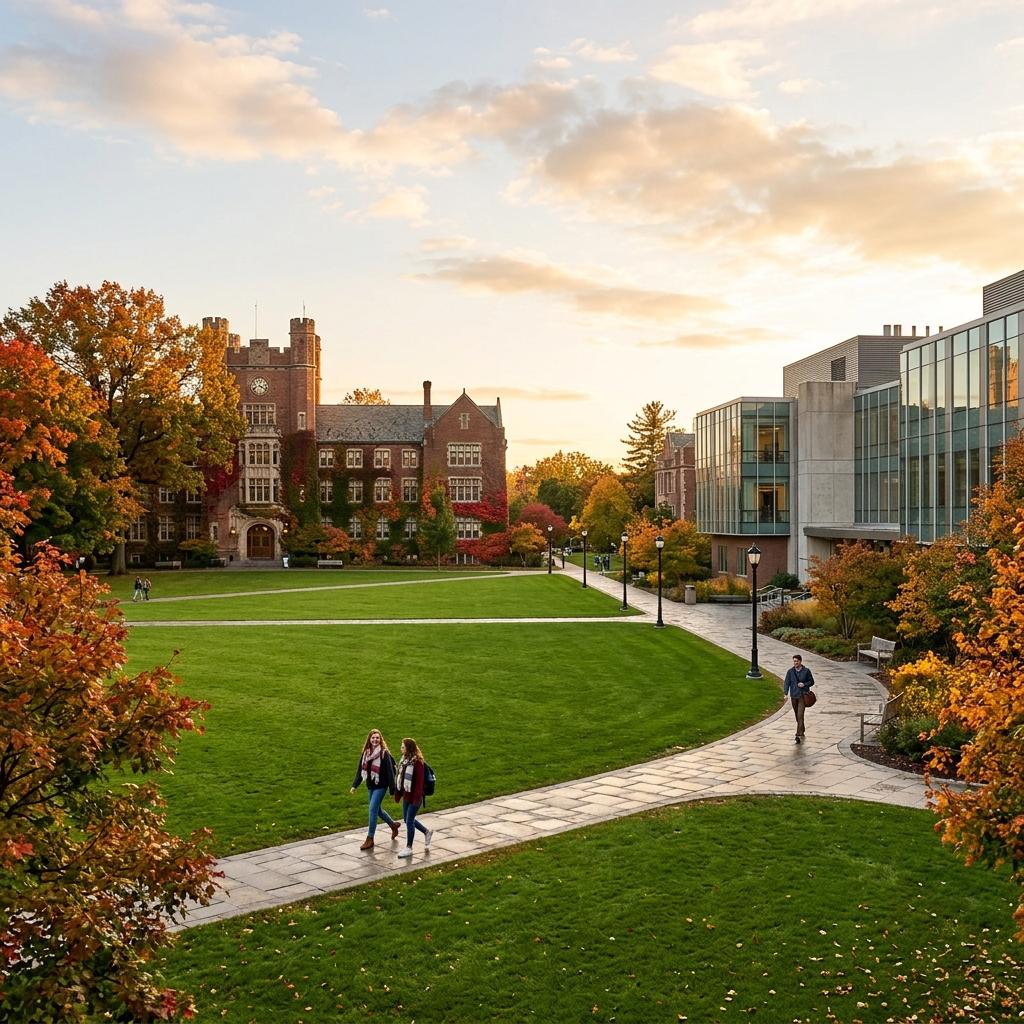
Research from higher education marketing firm Ologie identified five core categories that drive how students and families evaluate colleges: Curriculum, Campus, Community, Career, and Cost. They're not arbitrary — they map to the questions you'd ask yourself if you had six months and unlimited campus visits. Consider this your shortcut.
Curriculum — Does the School Actually Teach What You Want to Learn?
Start here. Before campus aesthetics or student culture, make sure the school can actually deliver on your academic goals.
Look beyond the department name. Dig into course offerings, faculty research, class sizes, and flexibility. If you're pre-med, does the school have strong research opportunities and a track record of medical school placements? If you're undecided, does it offer breadth and room to explore without penalizing you for changing direction?
For students who want to learn how to earn a 4.0 GPA in college, the rigor and support systems at your school matter more than the brand name on the diploma.
Campus — Can You Picture Yourself Living There for 4 Years?
Campus environment shapes your daily life in ways that are easy to underestimate during a 2-hour tour. Urban or rural? Big lecture halls or 15-person seminars? Division I sports culture or laid-back intramural vibes?
These aren't superficial questions. Students who feel genuinely at home on campus attend more regularly, engage more deeply, and perform better academically. Visit if you can — and when you do, skip the admissions office tour and eat in the dining hall, sit in on a class, and talk to actual students.
Community — Who Will You Be Surrounded By?
College shapes you through the people around you as much as the courses you take. Look at the diversity of the student body, the clubs and organizations available, the political and social culture, and the sense of belonging on campus.
Ask whether students collaborate or compete, whether the social scene fits your lifestyle, and whether the campus supports the communities you're part of or want to build.
Career — Will This School Open Doors After Graduation?
A degree is a credential, but a network is a career. Look at internship placement rates, recruiting partnerships, alumni networks in your target industry, and what graduates are actually doing five years out.
Career services vary wildly by school. Some run active recruiting pipelines with top firms. Others hand you a job board password and call it a day. Dig into this — it's one of the most underresearched parts of the college search.
Getting in is only step one. If you want to understand how to study effectively in college so you can actually capitalize on those opportunities, having strong academic habits from day one puts you ahead of most classmates.
Cost — What's the Real Price Tag?
This is the C that matters most to parents and more than students often admit. The published sticker price is almost never what you'll pay.
Average private university tuition runs about $44,961 per year, while in-state public tuition averages $11,371. But private nonprofit colleges discount their sticker price by an average of 56.3% through institutional aid. Meanwhile, net tuition at public universities dropped to just $2,300/year after grant aid for the 2025–2026 school year.
Still, the average federal student loan balance now sits at $39,547. Compare every school's net price, not sticker price, and factor in what you'll realistically earn in your field after graduation.

What Is a "5C College"?
If you've been researching selective liberal arts schools and kept seeing "5Cs" pop up, it refers to something entirely different: the Claremont Colleges consortium in Southern California.
The 5Cs are five highly selective, co-located undergraduate colleges — Pomona, Scripps, Claremont McKenna, Harvey Mudd, and Pitzer — that operate as a consortium modeled after Oxford University. They share a library, health services, and campus safety while each maintaining a distinct academic identity. Students enrolled at any one of the five can cross-register at the others, giving them access to over 2,100 courses across campuses.
Together with two graduate schools (Claremont Graduate University and Keck Graduate Institute), they're known collectively as the 7Cs. If you're considering applying, know that admission is highly selective — all five undergraduate colleges rank among the top 35 liberal arts colleges in the U.S. by U.S. News, with Pomona consistently in the top five.
So: 5 C's (lowercase) = decision-making framework. 5Cs (proper noun) = Claremont Consortium. You'll see both in college search forums. Now you know the difference.
What Are the 5 Key Criteria for College Admissions?
Choosing the right college is only half the equation. You also need to get in. Admissions at selective schools remains extremely competitive in 2026, especially as application volume stays high and some colleges bring back testing requirements — most Ivy League schools now accept fewer than 5% of applicants.
Here's what selective colleges actually evaluate.
Academic Record and GPA
Your transcript is still the foundation. At schools with acceptance rates under 10%, the average admitted student carries an unweighted GPA between 3.9 and 4.0. But GPA is never evaluated in isolation — admissions offices look at the rigor of your courses. An A in AP Chemistry reads very differently than an A in standard-level science.
If you're aiming for selective schools, load up on honors, AP, or IB coursework in areas relevant to your intended major.
Standardized Test Scores in 2026
Test scores are back, and they matter more than the test-optional era suggested. MIT reinstated its requirement in 2022. Harvard, Brown, and Dartmouth followed for recent cycles. More than half of all Common App applicants now submit scores. At many selective colleges, students who submit strong scores may benefit because test scores can add another positive signal to an already competitive application.
At the most selective schools, the middle 50% SAT range clusters between 1500 and 1580. That's the 98th percentile nationally. If your score is competitive, submit it.
Essays, Recommendations, and Extracurriculars — The Holistic Layer
Once your academic stats clear the threshold, the rest of your application determines whether you stand out. Selective schools use what's called holistic review — they're building a class, not just ranking applicants by GPA.
Your essays should sound like you. Admissions readers see thousands of polished, AI-assisted essays. The ones that land are specific, honest, and show genuine self-awareness. Same rule applies to extracurriculars: depth beats breadth. One sustained commitment with real impact outperforms a resume padded with 12 clubs.
Recommendation letters matter more than most students think. A teacher who can speak to how you think, ask questions, and engage with material carries far more weight than a generic letter from a more impressive-sounding recommender.
What Are the 5 C's of Decision-Making — Applied to College?
The "5 C's of decision-making" shows up in business and leadership contexts, but the framework maps cleanly onto college choice. Here's how:
Clarity — Get clear on what you actually want from college before you start comparing schools. Career path, campus size, location, research vs. teaching focus. Without this, you're just collecting brochures.
Criteria — Turn your priorities into concrete metrics you can actually measure. "Good vibe" is not a criterion. "Career placement rate above 85% in my field" is.
Consequences — Think through the downstream effects of each choice. A prestigious school with a high sticker price may mean a decade of debt repayment. A state school with a scholarship might let you graduate debt-free and take risks early in your career.
Comparison — Stack your schools against each other on the same set of criteria. Use the College Scorecard to compare graduation rates, earnings post-graduation, and net cost side by side.
Commitment — Once you decide, commit fully. Students who spend their first semester second-guessing their choice consistently underperform students who go all-in. The grass-is-greener mindset is the enemy of a good college experience.

How to Actually Make Your Final Decision
You've done the research. You've visited campuses, compared aid packages, and weighed the 5 C's. Now you need to land somewhere.
Build a Weighted Pros/Cons Matrix
List your top three priorities, then rate each school from 1–5 on each one. Multiply the score by the priority weight. The highest total gives you a data-backed answer — and more importantly, it often reveals a mismatch between what you think you want and what the numbers show.
BestColleges recommends comparing schools on location, budget, academics, culture, and reputation as your core categories — which maps almost exactly to the 5 C's.
Try the Gut-Check Method
Once you've done the analytical work, try this: flip a coin, call heads for School A and tails for School B. Cover the result before you look. Notice how you feel in that moment of not knowing. Then look. Your emotional reaction before you see the answer often tells you what your gut already decided.
This isn't anti-intellectual. It's using your instincts after the information has been processed, not instead of it.
Use AI Study Tools to Prep Before You Arrive
Choosing the right college is a great start. But once you're there, the students who hit the ground running academically are the ones who arrive with study habits that actually work and tools that help them learn faster — not harder.
If you want to go into college with a system that actually builds retention and saves you hours of re-reading notes, Cramd's AI flashcard generator turns any PDF, lecture notes, or text into smart flashcards with spaced repetition built in. It's one of the best free AI study tools available, and it takes under 30 seconds to go from raw material to a full study deck. Try it free →

Conclusion
Picking a college doesn't have to be a paralyzing decision. Use the 5 C's — Curriculum, Campus, Community, Career, Cost — as your filter, apply the 5 C's of decision-making to structure your thinking, and remember that the "right" school is the one where you're most likely to grow, graduate, and land where you want to be.
The best students don't just pick the most impressive school. They pick the school that fits their goals, then work hard once they're there. If you want to get a head start on the academic side, ace your finals from semester one by building study systems before classes even start.
The school on your hoodie matters less than what you do while you're wearing it.