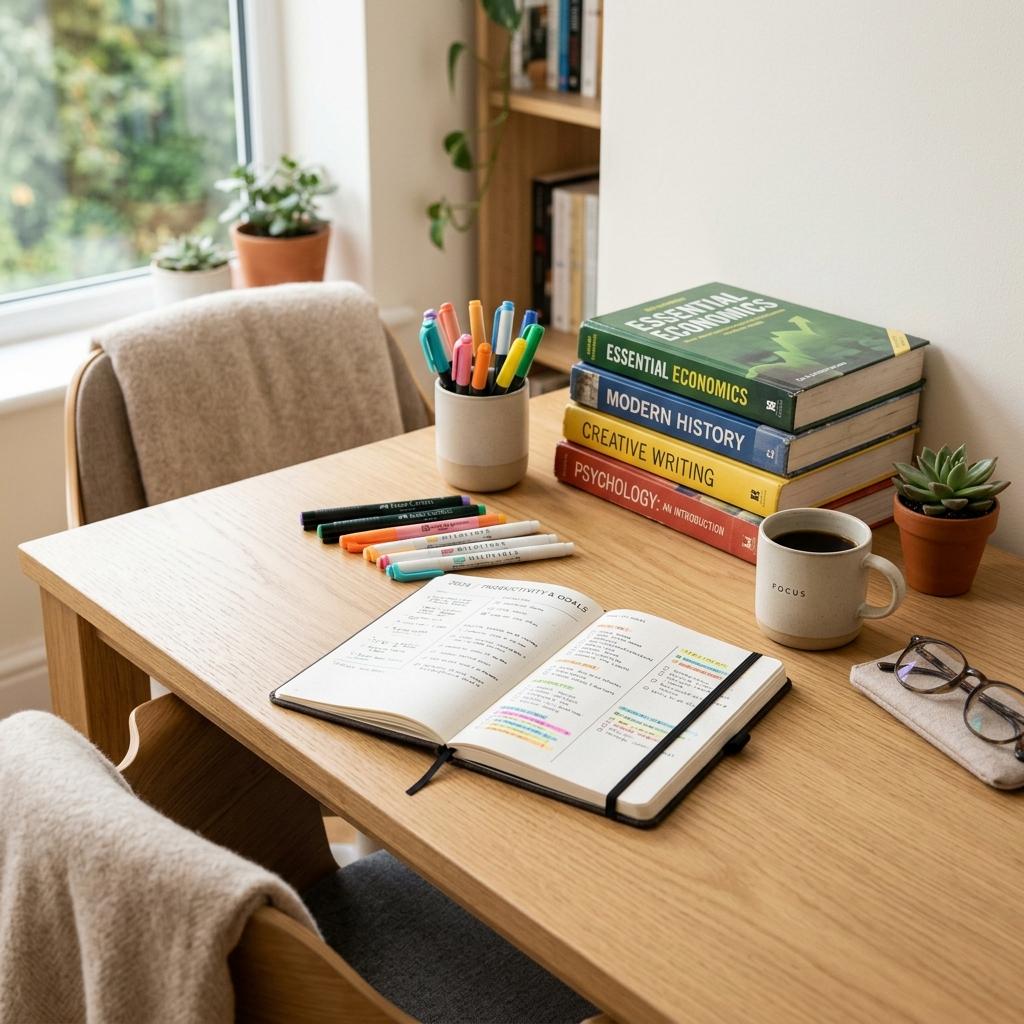
Why Most Finals Prep Fails (And What to Do Instead)
The #1 mistake students make is confusing familiarity with knowledge. You read the chapter, it feels familiar, and your brain gives you a false green light. Research on cognitive science calls this the fluency illusion - you recognize information, but you can't actually retrieve it under exam pressure.
The fix is retrieval practice: actively pulling information out of your memory, not just passively reviewing it.
What the Research Actually Says About Retention
Studies summarized by the American Psychological Association show that spacing your review sessions over time produces far stronger long-term recall than massed cramming. And Colorado State University's Teaching and Learning Center confirms that practice testing - not rereading - is one of the most effective exam prep strategies available.
One more stat worth knowing: without active review, your brain discards roughly 70% of new information within 24 hours. Start reviewing earlier, and you reset that curve.
How to Build a Finals Study Schedule That Holds
Start 2-3 Weeks Out
Don't wait until the week before. A solid schedule begins 2-3 weeks before your first exam. Map out every exam date, then work backward to figure out when each subject needs your attention. Evidence-based guides on finals prep consistently point to this backward planning approach as the most reliable way to prevent subjects from colliding at the worst possible moment.
Prioritize by Weight, Not by Anxiety
Not all exams deserve equal time. Pull your syllabi and list every subject with its approximate exam weight. Start with your "definitely on the exam" material, move to "probably," and review edge-case topics only if you have buffer time.
This is also where Cramd's AI flashcard generator speeds things up: you upload your lecture notes or PDFs and get a targeted deck of study cards in seconds, already organized around the core concepts.
Build a Realistic Daily Block
Short, focused sessions beat marathon grinds. Aim for 45-90 minute study blocks with 10-minute breaks in between. Studies on study habits show that 4 focused hours outperform 8 distracted ones, and that students routinely overestimate how much they've actually studied by 30-50%.
A practical daily structure for finals week:
- Morning: hardest subject, highest-stakes material
- Midday: second priority subject or flashcard review
- Afternoon: lighter review, practice problems, or group study
- Evening: wind down, quick Cramd deck review, sleep

The Study Methods That Actually Work for Finals
Active Recall Studying
Stop re-reading. Start testing yourself. Active recall means closing your notes and forcing your brain to retrieve information from scratch - through flashcards, practice questions, or just writing out what you remember on a blank page.
This is one of the best-supported techniques in cognitive psychology and learning science. It's uncomfortable at first, which is exactly the point. The mental strain of retrieval is what builds durable memory.
Cramd's flashcard system is built for this. The active recall studying approach is baked into every deck - you're always being tested, never just reading.
Spaced Repetition
Spaced repetition means reviewing material at increasing intervals: day 1, day 3, day 7, day 14. Each review session reinforces the memory trace before it fades. Students who use spaced repetition apps report up to a 40% reduction in total study time while retaining more for exams.
Cramd's spaced repetition app automates the scheduling for you. It tracks which cards you're getting wrong and surfaces them more frequently, so you're spending time on weak spots rather than reviewing things you already know.
The Feynman Technique
Pick a concept, close your notes, and explain it as if you're teaching a total beginner. Where you stumble is where your knowledge has a gap. Go back, fill it, and try again. This method works particularly well for essay courses, STEM subjects, and anything conceptually layered.
Interleaving: Mix Up Your Subjects
Instead of spending Monday exclusively on bio and Tuesday on chem, mix topics within the same session. Interleaving feels harder, but it improves your brain's ability to distinguish between concepts and apply the right one under pressure. It's especially useful for cumulative finals where subjects bleed into each other.
How to Use AI Study Tools for Finals Prep
What Does an AI Flashcard Maker Actually Do?
An AI flashcard maker takes raw material - your lecture slides, PDFs, handwritten notes, even images - and converts them into structured flashcards automatically. Instead of spending two hours making cards by hand, you upload your notes and get a full deck in under a minute.
Cramd's AI flashcard generator does this, and it's built specifically for students preparing for high-stakes exams. The cards are formatted for active recall and connected to the spaced repetition engine, so you're not just creating cards - you're creating a full review system.
AI PDF Summarizer for Dense Readings
If you're staring down a 200-page textbook before finals, an AI PDF summarizer can break it down into digestible summaries and flashcards in under 30 seconds. You get the key concepts without losing hours to passive reading.
This pairs well with the active recall method: let Cramd summarize the reading, then test yourself on the summary with generated flashcards instead of re-reading the original.
Is It Okay to Use AI Tools for Studying?
Yes - as long as you're using them to support learning, not replace it. AI tools handle the organizational work (summaries, flashcard creation, scheduling), so your brain can focus on the reasoning and retrieval that actually builds understanding. Don't paste AI-generated text into graded work. Use it as a tutor and study partner, not a ghostwriter.
For a deeper look at the right way to use these tools, check out Cramd's guide to how to use AI for studying.

Finals Week: Day-by-Day Execution
The Week Before
- Finalize your flashcard decks in Cramd and run through each once
- Identify the 3-5 concepts per subject you're least confident on
- Do at least one full practice exam per course, timed under real conditions
- Sleep 7-8 hours minimum. Memory consolidation happens during sleep, not during all-nighters
What to Do the Night Before an Exam
Light review only. Skim your summary notes or run through your Cramd deck one more time. Don't attempt to learn new material the night before - it crowds out what you've already built. Pack your bag, set your alarm, and sleep.
For a detailed game plan, Cramd's guide on what to do 30 minutes before an exam covers exactly how to use that final window.
Exam Day
- Eat a real meal before the exam. Glucose supports working memory.
- Arrive 10-15 minutes early so you're not rushing into the room already stressed
- Read every question before you start answering
- Answer the questions you're confident about first, then return to harder ones
- Use breathing exercises if nerves spike (4 counts in, 4 hold, 4 out)
What to Do After Finals
Don't just delete everything and move on. Take 30 minutes after each exam to note what you got wrong and why. Did you blank on a concept you'd studied? Were the questions phrased differently than your flashcards? These observations shape how you prep for your next exam.
Keep your best Cramd decks. A lot of finals material resurfaces in upper-division courses, qualifying exams, or licensing tests. Your future self will thank you for keeping a well-organized deck library.

Finals Prep Checklist
Before each exam, make sure you've covered the following:
- Study schedule built at least 2 weeks out
- Flashcard decks created for each subject (use Cramd's AI to speed this up)
- At least 3 spaced repetition review sessions per subject
- One full practice exam under timed conditions
- Weak areas identified and prioritized in your review sessions
- 7-8 hours of sleep the night before
- Light review only on exam morning - no new material
Ready to Study Smarter?
Finals don't have to be a panic spiral. With the right structure, you can cover more material in less time and actually remember it when it counts.
Cramd's AI study tools handle the setup - flashcard generation, spaced repetition scheduling, PDF summarization - so you can focus on the actual learning. Students who use structured, retrieval-based systems like Cramd's consistently outperform those who rely on passive review.
Try Cramd free -> and build your first finals deck in under two minutes.