
You already know studying is important. You've highlighted notes, reread chapters, pulled late nights before exams - and still blanked when it mattered. The problem usually isn't effort. It's method.
Most students default to passive studying: reading the same material over and over until it feels familiar. But familiarity and recall are completely different things. What you need are study methods that build actual memory, not just the illusion of it.
These five habits are grounded in cognitive science, and students who adopt them consistently see real results - fewer hours wasted, more material retained, better grades. Let's get into it.
TL;DR
- Active Recall: Stop rereading; testing yourself is 3x more effective for long-term retention.
- Spaced Repetition: Review material at increasing intervals (1, 3, 7 days) to stop the "forgetting curve."
- Pomodoro Power: Use 25-minute focused blocks and 5-minute breaks to stay sharp and avoid procrastination.
- Note-Taking 2.0: Use Cornell or "Question-first" notes to build a built-in testing system from day one.
- Strategic Focus: Prioritize based on exam weight and your current understanding, not just anxiety.
1. Active Recall: Stop Rereading, Start Retrieving
Highlighting your textbook feels productive. It's not. Research published in 2026 confirms that passive review creates a false sense of familiarity - students recognize material as familiar without being able to retrieve it under pressure.
Active recall flips that. Instead of rereading, you close your notes and force yourself to pull information from memory. The act of struggling to retrieve something is exactly what makes it stick.
How to Practice Active Recall Studying
A few approaches that work across subjects:
The blank page method. After studying a topic, close everything and write down everything you remember on an empty page. Then open your notes and fill the gaps. Gaps = what to study next.
Flashcards done right. Cover the answer, commit to a guess, then flip. If you peek before trying, you lose most of the benefit. The effort of retrieval is the whole point.
Teach it out loud. Explain a concept as if you're talking to someone who knows nothing about it. Wherever your explanation gets vague or generic, that's where your understanding actually breaks down.
Practice questions before you feel ready. Most students wait until they "know" the material before doing practice tests. Flip that. Active recall studying produces roughly double the long-term retention compared to equivalent time spent rereading, and the gains compound when you start early.
If you want to put this on autopilot, Cramd's AI flashcard generator turns your notes and PDFs into ready-to-review flashcards in seconds - so you spend your time retrieving, not building cards.
2. Spaced Repetition: Study Less, Retain More
Cramming works for a test. Spaced repetition works for an exam, and for every class you take after that.
The idea is simple: review material at increasing intervals over time, hitting it just before you'd normally forget it. Each successful review strengthens the memory and pushes the next review further out. Over weeks, you're spending less total time on material you already know and more on material that needs work.
What Is a Spaced Repetition App, and Do You Need One?
You don't need an app to use spaced repetition. A calendar and handwritten cards can work. But a spaced repetition app automates the scheduling entirely, which removes a huge friction point. Without a system, most students either review too early (wasting time) or too late (after forgetting). An algorithm handles that math so you don't have to.
The classic schedule looks like this: study something on Day 1, review it on Day 2, then Day 5, then Day 12, then Day 30. By that point, the memory is deeply consolidated and needs only occasional review to stay sharp.
Pair this with active recall - meaning you test yourself during each review session rather than just rereading - and you've got the most evidence-backed study combination in cognitive science. A 2026 study in Current Pharmacy Teaching and Learning found that students who combined active recall with spaced repetition outperformed peers using traditional passive review across every measure of retention.

3. Structured Study Sessions: Build a Rhythm That Actually Holds
Consistency beats intensity. An hour of focused study every day will outperform a six-hour grind session before an exam, every time. The problem is that most students don't build structure around their sessions - they sit down "whenever," study until they're distracted, and call it done.
A few things that change that:
Does the Pomodoro Technique Actually Work?
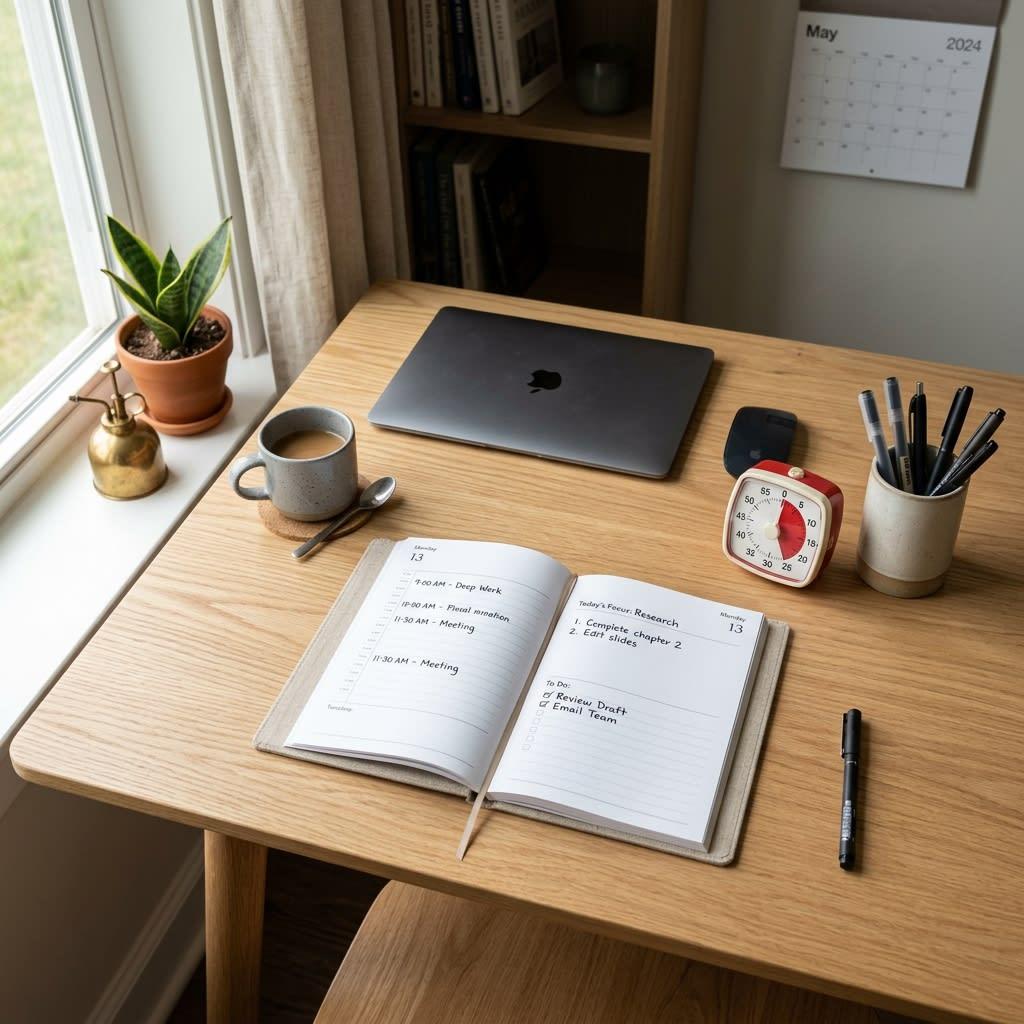
Yes, for most students. The Pomodoro method breaks study sessions into 25-minute focused blocks followed by 5-minute breaks. It's not magic, but research published in BMC Medical Education (2025) found that students using the technique showed higher focus scores and better exam performance than students using unstructured study time, while also spending less total time studying.
The mechanism is straightforward: breaking a huge task into a 25-minute block makes it feel manageable. You stop negotiating with yourself about whether to start.
That said, the Pomodoro timer isn't sacred. Some students do better with longer 45-minute blocks, shorter 15-minute ones, or flexible intervals tied to natural stopping points in the material. The principle matters more than the exact timing: structured breaks outperform self-regulated ones for focus and follow-through.
How to Track Progress Without Burning Out
Keep it simple. A notebook page or basic spreadsheet where you log subjects studied, time spent, and a quick self-rating of how well you retained the material is enough. After a week, patterns show up. You'll notice which subjects need more sessions, which times of day you're sharpest, and where you've been avoiding hard material.
Pair a session tracker with Cramd's AI study tools to turn logged topics into flashcard decks automatically. You study, you log it, you review it - same day, zero setup.

4. Smart Note-Taking: Build a System You'll Actually Use
Notes you never review again are just a performance of studying. The goal is a system that feeds directly into your active recall practice.
What Is the Best Method for Note-Taking?
There's no universally best method, but the most effective note-taking approaches share one trait: they force you to process information rather than transcribe it. That processing is where learning starts.
A few methods worth knowing:
Cornell notes. Divide the page into a main notes column, a cues column on the left, and a summary at the bottom. After class, you write questions in the cues column that your notes answer - turning your notes into a built-in retrieval tool.
Mind maps. Useful for subjects with lots of interconnected concepts. Draw the central idea, branch out to related concepts, and draw connections between branches. Good for visual thinkers and subjects like biology or history.
The question-first method. Instead of writing "The mitochondria produces ATP through oxidative phosphorylation," write "What is oxidative phosphorylation?" at the top and answer it below. Your notes become flashcard prompts from day one.
AI-assisted notes. If you've uploaded a PDF, lecture slide deck, or reading to Cramd's PDF summarizer, it pulls key concepts automatically. You can review the summary, then use it to build your retrieval practice. Saves time, keeps structure.
Whatever method you choose, the review is what matters. Notes you take and never revisit don't help much. Schedule a weekly pass through your notes to consolidate what you've learned and spot gaps before they become exam problems.

5. Strategic Prioritization: Focus Where It Compounds
More studying hours doesn't mean more learning. Students who prioritize high-leverage material tend to outperform those who try to cover everything equally.
How to Prioritize What to Study
Start by asking three questions about each topic on your syllabus:
- How often does this show up in past exams or practice questions?
- How well do I actually understand it (not just recognize it)?
- How much does understanding this topic unlock other topics?
Topics that score high on all three questions deserve the most time. Topics that are low-stakes, well-understood, and isolated can get the least. This isn't about cutting corners - it's about maximizing study efficiency by allocating effort based on impact.
A simple approach: at the start of each week, rate every major topic you're studying from 1 (solid) to 5 (shaky). Focus your sessions on anything rated 3 or above. Revisit ratings weekly. As your 5s become 3s and your 3s become 1s, shift your effort to where the gaps still are.
If you've imported your Quizlet sets or uploaded your textbook chapters to Cramd, the platform's spaced repetition algorithm does this automatically - surfacing cards you're weak on more often, and giving you a break on the ones you've already nailed.
What Makes These Habits Work Together
Each habit is useful on its own. Together, they form a loop:
You take notes in a format designed for retrieval. You load those notes into a spaced repetition system. You practice active recall during review sessions. You use structured Pomodoro blocks to stay consistent without burning out. And you prioritize based on where gaps actually are.
That loop compounds. Every week you run it, you're building a cleaner, more durable body of knowledge - not just a collection of material you've looked at a bunch of times.
If you're ready to stop studying hard and start studying smart, try Cramd free. Upload your notes or PDFs and get a full set of AI flashcards in under 30 seconds. Your future self will thank you.
FAQ: Game-Changing Study Habits
Further reading from Cramd: The Power of Active Recall | Mastering Spaced Repetition | Best Note-Taking Methods | How to Study Effectively in College