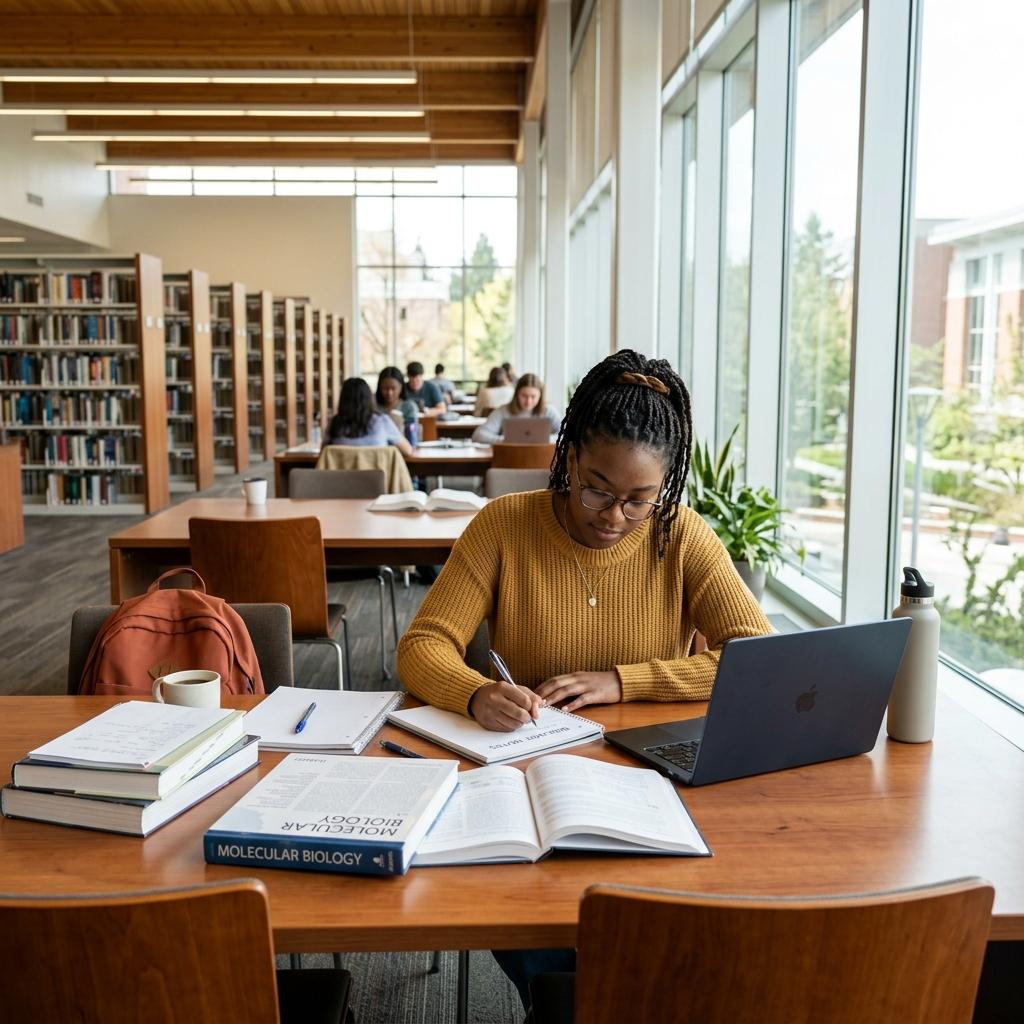
Most college students study the wrong way. They reread their notes, highlight textbooks, and cram the night before. It feels productive. It isn't.
Research from UCSD's psychology department found that most university students rarely use the learning techniques shown to actually work, even when those methods exist and are accessible. The result? Hours of studying that produce mediocre exam scores and knowledge that evaporates by the following week.
If you're in college right now and wondering why studying harder isn't translating into better grades, the issue isn't effort. It's method.
This guide breaks down the study methods that cognitive science actually backs, when and where to use them, and how to build a routine you'll stick to without grinding yourself into the ground.
TL;DR
- Stop Rereading: Rereading creates a "fluency illusion"; switch to Active Recall (testing yourself) for 2-3x better retention.
- The 50-10-Switch: Work for 50 minutes, break for 10, and switch subjects every 2 hours to keep your brain sharp.
- Peak Hours: Identify your "high-performance window" (Morning, Afternoon, or Night) for your hardest tasks.
- Active Setup: Success starts with creating testable notes during class, not just transcribing slides.
Why Most College Study Habits Don't Work
Passive review creates what researchers call a "fluency illusion": rereading your notes makes the material feel familiar, which your brain mistakes for understanding. It isn't.
According to learning retention data, students who rely on passive review forget up to 70% of new information within the first 24 hours without reinforcement. Students using active recall techniques retain roughly twice as much as those using passive methods.
That gap compounds over a semester. Two students study for the same number of hours. One uses active recall and spaced repetition. The other rereads and highlights. By finals, they're not close.
The fix isn't more hours. It's switching to methods your brain actually responds to.
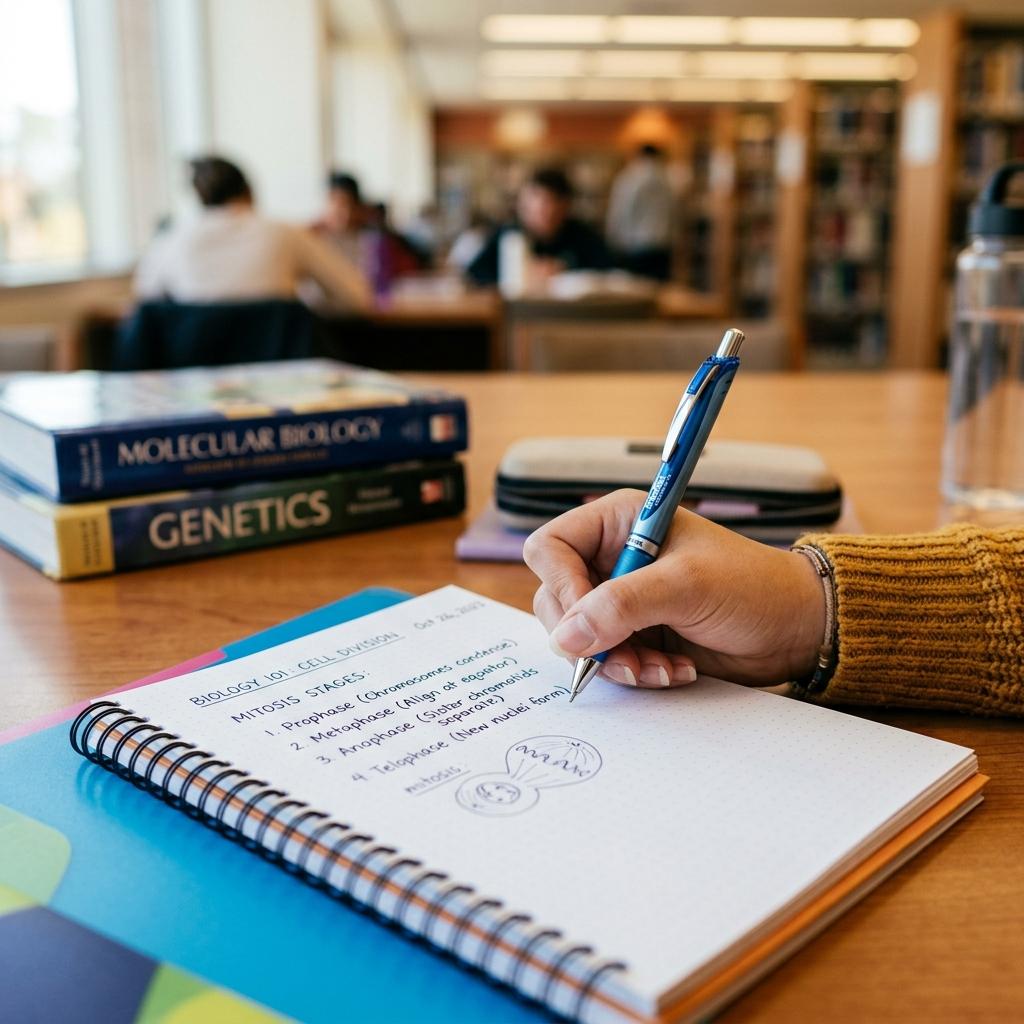
The Two Study Methods Backed by Decades of Research
Active Recall: Study by Retrieving, Not Reviewing
Active recall means forcing your brain to retrieve information from memory rather than reading it off a page. You close your notes and answer questions. You write down everything you remember about a topic before checking your materials. You test yourself.
A peer-reviewed study published in the Journal of Otolaryngology found that long-term retention using active recall can be 2-3 times greater than traditional rereading methods. That's not a small margin. For a pre-med student trying to retain biochemistry or a poli-sci major preparing for a cumulative final, that difference changes your grade.
Practical ways to use active recall in college:
- Flashcards - Create a question on one side, answer on the other. Go through them without flipping until you've made your best attempt to recall.
- Blurting - Take a blank page. Write down everything you remember about a topic from scratch. Check your notes and fill in gaps.
- Practice exams - Work past papers under timed conditions before the test. This doubles as anxiety reduction.
- The Feynman Technique - Pick a concept. Explain it out loud as if teaching a 10-year-old. Any point where you stumble is a gap to fix.
If you want to put active recall studying on autopilot, Cramd's AI flashcard generator turns your lecture notes or PDFs into testable flashcards in seconds. You get active recall practice without the manual card-creation grind.
Spaced Repetition: Review Before You Forget
Spaced repetition means reviewing material at increasing intervals over time. Day 1, Day 3, Day 7, then two weeks later. Each review resets what Hermann Ebbinghaus called the "forgetting curve," building stronger long-term memory with each session.
Learning retention research shows spaced repetition increases long-term retention by up to 80% compared to massed (cramming) learning. Students who review material multiple times over time retain about 90% of it versus 30% for those who reviewed it once.
The Pomodoro Technique pairs naturally with spaced repetition: 25 minutes of focused study, 5-minute break, repeat. After four cycles, take a longer break. It keeps you from burning out and makes spacing feel less like a chore.
A basic spaced schedule for a new concept looks like this:
- Study it tonight
- Review it tomorrow morning
- Test yourself 3 days later
- Do one final review a week after that
For subjects with heavy memorization loads like biology, pharmacology, history, and economics, pair a spaced repetition app with your note-taking system. The combination of active recall and spaced repetition is where the real retention gains happen.
How to Build a College Study Schedule That Actually Sticks

Find Your High-Performance Window
Students generally fall into three categories: morning-sharp, afternoon-steady, or late-night focused. The research on chronotypes suggests you're not just making excuses. Science backs the idea that your environment, stress levels, and phone distraction patterns affect how much focused time you actually get.
Track one week of study sessions honestly. Not time spent at your desk, actual focused output. Most students overestimate by 30-50%. Once you see the data, you'll know your peak window.
A practical framework:
Morning (7-10 AM): Best for hard cognitive work. New material, complex problem sets, writing drafts. Your brain is fresh and distraction-prone apps haven't fired up yet.
Afternoon (2-5 PM): Best for group sessions and applying concepts. Energy is stable, resources are available on campus.
Evening (7-10 PM): Best for review sessions using active recall. Spaced repetition runs, flashcard reviews, practice questions.
The 50-10-Switch System
Study for 50 minutes of fully focused work. Then take 10 minutes off: move, stretch, get away from screens. Switch subjects every 2 hours. This interleaving approach is backed by cognitive science: rotating between related topics feels harder in the moment but improves your brain's ability to distinguish and apply information during exams.
Pre- and Post-Class Habits That Compound
Before class (15-20 minutes):
- Skim the material to be covered
- Review your last session's notes
- Write 2-3 questions you expect the lecture to answer
After class (within 24 hours):
- Rewrite your notes in your own words; don't copy, summarize
- Test yourself on the main concepts before you review your notes
- Connect new ideas to things you already know
This cycle makes your in-class time far more productive. You walk in primed, not blank.

Where Should You Study in College?
Location matters more than students give it credit for. The goal is a place that's comfortable but not relaxing enough to fall asleep in, with minimal interruption risk.
Student-reported rankings:
- Library quiet floors - Best for deep focus sessions and problem sets
- Empty classrooms - Ideal for practice exams and verbal review (talking through material aloud)
- Study lounges - Strong for group sessions with defined goals
- Coffee shops - Fine for lighter reading and review, not for first-pass complex material
- Outdoor spaces - Good for verbal memorization walks
One thing that tanks any location: your phone face-up on the desk. Each notification check forces your brain to refocus, cutting into productive output. Silence it or flip it face-down before a session starts.
How to Study for Different College Subjects
Math and Quantitative Courses
Math isn't a reading subject. Reading the worked example and understanding it is not the same as being able to do the problem yourself.
- Work problems daily, not just before exams
- Build formula sheets but prioritize knowing when to apply each one
- When you get a problem wrong, fix your understanding of the concept, not just the arithmetic
Science Courses (Biology, Chemistry, Physics)
Science requires both conceptual understanding and technical recall.
- Draw diagrams from memory and compare them to your notes
- Create concept maps linking related systems
- Explain processes out loud; use the Feynman Technique regularly
- Use Cramd's PDF summarizer to convert dense textbook chapters into structured study guides you can actually test yourself on
Writing-Heavy Courses (Literature, History, Social Sciences)
- Read actively; annotate as you go, write margin summaries
- Discuss readings with classmates before writing; it sharpens your argument
- Practice building outlines under time pressure
- Summarize each reading in 3 sentences immediately after finishing it
How to Use Study Groups Without Wasting Your Time

Study groups are useful or useless depending on how they're run. An accountability session where everyone sits in silence and occasionally chats is not a study group. It's companionship.
What works:
- Keep the group at 3-4 people. Any larger and focus diffuses.
- Set a specific agenda before meeting: "Tonight we're testing each other on chapters 4-6."
- Assign roles: one person quizzes, one explains, one writes the gaps on a whiteboard.
- End each session with a shared summary of what you got wrong
The value of group study is exposure to gaps you didn't know you had. Someone else will ask a question you'd never have thought of, and not being able to answer it is useful information.
What to Do When You Can't Focus
Procrastination is usually a signal, not a character flaw. It tends to mean either the task feels too big, the material feels too hard, or you're mentally depleted.
Fixes that actually work:
- Break the session into a 10-minute start. Tell yourself you only have to do 10 minutes. The hardest part is starting.
- Identify what specifically you're avoiding. Usually it's one concept or one task you feel uncertain about. Work on that first; it removes the mental weight.
- Use accountability. Tell a friend when you're starting and when you'll finish. Even a text message creates real commitment pressure.
- Track your sessions. Seeing your streak builds investment. Missing a day starts to feel like something worth avoiding.
For an in-depth look at building habits around your study sessions, the time management for students guide on Cramd's blog covers scheduling frameworks used by students managing heavy course loads.
How to Use AI Study Tools Without Hurting Your Learning
AI study tools can reduce the busywork of studying, organizing notes, generating flashcards, summarizing PDFs, so you spend more time on actual retrieval practice. Used well, they amplify good study habits. Used poorly, they replace thinking with browsing.
Ground rules:
- Use AI to generate practice questions and flashcards, not to read summaries so you can skip the material
- Use Cramd's AI flashcard generator to convert your own notes into testable content: your inputs, your words, your material
- Don't paste AI explanations into your essays; use them to understand what you're confused about and then write in your own words
For a broader look at which tools are worth using, see 15 Best AI Study Tools That Actually Work in 2026 on the Cramd blog.
Signs Your Study Methods Are Working
You don't need to wait until exam day to know whether your approach is landing.
Green flags to watch for:
- You can explain concepts in plain language without checking your notes
- Practice questions feel easier the second time around
- You spend less time reviewing material you covered weeks ago
- Exam prep feels like review, not first exposure
If exam day still feels like a surprise, you're probably spending most of your study time in passive review. Shift to testing yourself more aggressively, earlier in the cycle.
Build the System Once, Rely on It All Semester
The students who consistently hit the Dean's List aren't studying more hours. They're inside better systems. Active recall over passive rereading. Spaced sessions over cramming. Small daily inputs over frantic pre-exam sprints.
You don't have to overhaul everything at once. Pick one change this week: swap 20 minutes of rereading for 20 minutes of flashcard testing. See what happens to your retention.
If you want to make active recall a daily habit without building everything from scratch, try Cramd free and let the AI do the card-creation. You bring the material, it builds the practice system.
Sources:
- UCSD Psychology - Effective Studying
- ZipDo - Learning Retention Statistics
- ScienceDirect - Spaced Repetition & Active Recall in Otolaryngology Education
- Cairo360 - How to Study Smarter During Finals 2026