
TL;DR
- The best way to turn class materials into a study plan is to collect everything, sort it by exam topic, convert each topic into tasks, and schedule review.
- Your syllabus gives the deadlines, but your notes, PDFs, slides, and practice questions tell you what to study.
- A real plan should include active recall, flashcards, practice questions, and spaced repetition, not just rereading.
- Use class materials to build daily tasks like "quiz chapter 4 terms" or "review missed lecture 8 questions" instead of vague blocks like "study chemistry."
- Cramd can help you turn notes, PDFs, and slides into flashcards and quizzes so your study plan is easier to follow.
Introduction
Your class materials are everywhere. The syllabus is in the course portal. Lecture slides are in one folder. PDFs are in another. Your notes are half typed, half handwritten, and one important study guide is buried in an email.
That is why learning the best way to turn class materials into a study plan matters. Most students do not fail because they have zero materials. They struggle because the materials never become a clear next step.
A study plan is not just a calendar that says "study." That is too vague to help when you are tired. A real plan turns class materials into topics, tasks, questions, flashcards, quizzes, and review dates.
This guide shows you how to make a study plan from class notes, syllabi, lecture slides, PDFs, and handouts. The goal is simple: stop staring at files and start doing the study tasks that actually prepare you for exams.
Why Class Materials Don't Automatically Become a Study Plan
Notes tell you what was covered, not what to practice
Class notes are a record of what happened. They are not automatically a plan for what you should do next.
If you write down a definition, that tells you the topic exists. It does not tell you whether you can explain, apply, or remember it under pressure. To turn class notes into a study plan, each note needs to become an action.
For example, "cellular respiration" is a topic. "Create flashcards for glycolysis steps" is a task. "Answer five practice questions on ATP yield" is even better.
A syllabus gives deadlines, but not daily study tasks
Your syllabus is still the best starting point. It shows exam dates, project deadlines, readings, and sometimes the units your instructor cares about most.
But a syllabus usually does not tell you what to study on Tuesday night. You have to translate it. Cornell's study schedule guidance recommends planning around course materials while protecting breaks, sleep, and other responsibilities.
If you are setting up before classes start, Cramd's guide on how to prepare for a new semester is a useful companion.
PDFs and slides create rereading traps
PDFs and lecture slides look organized, so they make rereading feel productive. You scroll, highlight, and nod at the same bullet points.
But recognition is not the same as memory. If you want to study from a PDF without rereading it, the key is to turn sections into questions and prompts. The same applies to lecture slides: pull testable tasks out of the file.
Step 1: Gather Every Class Material in One Place
Start with the syllabus and exam dates
Before touching your notes, find the syllabus. Write down every exam, quiz, paper, presentation, lab practical, and reading deadline.
This gives your study plan a spine. With dates, you can work backward and decide what needs attention first.
Add lecture slides, PDFs, notes, and handouts
Next, gather the actual material: slides, textbook PDFs, class notes, worksheets, handouts, problem sets, review guides, and old quizzes.
Put them in one folder or one tool. You do not need a perfect filing system. You just need to stop losing materials across downloads, tabs, and course portals.
Separate "must know" from "nice to review"
Not everything deserves equal time. Mark the material that is directly tied to exams, repeated by your professor, listed as an objective, or used in homework.
Then mark anything useful but lower priority. This keeps your study plan from becoming a giant guilt list.
Step 2: Turn Your Syllabus Into a Study Schedule
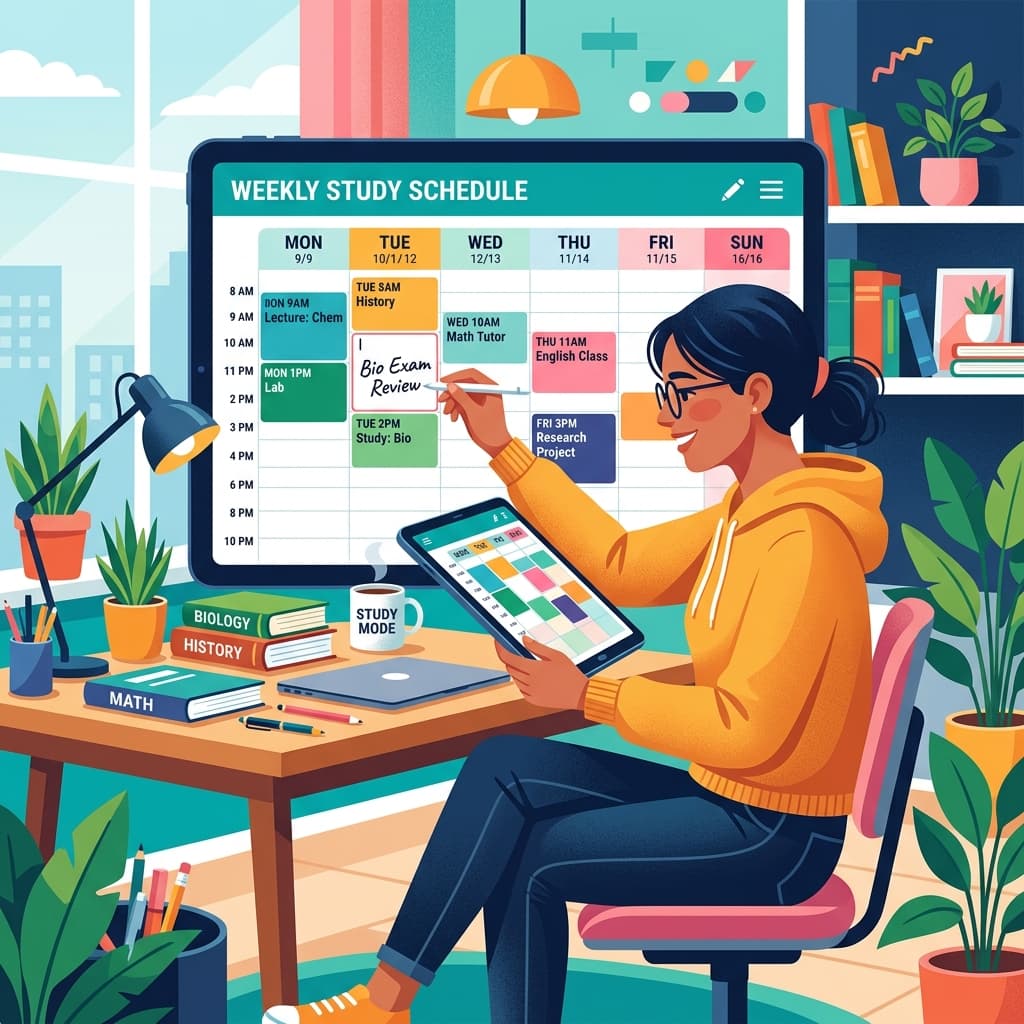
Work backward from exams and deadlines
Start with the exam date and move backward. If the exam is two weeks away, the final two days should be review and practice.
Victoria University's guide on making an effective study plan recommends accounting for existing commitments before assigning study time. Your plan should fit your real week, not an imaginary version of you with unlimited focus.
Break each unit into weekly study blocks
Once you know the deadline, split the unit into weekly blocks. A block might be "lectures 1-3" or "chapter 5 practice problems."
Then turn each block into tasks:
- Summarize the main idea from memory.
- Turn lecture notes into flashcards.
- Make practice questions from slides.
- Review missed homework problems.
- Revisit weak cards with spaced repetition.
That is how a weekly study plan from notes becomes something you can follow.
Leave buffer days for hard topics
Every class has one unit that takes longer than expected. Build space for it before it causes a problem.
Leave at least one buffer day before each exam. Use it to review weak topics, finish missed practice, or clean up flashcards.
Step 3: Turn Class Notes Into Study Tasks
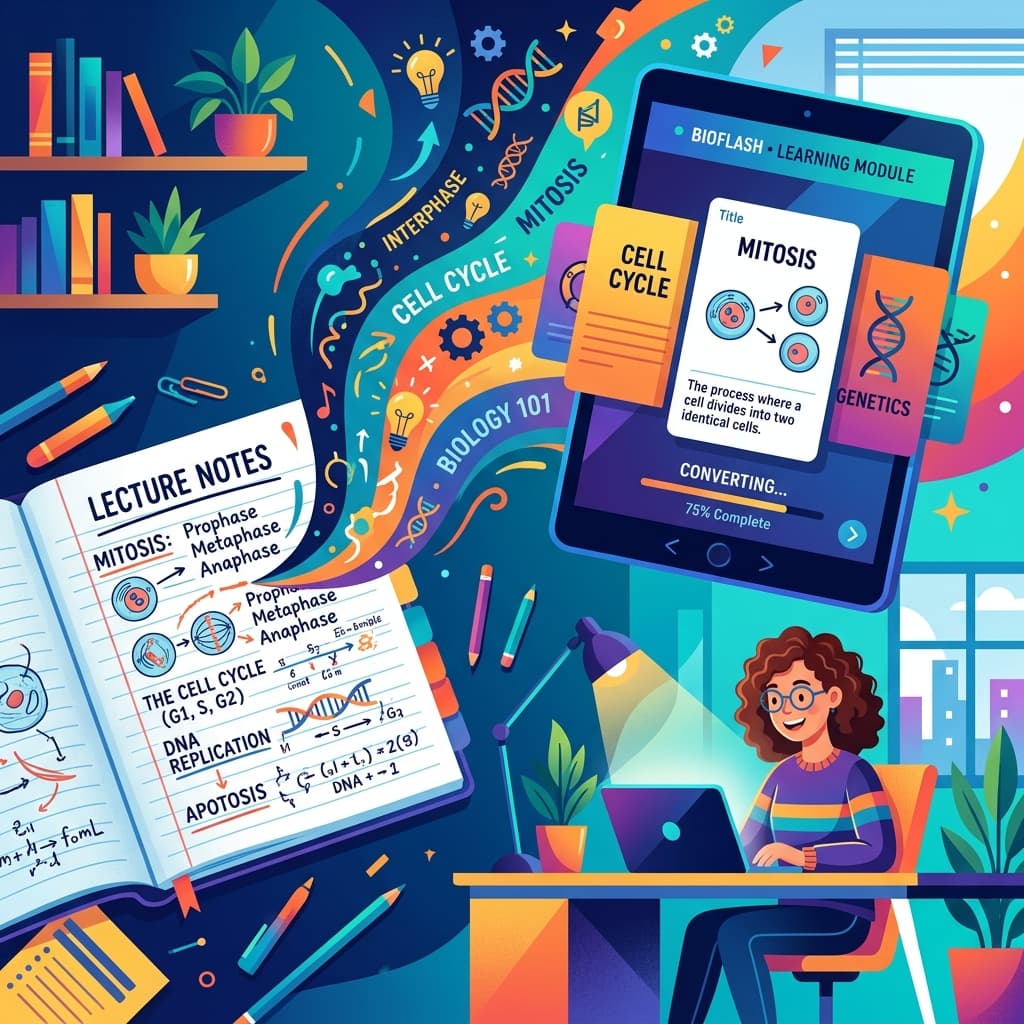
Change headings into questions
The easiest way to organize class materials for studying is to turn headings into questions.
"The causes of the French Revolution" becomes "What were the major causes of the French Revolution?"
Questions force your brain to retrieve. Headings let your eyes drift.
Turn lecture slides into practice prompts
To make a study plan from lecture slides, group slides by topic and ask what each slide wants you to be able to do.
Some slides become definition cards. Some become comparison prompts. Some become short-answer questions.
If a slide says "key differences," your task is not "review slide." Your task is "explain the differences without looking."
Convert PDFs into summaries, flashcards, and quizzes
PDFs are easier to manage when you turn them into smaller outputs. First, summarize the main sections. Then pull out key terms, examples, processes, and confusing points.
From there, create flashcards and quiz questions. Cramd's AI PDF summarizer can help with the first pass, and the AI flashcard generator can turn notes or PDFs into cards faster.
An AI study guide maker from notes is useful when it gets you to practice sooner. It should not become another pretty document you reread three times.
Step 4: Build an Active Recall Study Plan

Quiz yourself before rereading
An active recall study plan starts with testing, not rereading.
Before you reopen the slides, ask: "What do I remember from this lecture?" Write a quick answer. Then check the material and fill the gaps.
The Dunlosky et al. review found practice testing and distributed practice to be high-utility learning techniques. A Psychological Science summary explains why retrieval and spacing beat passive review.
Turn missed questions into flashcards
Missed questions are the most useful part of your plan. They show you where your next task should be.
If you miss a term, make a card. If you mix up two concepts, make a comparison card. If you cannot explain a process, split it into steps.
This is the difference between "review chapter 6" and "fix the three ideas from chapter 6 I keep missing."
Add spaced repetition review dates
Spaced repetition is the calendar part of remembering. Instead of reviewing once, you bring the material back over time.
Birmingham City University's spaced repetition guide recommends reviewing soon after a lesson, then again after increasing intervals. Cramd's spaced repetition guide turns that into a student-friendly workflow.
Your study plan should include those review dates, not just the day you create the cards.
Example: A Weekly Study Plan From Class Materials
Monday: organize new material
Collect the syllabus updates, lecture slides, PDFs, and notes from the week. Group them by topic.
Do not spend the whole night organizing. Give yourself 20 minutes, then move into one small study task.
Tuesday and Wednesday: create flashcards and questions
Turn lecture headings, PDF sections, and textbook examples into questions. Use Cramd to create flashcards from class materials faster.
Then edit. Delete weak cards and split overloaded ones.
Thursday: quiz yourself
Use your cards, practice prompts, or a blank page. Answer before checking.
If you miss something, mark it. That missed item becomes your next review task. The KQED article on self-testing and distributed practice explains why this works better than simply rereading.
Weekend: review weak spots
The weekend is for cleanup. Review difficult flashcards, redo missed problems, and update next week's plan.
This keeps studying from piling up until the night before the exam.
Common Mistakes to Avoid When Making a Study Plan
Planning by time instead of tasks
"Study for two hours" sounds responsible, but it does not tell you what to do.
Better: "Make 25 flashcards from lecture 4" or "quiz chapter 3 terms without notes." Tasks create progress you can measure.
Copying notes instead of testing yourself
Copying notes feels clean. It also eats time.
If you want to make notes for final exams, focus on prompts, summaries from memory, diagrams, and missed questions. Your notes should become a launchpad for practice, not a rewritten textbook.
Waiting until exam week to organize everything
Exam week is too late to discover your notes are scattered.
The best study plans are built a little at a time. Every week, collect materials, turn them into practice, and schedule review. That way, finals are not a rescue mission.
Conclusion
The best way to turn class materials into a study plan is not complicated. Collect everything. Sort it by topic. Turn each topic into questions, flashcards, quizzes, and review tasks. Then schedule those tasks across the week.
Your syllabus gives you the timeline. Your notes, PDFs, slides, and assignments give you the material. Active recall and spaced repetition turn that material into memory.
If you want to make the process faster, Cramd can help you turn class materials into flashcards, quizzes, and study guides in seconds. Start with the AI flashcard generator, upload your notes or PDFs, and build a plan that tells you exactly what to study next.