
TL;DR
- Active recall beats re-reading every time: testing yourself on material leads to dramatically better long-term retention than passively reviewing notes.
- Spaced repetition using the 2-3-5-7 rule is one of the most research-supported scheduling strategies: review material 2, 5, 10, and 17 days after learning it to lock it into long-term memory.
- Interleaving topics feels harder but produces stronger recall and problem-solving ability than blocking one topic at a time.
- Dual coding pairs text with visuals like diagrams or timelines, encoding material through two cognitive channels and improving retention.
- Elaborative interrogation means asking why and how questions, which deepens understanding beyond surface memorization.
Introduction
You can spend hours re-reading a chapter, highlighting your notes, and still blank during the exam. That does not always mean you studied too little. Often, it means you used the wrong method.
Research in cognitive psychology consistently shows that passive review creates familiarity, not durable memory. You may recognize the material when it is in front of you, but struggle to retrieve it when it counts.
The better approach is to use study methods that force your brain to recall, connect, and apply information. In this guide, we'll break down 7 science-backed study techniques students can use to remember more, avoid cramming, and study smarter.
What Are the 7 Study Methods That Actually Work?
The "secret" is not glamorous. It is counterintuitive effort. The most effective study methods all share one thing: they feel harder than passive review because they force your brain to actually work.
Here are the 7 science-backed techniques this post covers:
- Active Recall (Retrieval Practice)
- Spaced Repetition and the 2-3-5-7 Rule
- Interleaved Practice
- Dual Coding
- Elaborative Interrogation
- Concrete Examples
- The Pomodoro Technique, with caveats
Let's break down each one.
Technique 1: Active Recall, The Most Powerful Study Method You're Probably Not Using
What Is Active Recall?
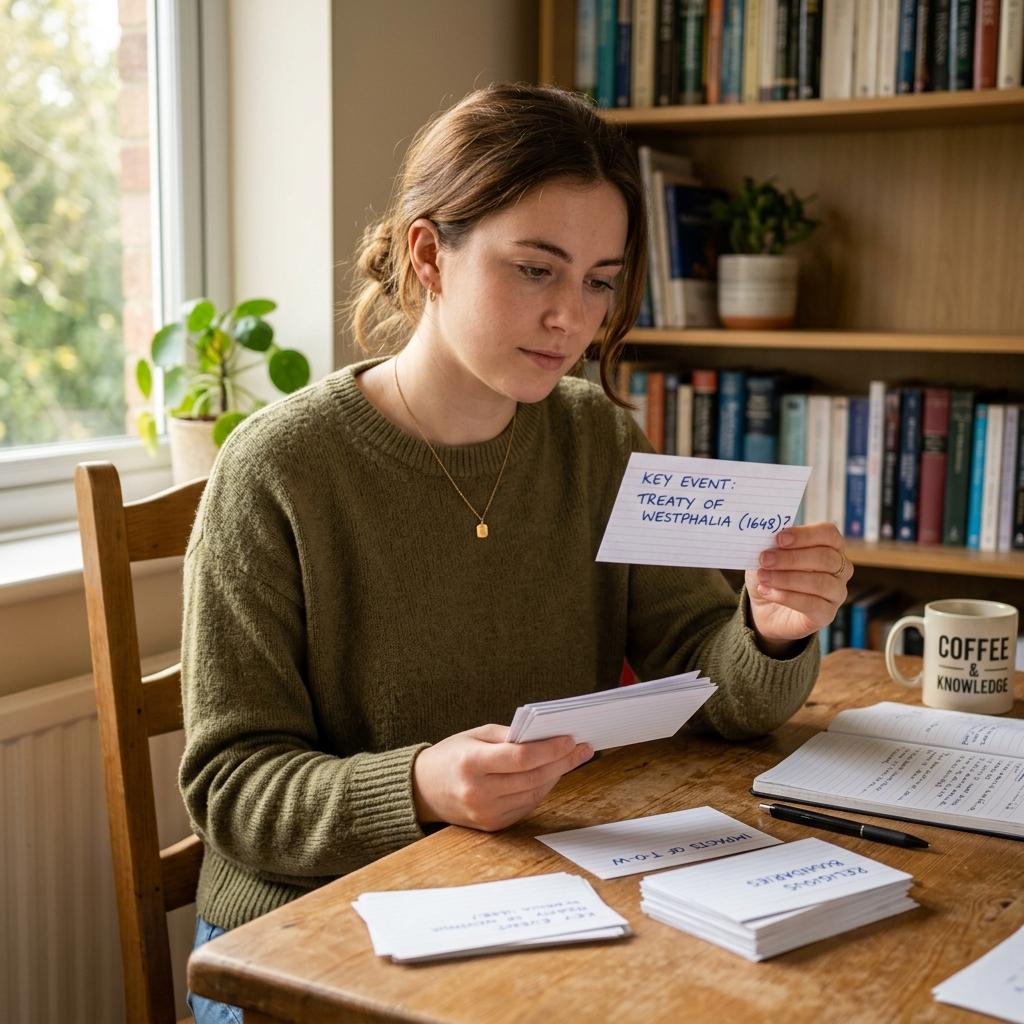
Active recall, also called retrieval practice, is the process of deliberately pulling information out of your brain rather than putting it back in. Instead of re-reading a chapter, you close the book and try to write down everything you remember. Instead of reviewing your flashcards passively, you quiz yourself.
It sounds simple. The results are not.
What the Research Says
In one of the most-cited studies in learning science, Roediger and Karpicke asked students to either re-read a passage or take a recall test after studying it. After one week, the retrieval practice group retained roughly 80% of the material, compared to just 34% for the re-reading group. A single act of retrieval more than doubled long-term retention.
Studies by Karpicke and Roediger (2008) have shown that retrieval practice enhances learning far more than simply re-reading material. Dunlosky et al.'s landmark 2013 review rated practice testing as "high utility", calling it one of the most time-efficient and effective techniques available.
How to Use It
- After reading a section, close your notes and write down everything you remember, then check what you missed.
- Use flashcards with the answer on the back, not just reading front-and-back.
- Try the "blank page" method: write a topic at the top and dump everything you know from memory.
- Practice past exam questions regularly, not just the night before.
If you want to turn active recall into a daily habit without manually creating hundreds of flashcards, Cramd's AI flashcard generator can auto-generate quiz-ready cards from your notes, PDFs, or lectures in seconds. That means less setup time and more actual recall practice.
Technique 2: Spaced Repetition and the 2-3-5-7 Rule
What Is the 2-3-5-7 Study Rule?
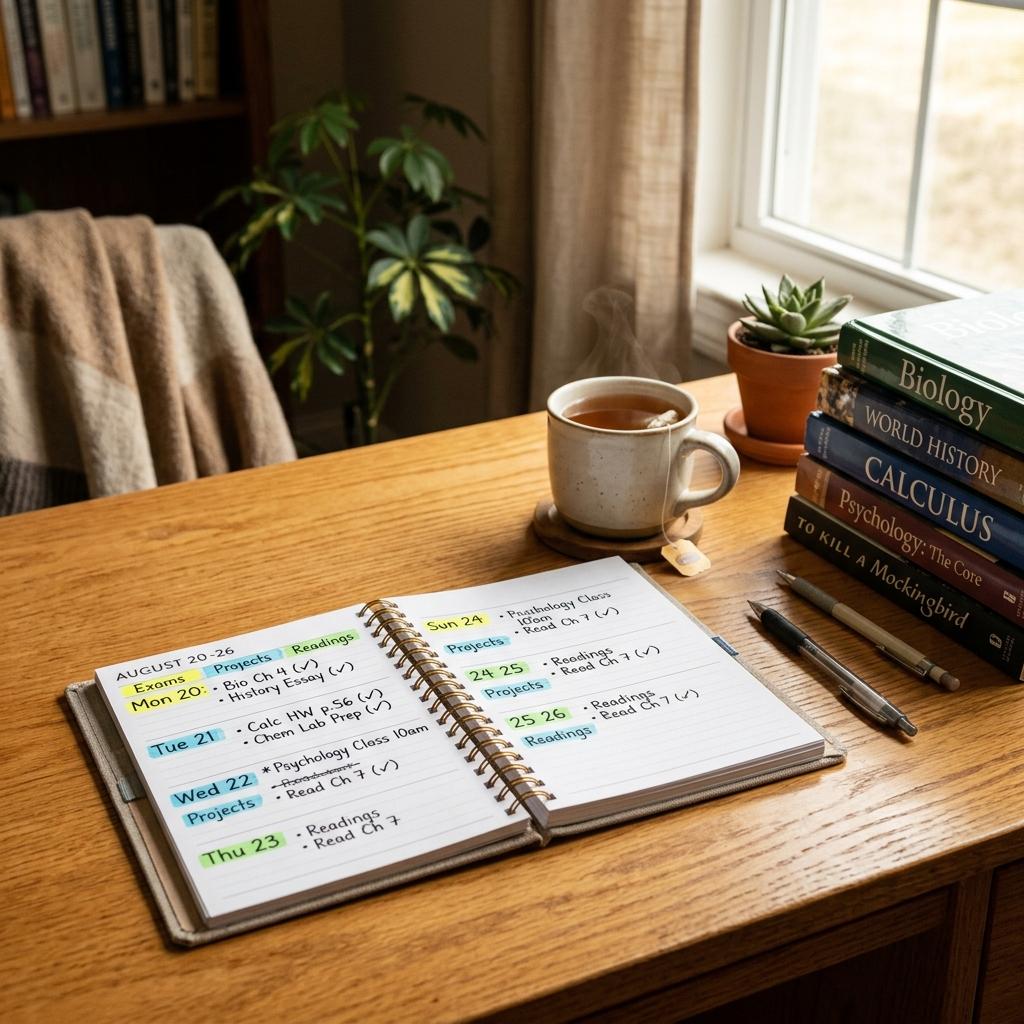
The 2-3-5-7 rule is a practical framework built on the science of spaced repetition. It is a memory-enhancing technique based on the principles of spaced repetition, which means reviewing newly learned material at timed intervals to fight the forgetting curve.
Here is how it works. After learning something new, you review it:
- Day 2 (2 days later)
- Day 5 (3 more days after that)
- Day 10 (5 more days after that)
- Day 17 (7 more days after that)
The Science Behind Spaced Practice
A related framework, the 1/3-5/7 rule, works slightly differently. It suggests spending one-third of your total study time reviewing previous material, while dedicating five-sevenths to new learning and practice. Both versions follow the same core principle: strategic spacing beats cramming every time.
How to Use It
- Map out your review schedule when you learn something new, not the night before the exam.
- Combine the 2-3-5-7 schedule with active recall through flashcards or quizzes at each interval.
- Use Cramd's spaced repetition app to automate the scheduling. It surfaces cards at the right time so you do not have to track intervals manually.
Technique 3: Interleaved Practice
Why Interleaving Works Better Than Studying One Topic at a Time
Most students use blocked practice: study all of Chapter 1, then all of Chapter 2, then all of Chapter 3. Interleaving flips this. You mix topics within a single session, alternating between subjects or problem types rather than hammering one thing to exhaustion.
Research cited in the book Make It Stick indicates that interleaved practice improves retention and application of skills compared to blocked practice. It also naturally incorporates spacing because switching topics creates delays between practice repetitions of each subject.
Why It Feels Wrong, and Why That Matters
Interleaving feels less productive in the moment. Blocked practice gives you the satisfying feeling of mastery because you are drilling one thing repeatedly. But that feeling is misleading. The struggle of interleaving, having to shift gears, retrieve different knowledge, and re-orient your thinking, is exactly what builds durable learning.
How to Use It
- Instead of studying only chemistry for two hours, rotate: 25 minutes chemistry, 25 minutes biology, then 25 minutes chemistry again.
- When doing practice problems, mix problem types rather than completing all "type A" problems first.
- When reviewing flashcards, shuffle across topics rather than completing one deck before the next.

Technique 4: Dual Coding
What Is Dual Coding?
Six cognitive strategies have received robust support from decades of research: spaced practice, interleaving, retrieval practice, elaboration, concrete examples, and dual coding. Dual coding is perhaps the most underutilized of these.
The concept is simple: combine verbal information with visual representations. When you encode something twice, once as words and once as an image or diagram, you create two retrieval routes instead of one.
Dual coding improves learning by creating more neural pathways. When you later try to recall the material, you can access it through either channel.
What Dual Coding Looks Like in Practice
- Draw a diagram of a process you are studying rather than just re-reading a description.
- Create a timeline for historical events instead of a list.
- Sketch a flowchart of a biological system.
- Pair your written notes with simple infographics or concept maps.
You do not need to be artistic. Even rough sketches work. The act of translating text into a visual, deciding what to emphasize and how things connect, is itself a form of active processing.
For any PDF-heavy subject, Cramd's AI PDF summarizer can extract key concepts and turn them into structured flashcards, which you can then pair with your own visual notes for maximum dual-coding effect.
Technique 5: Elaborative Interrogation, Ask Why
How Elaborative Interrogation Helps You Understand, Not Just Memorize
The "7-3-2-1 method" is a scheduling framework for review sessions, where you review material 7, 3, 2, and 1 days before an exam. Elaborative interrogation is different. It is a strategy for what to do during those sessions.
Elaborative interrogation involves asking "how" and "why" questions about the topics you are studying, and then finding those answers in your course materials. Questions like: Why does osmosis work that way? How does supply and demand determine price? What are the similarities and differences between these two historical events?
This matters because it moves you from surface recognition to genuine understanding, the kind that transfers to unfamiliar exam questions and real-world problems.
How to Use It
- After reading a section, generate 3 to 5 "why" or "how" questions.
- Answer them from memory first, then verify with your notes.
- Use elaborative interrogation alongside retrieval practice. The combination is particularly potent.
- Teach someone else. The Feynman Technique is elaborative interrogation in disguise because you quickly discover which "why" questions you cannot actually answer.
Technique 6: Concrete Examples
When you are learning an abstract concept, your brain struggles to hook it onto anything stable. Concrete examples give it an anchor.
Concrete examples are specific instances used to understand abstract ideas. Finding these examples in your class materials while studying helps create durable understanding. They can also be both verbal and visual, making them a natural complement to dual coding.
The key difference from just re-reading: when you generate your own concrete example rather than just using the one in the textbook, you are doing active processing. You are testing whether you truly understand the concept well enough to apply it.
Try this: after learning a concept, close your notes and write your own example of it. If you cannot, that is the gap you need to go back and fill.

Technique 7: The Pomodoro Technique, Used Right
What Is the 20/20/20 Rule for Memorizing?
You may have heard of the 20-20-20 rule in the context of eye strain: look at something 20 feet away for 20 seconds every 20 minutes. When it comes to studying, the spirit is similar. The brain benefits from structured breaks.
The Pomodoro Technique applies this with 25-minute work blocks followed by 5-minute breaks. The research on Pomodoro specifically is still emerging, but evidence supports that structured work-and-break cycles positively influence mental stamina and task perseverance.
What does have strong research behind it: passive rest during breaks encourages memory consolidation, as the brain replays recent experiences. That means your break should actually be a break, not scrolling social media.
The 7 Keys of Effective Learning
Building on all 7 techniques above, the 7 keys of effective learning come down to:
- Test yourself, do not re-read.
- Space out your review sessions.
- Mix up your subjects and problem types.
- Encode visually and verbally.
- Ask why and how, not just what.
- Use concrete examples you generate yourself.
- Rest intentionally because sleep and breaks are part of studying.
Which Study Type Are You?
Most students fall into one of four common study patterns. This is not a formal scientific taxonomy, but it can help you spot which techniques you already use and which ones you are avoiding.
The Crammer: waits until the last 48 hours and goes nuclear. This can work for short-term recall, but it is rough for finals, long-term retention, or any cumulative subject.
The Re-Reader: feels safe re-reading familiar content. This builds false confidence because recognition is not recall. This student is probably also a heavy highlighter.
The Organized Avoider: makes beautiful notes, color-coded schedules, and elaborate study plans. The planning feels like studying, but the actual retrieval practice never quite happens.
The Active Learner: uses a combination of spaced repetition, active recall, and interleaving. This student often studies less total time but retains dramatically more.
If you recognize yourself in the first three, that is fine. The techniques in this post are the bridge to becoming the fourth type.
Conclusion
The gap between students who struggle and students who consistently perform well usually is not talent or time. It is method. Re-reading and highlighting feel like studying. Spaced retrieval, active recall, and interleaving are studying.
The research is clear: active recall and spaced repetition are the two most effective learning techniques identified by cognitive science. Add interleaving, dual coding, and elaborative interrogation, and you have a complete, evidence-based system.
The hardest part is starting. So pick one technique. Active recall is the easiest entry point. Add it to your very next study session.
If you want to put spaced retrieval and active recall on autopilot, Cramd's AI flashcard generator turns your notes, PDFs, and lecture slides into smart, quiz-ready cards in under 30 seconds. You do the studying. Cramd handles the system.
Related Reading on Cramd
- The Power of Active Recall in Learning
- Mastering Spaced Repetition: The Key to Long-Term Memory
- The 2,3,5,7 Revision Method: How Our Community Transformed Their Learning
- How to Study Effectively in College (What Actually Works)
- Building Effective Study Habits with Digital Tools