TL;DR
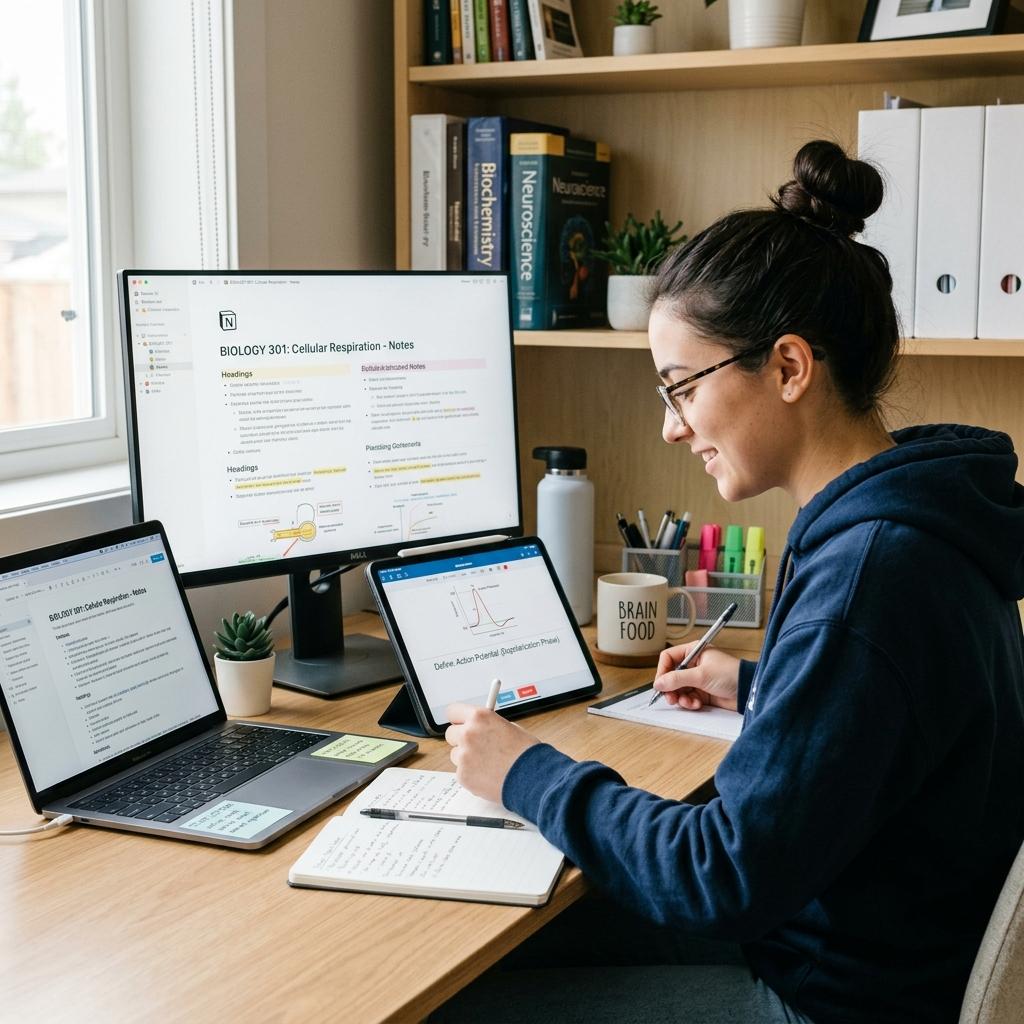
- Top 1% students don't study more. They study smarter using active recall and spaced repetition instead of passive re-reading.
- A growth mindset (believing your ability can grow) is directly linked to academic resilience and better grades over time.
- The habits of top students are boring but powerful: clear goals, retrieval practice, mistake reviews, consistent sleep, and focused study blocks.
- Sleep consistency, not just sleep quantity, is one of the strongest predictors of academic performance. MIT research found it accounts for ~25% of a student's grade.
- Strategic time blocking beats marathon sessions: 90-minute deep work blocks with scheduled breaks outperform 8 distracted hours.
- AI study tools like flashcard generators and PDF summarizers can dramatically compress the gap between studying and actually retaining material.
Introduction
Most students hit a ceiling and assume it's talent. It's not.
The difference between a B-average student and a top 1% student almost never comes down to raw intelligence. It comes down to systems. The way you study, when you sleep, how you process information: these are all decisions, not fixed traits.
Here's the thing: becoming a top 1% student isn't about grinding 12-hour study sessions or sacrificing your social life. According to recent research published in 2025, students who engage in at least five retrieval-based techniques and dedicate over 60% of their study sessions to active recall demonstrate significantly higher exam scores, and quality of engagement is a far better predictor of success than total hours spent.
This guide is your blueprint. Whether you're trying to figure out how to get A+ grades, how to become an A student, how to be the best student in class, or how to finally break the cycle of cramming-and-forgetting, you're in the right place. We'll break down the exact mindset shifts, study methods, daily habits, and AI tools that separate elite students from everyone else.
What Do Top Students Do Differently?
Before you can become one, you need to know what you're aiming for, and it's probably not what you think. What top students do differently is less glamorous than most people imagine: they make learning measurable, repeatable, and hard to fake.
It's Not About Being the Smartest Person in the Room
Top students aren't born with a superpower. They've built a system. According to studyingmachine.com, becoming a top-tier student requires three things working together: effective study habits, strategic time management, and a growth mindset. Intelligence is table stakes. Execution is what separates the pack.
They Treat Learning Like an Athlete Treats Training
Elite athletes don't just "practice more." They practice with intention. Top students do the same. They're consistent, they track their progress, and they use evidence-based techniques rather than whatever feels comfortable in the moment. These are the study habits of successful students: deliberate practice, honest feedback, and small improvements repeated daily.
They Know the Difference Between Busy and Productive
One of the biggest traps students fall into is mistaking motion for progress. Re-reading notes for three hours feels like studying. But it's largely a waste. Top students know that passive review creates a false sense of familiarity, not actual retention. They've built their entire approach around the opposite.
How to Be a Top 1% Student: The Mindset Foundation
Adopt a Growth Mindset (For Real This Time)
You've probably heard of growth mindset, psychologist Carol Dweck's research showing that students who believe their abilities can grow tend to outperform those who see intelligence as fixed. Global data from Dweck's research links this belief system to higher test scores and better overall well-being.
But here's the part most people skip: a growth mindset isn't just a feeling. It's a behavior pattern. Students with a growth mindset are more persistent on difficult problems and more likely to choose challenging tasks. In practice, that means:
- Treating a bad grade as data, not a verdict
- Leaning into hard subjects instead of avoiding them
- Asking "what can I fix?" after every exam, not "was I just not smart enough?"
The students who consistently land at the top aren't necessarily starting from a higher place. They're just more willing to sit in discomfort and iterate.
Set Goals That Scare You a Little
Research consistently shows that students who begin each study session with a specific, measurable goal outperform those who study without direction. Vague intentions like "I'll study bio tonight" produce vague results. Specific goals like "I'll complete practice questions on chapters 4–6 and hit 85%+ accuracy" actually move the needle.
Use the week ahead, not just the day ahead, as your planning unit. Map out when each subject gets attention, which topics need the most work, and what "done" looks like for each session.
How to Become an A Student: Study Methods That Actually Work
This is the core of it. You can have the perfect mindset, a gorgeous study space, and a color-coded planner, but if your actual study technique is broken, none of that matters.
If you're wondering how to improve grades fast, this is where the biggest jump usually happens. You do not need a brand-new personality. You need to stop spending most of your time on low-yield review and start using methods that prove what you actually know.
Active Recall: The Most Powerful Study Method Alive
Active recall means testing yourself instead of reviewing material passively. Instead of reading your notes again, you close them and try to reconstruct what you learned from scratch.
Why does it work? Because retrieval strengthens neural pathways in a way that recognition doesn't. A landmark study by Roediger and Karpicke found that students who used retrieval practice retained roughly 80% of material after one week, compared to just 34% for those who only re-read. That's more than double the retention from a single change in approach.
Practical ways to build active recall into your routine:
- Flashcards (especially AI-generated ones that adapt to your weak spots)
- The Feynman Technique: explain the concept as if you're teaching it to a 10-year-old
- Practice tests from past exams or question banks
- Blank-page recall: after reading a section, write down everything you remember without looking
Cramd's AI flashcard generator was built specifically for this. You upload your notes or PDF, and it creates smart, testable flashcards in seconds, so you can spend your study time actually retrieving information, not formatting cards.
Spaced Repetition: How to Never Forget What You Learn
Active recall tells you how to study. Spaced repetition tells you when.
The concept: you review material at increasing intervals, shortly after learning it, then a few days later, then a week, then a month. Each time you successfully retrieve it, the gap before the next review grows. Material gets reviewed exactly when your brain is about to forget it, which is where the memory-strengthening happens.
A large-scale study by Cepeda and colleagues found that spacing reviews over increasing intervals significantly improved long-term retention compared to cramming. The research on this is decades old and consistently replicated. This isn't a trend. It's one of the most robustly supported findings in cognitive psychology.
The easiest way to implement it? Use a spaced repetition app that schedules your reviews automatically so you don't have to think about timing.
Dump the Highlighter. Use the Feynman Technique Instead.
Highlighting and re-reading are the comfort foods of studying: familiar, satisfying, and basically useless for retention. Passive review creates a false sense of familiarity rather than true understanding, which is why students who "reviewed everything" still blank on exams.
The Feynman Technique is the antidote:
- Pick a concept
- Explain it simply, as if to someone who knows nothing about it
- When you get stuck, go back to the source material
- Simplify again until there are zero gaps
This process reveals exactly where your understanding breaks down, which is exactly what you need before an exam.
For dense reading material, Cramd's PDF summarizer can compress a 40-page chapter into key concepts in under 30 seconds, giving you a strong starting point before you go deep on the hard parts.
Study Habits of Successful Students: Time Management and Deep Work
The 90-Minute Deep Work Block
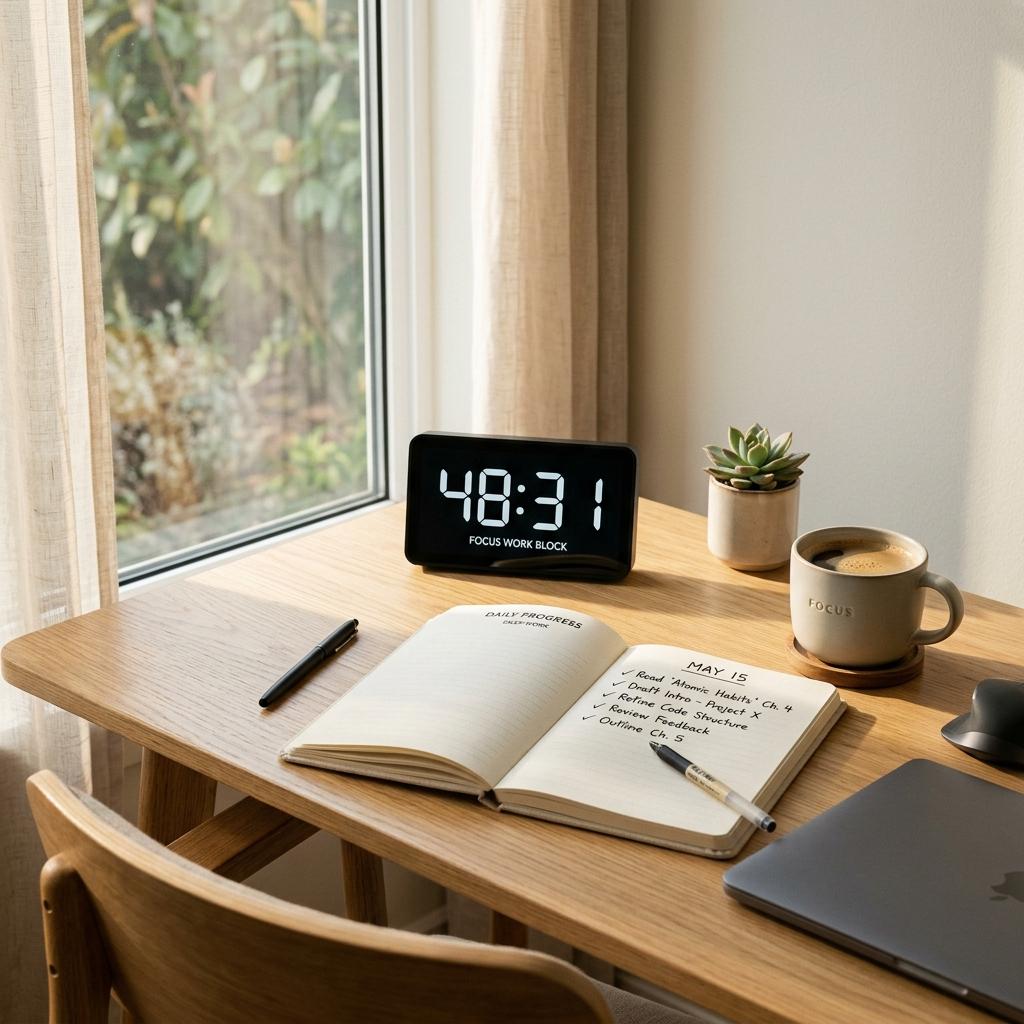
Science-backed research recommends 90-minute focused study blocks as the sweet spot for meaningful cognitive work, aligned with the brain's natural ultradian rhythm. After 90 minutes, performance starts to drop regardless of how motivated you feel.
The practical setup:
- Phone in another room (not face-down on your desk, in another room)
- One task per block
- Full commitment for 90 minutes, then a real break
Students overestimate how much they're actually studying by 30–50%. Tracking actual focused time, even with a basic timer, usually comes as a shock.
Eliminate the 35% Drain
Research from Miller and Thompson (2025) found that students are distracted about 35% of their study time on average, and that distraction directly predicted lower exam performance. That's over a third of your study time evaporating into notifications, background noise, and mental tab-switching.
Fix the environment before you fix the effort:
- Close every browser tab unrelated to the task
- Use a site blocker during study blocks
- Tell the people around you what you're doing and for how long
A distraction-free session of two hours beats an "all-day study session" of eight scattered hours every time.
Stack Habits, Don't Chase Motivation
Motivation is unreliable. Systems aren't. As James Clear outlines in Atomic Habits, small daily improvements compound dramatically over time, and habit formation research suggests it takes around 66 days to make a new behavior automatic. That means building consistency now pays off in a way that sporadic intensity never will.
Pair your study habit to an existing anchor: after dinner, after a specific class, immediately after waking up. The cue triggers the routine, the routine produces results, and the results reinforce the habit. Stack enough of these and the gap between you and the top of your class closes faster than you'd expect.
If your goal is to be the best student in class, make the routine specific enough that you can repeat it under stress: review yesterday's weak cards, do one timed practice set, correct every mistake, then preview tomorrow's lecture. That simple loop creates a faster feedback cycle than waiting for the next exam to tell you what you missed.
Check out Cramd's guide on 5 game-changing study habits for more on building a system that sticks.
The Physical Side of Academic Performance
Sleep Is a Study Tool
This one gets overlooked constantly, and it shouldn't. MIT research found that sleep habits accounted for approximately 25% of a student's course grade, an extraordinary finding that most students never act on. And it's not just about quantity. Consistency matters. Going to bed after 2 a.m. was associated with lower scores even when students got the same total hours of sleep as those who turned in earlier.
Sleep is when your brain consolidates everything you studied. Skip it and you're essentially studying on hard mode, acquiring information your brain won't fully encode. Prioritizing sleep isn't a sacrifice. It's part of the strategy.

Move Your Body to Move the Needle
Regular physical activity is associated with reduced academic stress, better mood regulation, and improved focus. Research from BMC Psychology found that physical exercise shows a significant positive correlation with student well-being, which in turn supports sustained academic performance. You don't need a gym. A 20-minute walk between study blocks keeps your brain functioning at a higher level than sitting stationary for four hours straight.
Use AI Study Tools to Outpace the Competition
The top 1% of students in 2026 aren't doing it alone. They're using the right tools to amplify their effort.
Turn Any Material into Flashcards Instantly
The most time-consuming part of the active recall method is creating the questions. AI study tools eliminate that bottleneck entirely. Cramd's AI flashcard generator turns lecture notes, textbook PDFs, or pasted text into smart flashcards in seconds, already formatted for spaced repetition.
If you're pulling from videos or podcasts, Cramd's video summarizer and text summarizer can pull out the key concepts before you turn them into testable material.
Study Smarter Across Every Format
One of the biggest bottlenecks for top students is converting passive content (lectures, PDFs, slides) into active study material (flashcards, quizzes, summaries). With the right AI study tools, this conversion takes minutes instead of hours.
Explore what's possible with Cramd's full suite of study tools, from PDF summarization to active recall flashcard practice.
Conclusion
Becoming a top 1% student isn't a mystery. It's a system built on the right study methods, consistent habits, strategic recovery, and tools that multiply your effort.
Here's the short version: swap passive re-reading for active recall, use spaced repetition so you actually remember what you learn, protect your sleep like it's a performance variable (because it is), and build study habits that don't rely on motivation to show up.
The students consistently at the top aren't burning themselves out. They're just more intentional about how they use their time.
If you want to put these strategies on autopilot, Cramd's AI flashcard generator, PDF summarizer, and spaced repetition system do the heavy lifting so you can focus on what actually matters: retrieval, understanding, and retention. Try Cramd free →