TL;DR
- Handwritten notes can become flashcards without typing every line again.
- Start with clear photos of the pages that actually cover your exam topics, not every page in your notebook.
- Turn definitions, processes, diagrams, comparisons, and examples into small testable cards.
- Treat AI-generated cards as a draft: check names, numbers, formulas, and missing context before studying.
- Use active recall and spaced review so your scanned notes become something you can remember, not just a cleaner image gallery.
Introduction
You have handwritten class notes, whiteboard photos, and diagrams that only made sense while the teacher explained them. The notes are useful, but turning them into flashcards can feel like a second assignment.
Learning how to turn handwritten notes into flashcards lets you keep the thinking you already did in class without retyping every sentence. Take a clear photo, pull out the ideas worth testing, check the draft, and turn it into a deck you can actually use.
This guide works for notebook pages, tablet handwriting, whiteboards, lab notes, and textbook annotations.
Why Handwritten Notes Are Worth Keeping
Handwriting is already part of the learning process
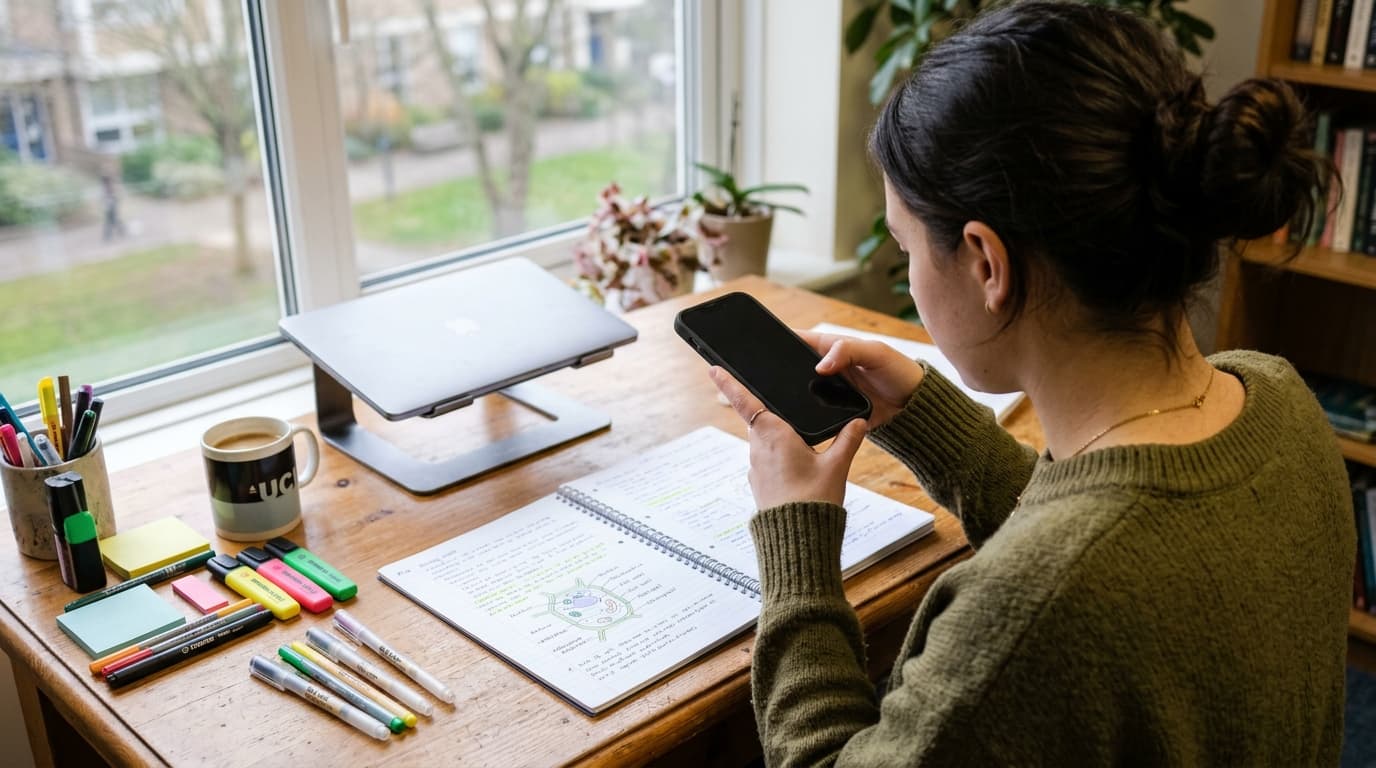
Handwritten notes capture arrows, diagrams, emphasis marks, worked steps, and examples added in the moment. The University of New Brunswick's note-taking guidance explains that handwriting can push students to capture keywords and relationships instead of every word.
Research on handwritten versus typed notes is nuanced. A study of medical students found no significant recall difference by note-taking mode, reinforcing that how you process and review notes matters more than the tool alone.
Your paper notes are not a problem to replace. They are raw study material that needs a better review system.
The problem is the transcription tax
If every page has to be copied into a flashcard app, formatting can take more time than studying. Photo analysis removes that first layer of busywork, not your judgment about what matters.
A photo is not a flashcard yet
Taking a photo makes notes portable. It does not turn them into active recall.
For that, you need questions that make you retrieve an answer from memory. A systematic review of active-recall strategies includes flashcards and practice testing among the approaches associated with stronger academic outcomes.
How to Turn Handwritten Notes Into Flashcards
Step 1: Choose pages with real study value
Start with pages tied to your next quiz, exam objectives, homework mistakes, or repeated topics. Definitions, processes, formulas, diagrams, comparisons, and worked examples are usually stronger card material than general commentary.
Step 2: Photograph or scan your notes clearly
Put the page flat in bright, even light and keep headings, margins, arrows, labels, and circled details in frame. Avoid glare and shadows; use separate images for dense notes, diagrams, or a large whiteboard.
Step 3: Review the generated summary and flashcards
Handwriting is personal. A tool may misread cursive, subscripts, chemical symbols, equations, or a rushed abbreviation.
In Cramd, an uploaded image is analyzed for key points and can produce a summary, flashcards, and practice questions. Review those study materials against the original page before you study them. This matters most for names, dates, numbers, formulas, and labels that can change the answer completely.
Step 4: Turn the right ideas into small prompts
Make one card for one thing you need to retrieve. Use separate cards for process steps, diagram labels, relationships, and what changes when one part changes.
Step 5: Edit weak or vague flashcards
Delete cards that only ask, "What is this?" when your exam will ask why, how, or what happens next. Add context to cards with similar terms, and split any answer that takes a paragraph to check.
Cramd's guide on how to create flashcards can help you make each prompt specific enough to reveal what you actually know.
Step 6: Review the deck with active recall
Look at the front, answer before flipping, then mark what you could not explain.
Use active recall studying and revisit missed cards over several days. A deck is only useful when it becomes a repeated retrieval habit.
What Makes a Good Photo of Handwritten Notes?
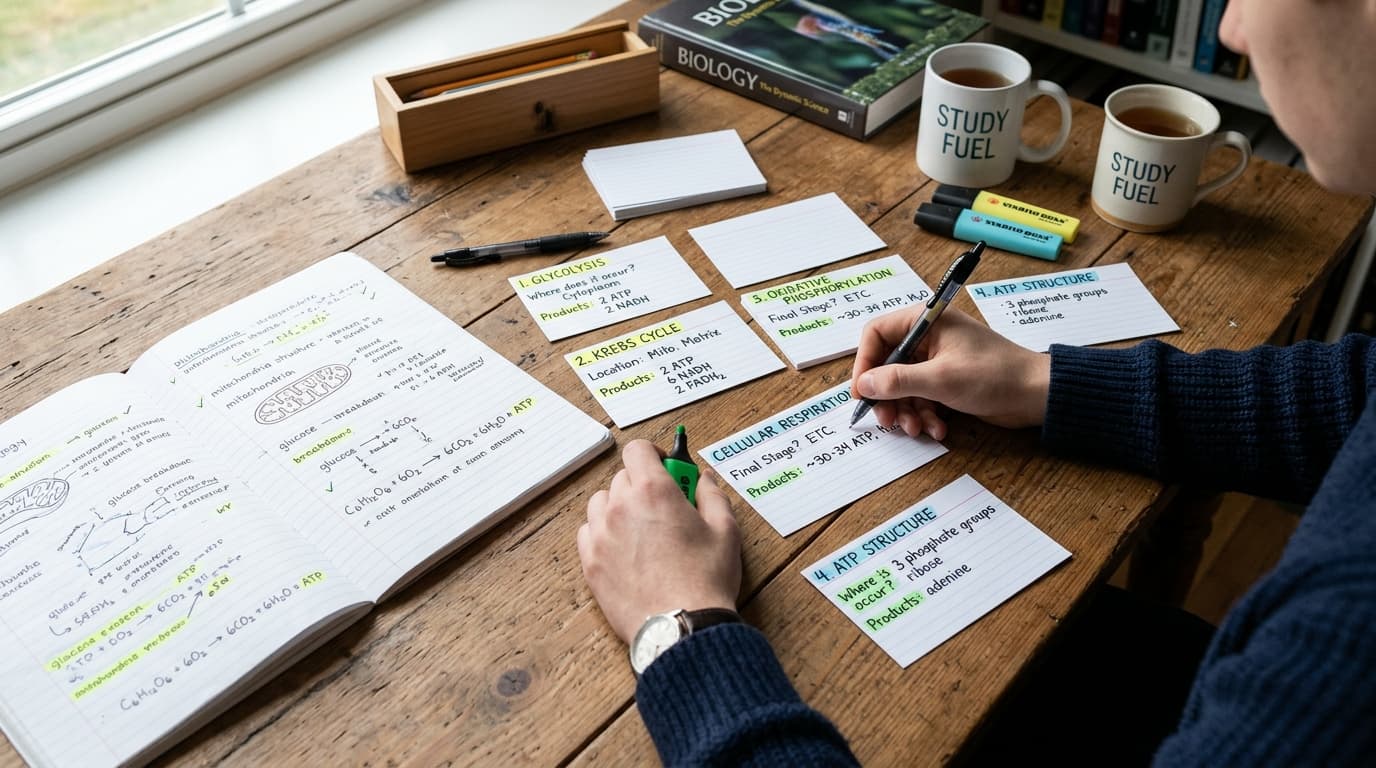
Small capture choices make a big difference when you turn notebook notes into flashcards.
| Note type | What to capture | Best flashcard output |
|---|---|---|
| Notebook page | Heading, key terms, examples, and margins | Definition and explanation cards |
| Science diagram | Labels, arrows, and relationships | Label and explain-the-process cards |
| Math worked example | Each step and the reason for it | Next-step and error-check prompts |
| Whiteboard photo | All columns, symbols, and context from slides | Comparison and application cards |
Keep the camera parallel to the page. Practical OCR workflow guidance likewise recommends clear, evenly lit images. If you cannot read a word, rewrite it, take a closer image, or check your slides.
Handwritten Notes to Flashcards: Examples
Complete before-and-after example
Here is what the transformation should look like from start to finish. The goal is not to convert every word. It is to turn the parts you need to recall into clear prompts.
| Handwritten note | Checked study points | Resulting flashcards |
|---|---|---|
| "Osmosis: water moves across selectively permeable membrane. High solute to low solute? Cell swells in hypotonic solution." | Water moves; the membrane is selective; solution concentration affects the cell. | What moves during osmosis? What type of membrane is involved? What happens to an animal cell in a hypotonic solution? |
After uploading a clear image, compare Cramd's generated summary and cards with the original note. Correct the ambiguous "high solute to low solute?" line before studying, then keep only the prompts that match what your class expects you to know.
Turn a diagram into relationship cards
For a heart diagram, make separate cards for each chamber, where blood travels next, and why that direction matters instead of one giant labeling card.
Turn a worked problem into decision prompts
For a worked problem, ask what tells you which formula to use or what should happen before substitution. Practice the decisions, not just the final answer.
Can AI Make Flashcards From Handwritten Notes?
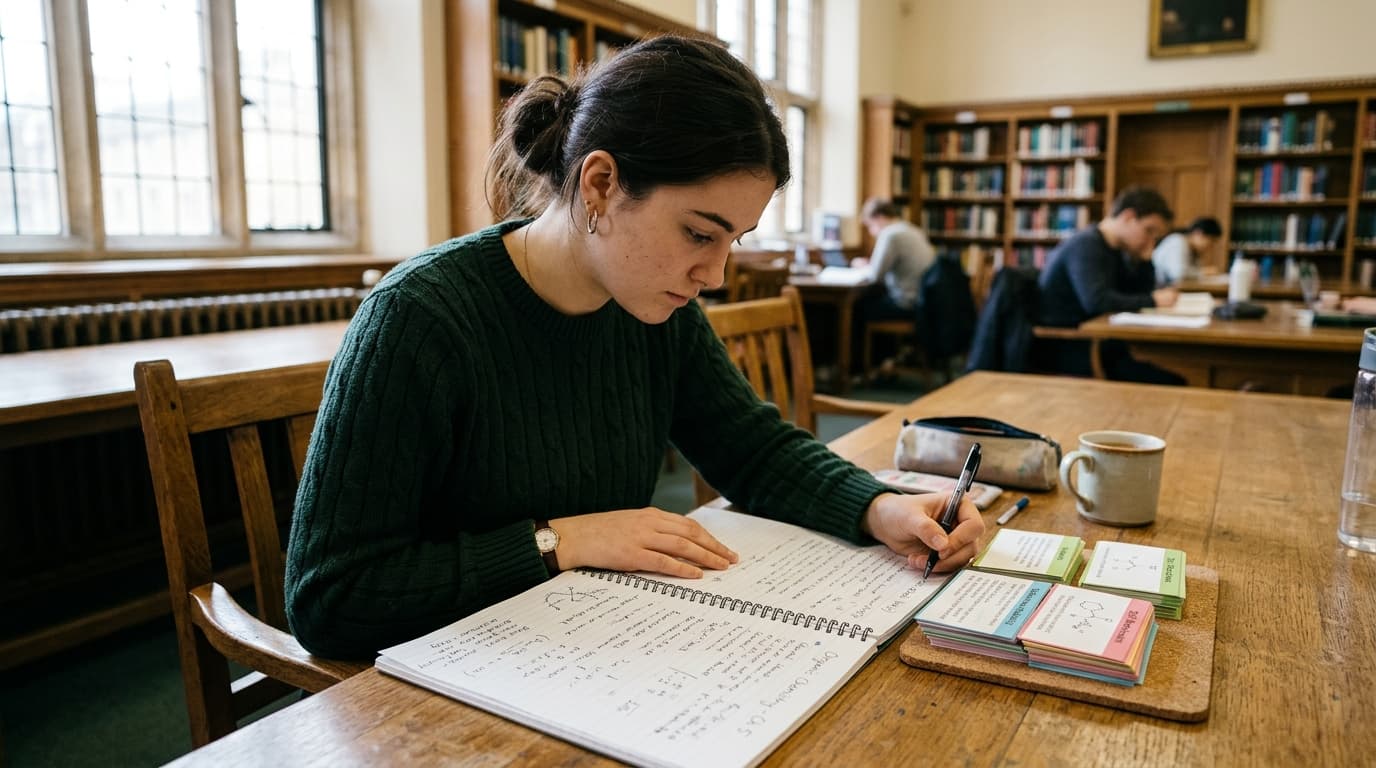
Yes, but think of AI as a fast first-draft partner. It can scan a clear photo, identify key concepts, and give you a deck to review. You still need to decide whether the cards match your course and whether the wording tests the right thing.
Use Cramd's photo analyzer to upload an image of your handwritten note, whiteboard, or annotated page. Cramd analyzes the image, creates key points and flashcards, and gives you practice questions. Then check the summary and cards, remove low-value prompts, and sharpen vague ones before you study.
This keeps the useful part of handwritten note-taking while removing the transcription tax. It is a convenience workflow, not evidence that AI-generated cards work better than cards you make yourself. The learning benefit still comes from checking accuracy and retrieving the answer repeatedly.
Troubleshooting Handwritten Notes to Flashcards
Your handwriting is too hard to read
Retake blurry, tightly written pages in brighter light, flatten the page, and capture dense sections separately. If one word is unclear, rewrite it or check your slides before creating a card.
Mathematical notation or symbols are misread
Equations, subscripts, superscripts, units, and chemical notation need a manual check. Compare every generated formula card with the original note, then make cards about when to use the formula or what each variable means, not only the final equation.
A diagram loses its context
Photograph the diagram with its title, labels, arrows, and nearby explanation. If the page has the diagram on one side and the explanation on another, upload both images and make relationship prompts such as "What does this arrow show?"
The generated cards are inaccurate or vague
Delete cards that do not match your course wording. Rewrite vague prompts, split overloaded answers, and check facts against the note, textbook, or class slides. The tool should save setup time; you remain the editor of what you study.
Common Handwritten Flashcard Mistakes
Making a card from every line
Your notebook is a record of class. Your deck should be a study tool. Build cards from the ideas you need to recall, explain, compare, or apply.
Trusting every extracted word
Always check technical terms, symbols, equations, names, and dates. An almost-right card can teach you the wrong answer with a surprising amount of confidence.
Using one overloaded card per page
If the answer needs a mini-essay, split it. Smaller cards make weak spots easier to spot and faster to review.
Generating cards without reviewing them
The tool can speed up setup, but it cannot do your retrieval practice for you. Use the deck to quiz yourself, then return to the original notes only when a missed card reveals a real gap.
For more help with that review rhythm, Cramd's guide to making effective flashcards shows how to build cards that are clear, focused, and easier to remember.

Conclusion
Your handwritten notes already contain the hard part: your first pass at deciding what mattered in class. You do not need to type every page again to make them useful.
Choose high-value pages, take clear photos, turn the important ideas into small questions, and check the draft before studying. Then use the deck for active recall instead of treating it as another set of notes to read.
Upload your next notebook page to Cramd's photo analyzer, turn it into flashcards, and spend your study time practicing what you need to remember.