
You've moved in, met your roommate, and found the dining hall. Now what?
If you're a first-generation college student, the first week of college can feel like everyone else got a manual you never received. Nobody in your family can tell you what "syllabus week" means, why office hours matter, or why professors keep mentioning something called an "add/drop deadline." That's not a knock on you - it's just a gap nobody warned you about.
Here's the part that actually matters: research on freshman retention suggests a huge share of students who eventually leave college do so within the first six weeks, and the transition period hits hardest in the first two to six weeks on campus. That window is short, but it's also completely winnable. This guide - with advice echoed by teachers and academic advisors - walks you through the exact things to do the first week of college so you start strong instead of playing catch-up in October.
Why Your First Week of College Matters More Than You Think
The first week feels low-stakes. Classes are short, nothing's graded yet, and it's tempting to coast. Don't.
Habits form fast. The calendar system you build (or don't build) in week one is the same one you'll rely on during finals. The relationships you start with professors and advisors now are the ones you'll lean on when things get hard later.
Treat this week like the foundation of your semester, not a warm-up lap.
1. Decode Every Syllabus Before Day Three
Syllabus week has a nickname for a reason - "sylli-week" makes it sound like nothing happens. Something does happen: your professor hands you a contract, and most students never actually read it.
Your syllabus tells you exactly how your grade is calculated, which sections carry the most weight, and what happens if you're late or absent. Skim it once for vibes and you'll miss the details that save your grade in November.
For each class, pull out:
- The grading breakdown, so you know where to spend your energy
- Attendance and late-work policies, because they vary wildly by professor
- Required materials, but don't buy anything until day one confirms it's actually needed
Turn Your Syllabi Into a Study System
Once you've read them, don't let five syllabi sit in five different tabs. This is exactly where a tool like Cramd's AI PDF summarizer is useful - upload each syllabus and get the key dates and policies pulled out in seconds, instead of re-reading a 12-page document every time you have a question.
2. Build a Master Calendar of Every Deadline
Every syllabus has a week-by-week schedule buried in it. Your job during week one is to pull every exam, paper, and quiz date into one place - a physical planner, Google Calendar, whatever you'll actually check.
This single habit is one of the most repeated pieces of advice from academic advisors, and for good reason: nothing wrecks a semester faster than missing a deadline you technically knew about but never wrote down.
Do this once, during the calm week, so you're not reconstructing it during a crisis in October.

3. Find and Actually Use Office Hours
Office hours are, hands down, one of the most underused resources in college. Professors set this time aside specifically so students can ask questions without the pressure of a full classroom - and most students never show up.
Introducing yourself during week one, even with no real question, does two things. It puts a face to your name before you need anything, and it makes it far less intimidating to walk in later when you actually do need help.
If you're a first-gen student, this is worth pushing through the discomfort for. It's a habit that pays off every semester after this one.
4. Meet Your Academic Advisor
In high school, counselors track you down. In college, nobody's chasing you - you have to go find your own support.
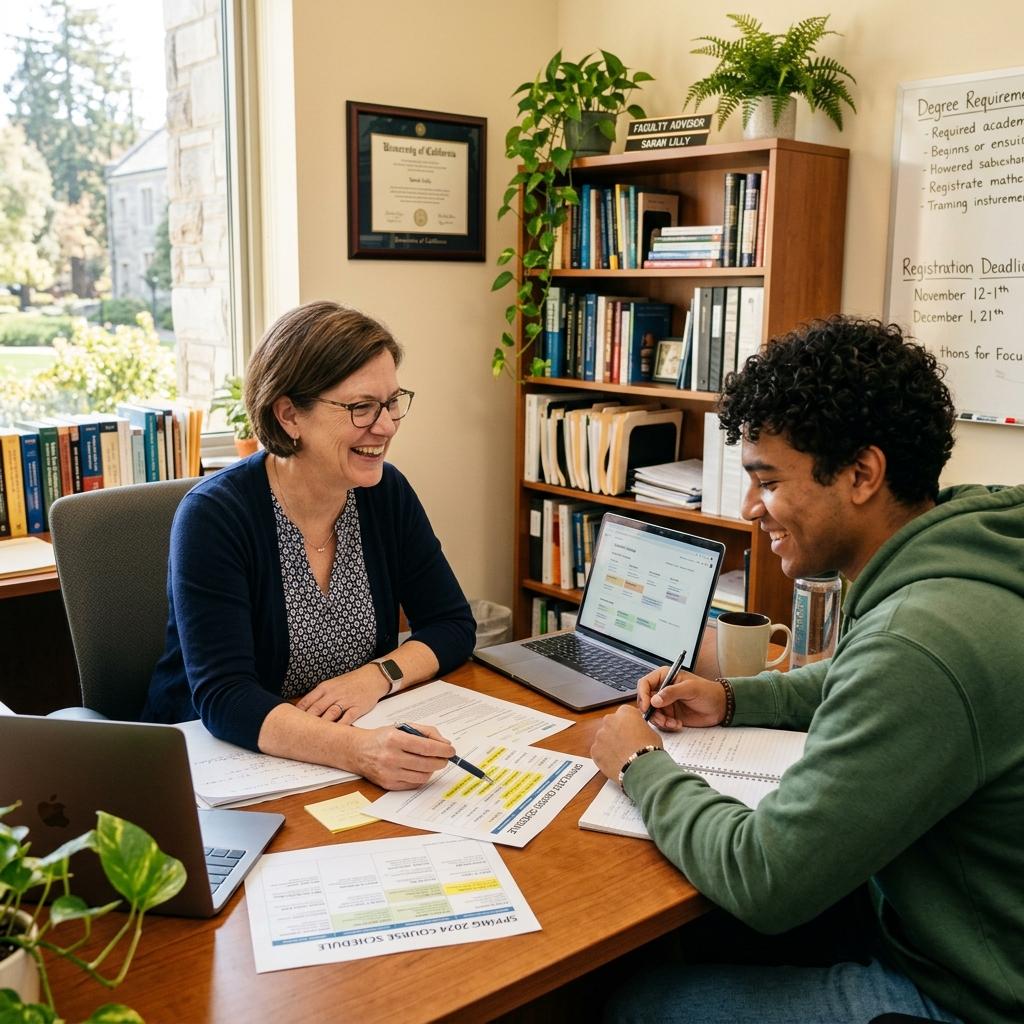
Schedule a meeting with your academic advisor during week one, even if everything feels fine. Ask about your major requirements, any first-gen support programs your school offers, and what resources exist for tutoring, writing help, or mental health support. Advisors are also a great source of information about scholarships and opportunities that never get announced in class.
5. Locate First-Gen and Student Support Resources
Most colleges have offices built specifically to support first-generation students - TRIO programs, first-gen student centers, mentorship pairings. These offices know exactly which hurdles trip up new students, because they've watched thousands of students go through it before you.
Find these resources during week one, not week twelve when you're already stressed. Knowing where the learning center, tutoring office, and food resources are located means you're not scrambling to find them later.
6. Set Up a Study System From Day One
Don't wait until the first exam to figure out how you study. By then, you've already lost weeks of retention.
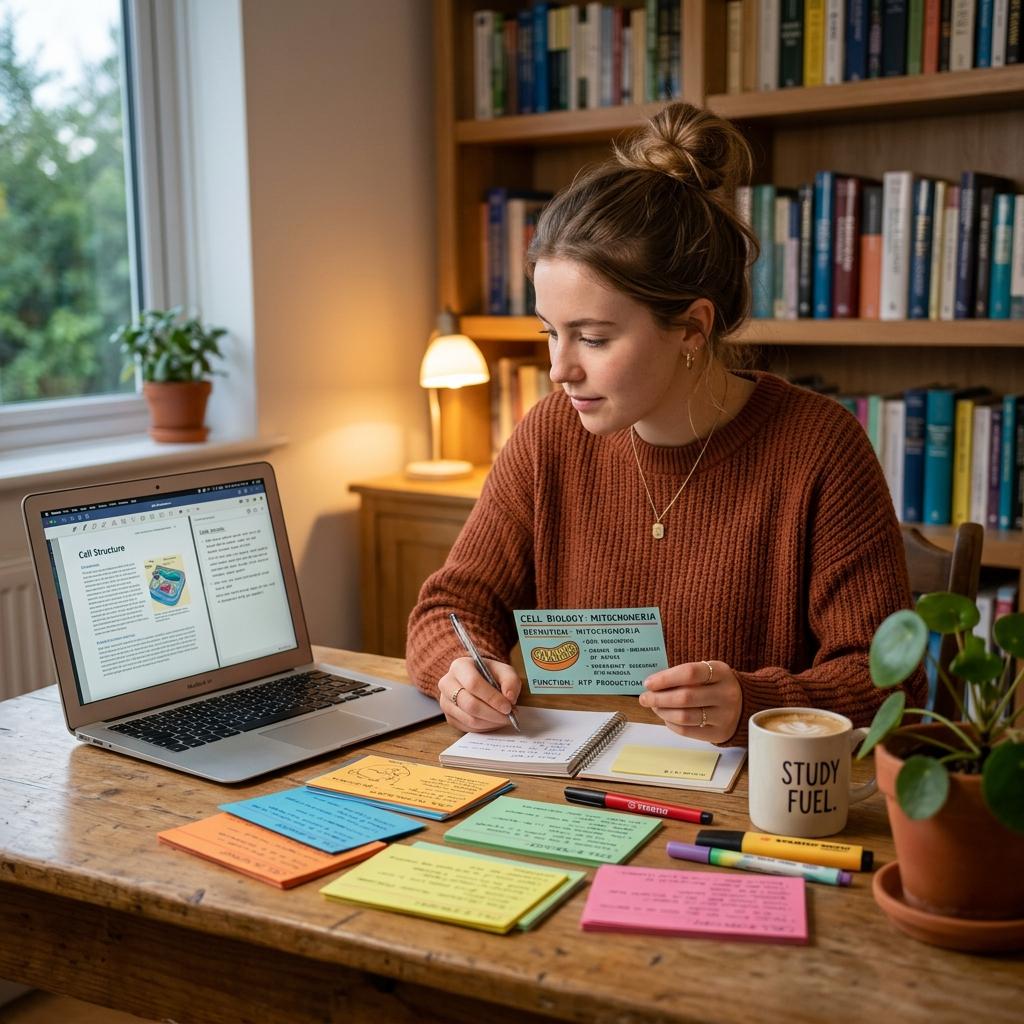
The research here is pretty clear: passively rereading notes creates a false sense of knowing the material. Active recall studying - testing yourself instead of just re-reading - has been shown in cognitive science research to roughly double retention compared to passive review. Spaced repetition, or reviewing material at increasing intervals instead of cramming, compounds that effect even further.
The simplest way to build this habit from week one: as soon as you get lecture slides or a reading, turn the key concepts into flashcards and quiz yourself a few days later, not the night before the exam. Cramd's AI flashcard generator can turn your notes or slides into a testable flashcard deck in seconds, so you're spending your time actually recalling the material instead of manually typing out cards. Our guide on the power of active recall and mastering spaced repetition breaks down exactly how to build this into a weekly routine.
7. Join One Club or Study Group
You don't need to join ten organizations in week one - pick one thing. A study group, a club tied to your major, an intramural team. It gives you a built-in reason to talk to the same people every week, which is how actual friendships form in college.
Study groups specifically double as an academic safety net. If you miss a class or don't understand a concept, you've got people to check in with instead of relying purely on yourself.
8. Handle the Money Stuff Early
Financial aid offices get slammed as the semester goes on. Week one - before the rush - is the best time to confirm your aid package, ask about work-study, and find out if you qualify for scholarships you haven't applied for yet.
It's also common to discover extra costs in that first week: access codes, lab fees, supplies your syllabus didn't mention until day one. Budget for surprises rather than assuming your estimate covers everything.
9. Build a Sleep and Routine Baseline
It's easy to let your sleep schedule fall apart in week one - no 8 a.m. commitments, new friends, no homework pressure yet. Resist it.
Your body and brain need a baseline routine to fall back on once the workload actually starts. Set a rough wake-up time, figure out when you'll eat, and protect at least some consistent sleep hours before the semester gets loud. This is also the week to scope out campus health services and wellness resources, so you know where they are before you need them.
10. Ask for Help Before You Need It
The single biggest difference between students who thrive and students who struggle isn't intelligence - it's whether they ask for help early or wait until they're drowning.
Colleges have tutoring centers, writing centers, mental health counseling, and academic coaching built in. Using them isn't a sign you're behind; it's a sign you're playing the game correctly. Find out what's available during week one, so asking for help later feels normal instead of like a last resort.
Your First Week Sets the Tone - Not the Whole Semester
You don't need to do all ten of these perfectly. But hitting even half of them - reading your syllabi closely, meeting your advisor, and setting up a real study system instead of winging it - puts you ahead of most of your classmates before classes even really start.
If you want your study system running on autopilot from day one, Cramd's AI flashcard generator turns your notes, slides, and PDFs into testable flashcards with built-in spaced repetition - so studying smarter starts this week, not during finals crunch. Try it free ->