
TL;DR
- The science is real. Spaced repetition and active recall are the most effective study methods for long-term retention.
- Anki's friction is the problem. Its outdated UI and complex settings often stop students before they see any results.
- Write better cards. The "one fact per card" rule is the single most important factor for success.
- Modern alternatives exist. Tools like Cramd use the same science but remove the manual setup by using AI to generate cards for you.
If you've tried using Anki and felt completely lost, you're not alone. And if you've ever opened it for the first time and immediately felt like you'd stumbled into the wrong decade, that tracks too. The interface looks like it was designed before smartphones existed, the settings menus go three layers deep, and nobody explains what half the buttons actually do. Most people quit before they ever see why the tool has such a devoted following.
But here's the thing: the frustration isn't because spaced repetition is flawed. It's because Anki, for all its power, doesn't exactly roll out the welcome mat. This post breaks down the science behind why spaced repetition and active recall studying actually work, where Anki falls short as an experience, and what you can do about it, whether you want to push through the learning curve or find a more modern spaced repetition app that gets out of your way.
Why Is Anki So Hard to Use?
Anki feels hard because of its outdated interface, complex settings, and lack of guidance for writing effective flashcards. Most beginners struggle not with spaced repetition itself, but with how Anki presents it.
What Makes a Spaced Repetition App Actually Work?
Before you can judge whether a tool is worth your time, it helps to understand what it's trying to do. Spaced repetition isn't a gimmick. It's one of the most well-supported techniques in memory science.
The Forgetting Curve: Why Your Brain Dumps Info So Fast
In the 1880s, psychologist Hermann Ebbinghaus ran a now-famous series of experiments on himself, memorizing nonsense syllables and tracking how fast he forgot them. What he found became known as the forgetting curve: without any reinforcement, we lose roughly 40% of new information within a few days and close to 90% within a month, according to research published in a 2025 pharmacy education study.
That's not a personal failing. It's just how human memory works. Your brain decides what to keep based on how often you use it, and anything you only saw once in a lecture or textbook is a prime candidate for deletion.
How Spaced Repetition Fights Back
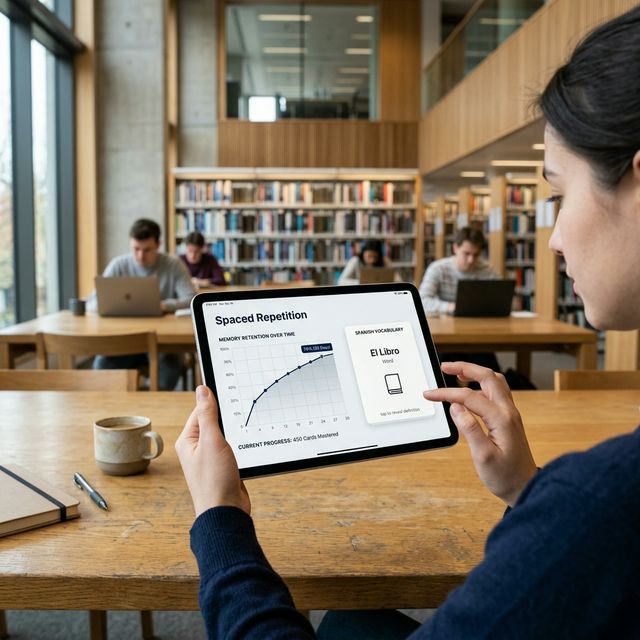
A spaced repetition app like Anki works by scheduling reviews at precisely the moments you're about to forget something. You see a card, rate how easy it was, and the algorithm decides when to show it again: soon if you struggled, much later if it felt easy.
Over a century of research confirms that spaced learning consistently improves long-term memory compared to cramming. A 2025 study from Frontiers in Medicine found that students using digital flashcards with spaced repetition scored significantly higher on post-tests than those who studied the traditional way, with results so strong they carried a p-value of less than 0.0001. A separate 2025 study of medical school entrance exam candidates found that spaced repetition independently predicted exam success even after controlling for lifestyle and other academic factors.
The mechanics are simple. Every time you review a card and successfully recall the answer, the next review gets pushed further into the future. Over weeks and months, the material moves from something you're actively trying to learn into something you just know.

Why Is Active Recall Studying So Uncomfortable?
Spaced repetition handles the when of studying. Active recall handles the how. Together, they're the reason flashcard-based study works so well and also why it feels so hard at first.
The Illusion of Learning (Why Rereading Feels Right But Isn't)
Most students default to rereading their notes because it feels productive. The material starts to look familiar. You nod along. You feel like you're learning. But research by Roediger and Karpicke showed that students who repeatedly reread material retained only 36% of it after one week. Students who practiced active retrieval instead retained 80%, spending the same amount of study time.
That gap is enormous. And according to FlashGenius, students using active recall remember around 57% of material on average, compared to just 29% with passive reading. It's nearly double the retention for the same investment of time.
Why the Struggle Is the Point
Here's the counterintuitive part: the difficulty of active recall is not a design flaw. It's the mechanism. When your brain has to strain to retrieve something, it strengthens the neural pathway to that memory. Recognition and recall are different skills, and exams test recall.
Research compiled by the NSCS links active recall to measurably higher academic performance and greater academic self-efficacy across multiple subject areas. When combined with spaced repetition, retention gains can reach 40 to 60% above either method used alone.
The discomfort you feel when you can't remember a card answer is not failure. It's your brain doing exactly what you need it to do.
Why Is Anki So Hard to Get Into?
Now that you understand what it's trying to do, it's easier to diagnose why the experience feels so hostile. There are three separate problems that compound on each other.
The Interface Problem
Anki's desktop interface hasn't changed much in years. Menus are nested several levels deep. Settings use terminology from cognitive science without explaining what any of it means. New users spend their first sessions clicking around in confusion rather than actually learning anything.
The mobile apps are better but still not intuitive. And syncing between devices requires creating an AnkiWeb account, which adds another setup step before you've even made your first card.
The Card-Writing Problem
Even when you get past the interface, most beginners write cards that are nearly impossible to learn from. They cram too much into one card, write questions that are too vague, or pull long quotes from textbooks that don't connect to anything concrete.
The actual skill of writing good flashcards is not built into Anki. There's no guidance. You either figure it out through trial and error or you don't. And a deck full of poorly written cards creates a miserable review experience that makes you feel like the method doesn't work, when really the cards are just bad.
The Habit Problem
Spaced repetition only works if you show up consistently. Miss a week and your review queue explodes. Miss two weeks and it becomes genuinely daunting. Anki doesn't do much to nudge you back or make the habit feel rewarding. There are no streaks, no encouraging feedback loops, nothing to make it feel like anything other than a chore.
For students who are new to this kind of studying, that friction is often fatal to the habit before it ever forms.
How to Write Flashcards That Don't Haunt You
If you're going to stick with Anki or any other flashcard maker, the quality of your cards matters more than almost any other factor. Here's what actually works.
One Fact, One Card
The single most important rule: one discrete piece of information per card. "What is the equation for photosynthesis?" is a good card. "Explain the entire process of photosynthesis including reactants, products, and the role of chlorophyll" is not a card, it's a mini-essay prompt.
If you find yourself writing multi-part answers, split the card. Your future self will thank you.
Make It Personal So It Sticks
Memory research consistently shows that personal relevance improves encoding. When you create flashcards, tie the fact to something you already know or something from your own life. A French vocabulary card that says "Je suis fatigué, I say this every Monday morning" is more memorable than one that just says "Je suis fatigué = I am tired."
You're not dumbing it down. You're giving your brain a hook.

How Do I Build a Flashcard Review Habit Without Burning Out?
This is where most people trip up, including plenty of experienced students who should know better.
How Many New Cards Per Day?
The answer is almost certainly fewer than you think. Adding 50 new cards on day one feels productive. Three weeks later, your daily review queue has grown to 300 cards and you've stopped opening the app entirely.
A sustainable ceiling is 10 to 15 new cards per day, maximum. At that pace, your reviews stay manageable and you can actually keep up. For high-stakes subjects with dense material, even 5 to 10 per day is plenty if you're consistent.
The "Just Clear Today's Queue" Rule
The most effective mindset shift for maintaining a spaced repetition habit is this: your only job each day is to clear whatever is due. Not to make new cards, not to add more content, just to review what the algorithm has surfaced.
Five minutes in the morning while your coffee brews. Three minutes in a queue. A quick session before bed. Short, frequent bursts work far better than long weekend sessions. The algorithm is designed around consistency, not volume.
Is There an Easier Alternative to Anki?
This is probably the most Googled question in the spaced repetition world, and the answer is yes, several, but quality varies.
What to Look for in an AI Flashcard Maker
A genuinely useful alternative to Anki needs a few things. It should use a real spaced repetition algorithm, not just random card shuffling. It should make card creation fast enough that you'll actually do it. And it should be intuitive enough that you're not spending 20 minutes configuring settings before you can review a single card.
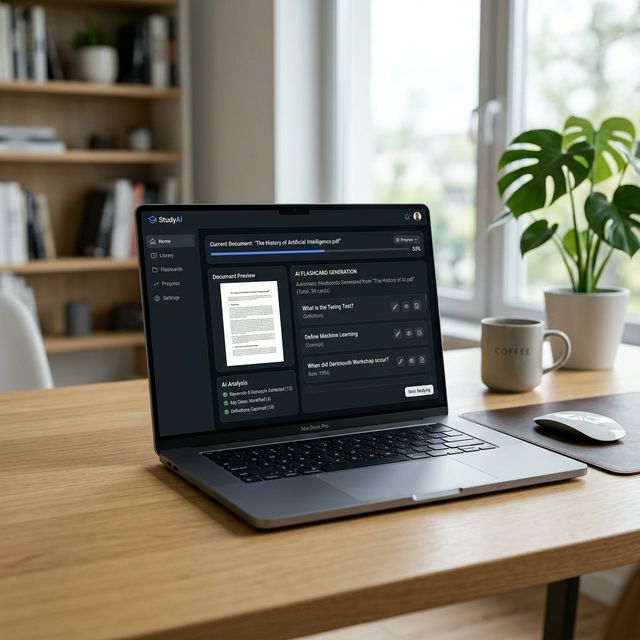
The best AI flashcard makers go further by generating cards from your own notes, PDFs, or lecture slides. Instead of typing each card by hand, you upload your material and let the AI handle the drafting. You review, edit if needed, and start learning.
How Cramd Compares to Anki
Cramd is built around the same core principles as Anki, spaced repetition and active recall, but without the setup friction. You can upload a PDF, a document, or paste in text, and Cramd generates smart flashcards automatically. The interface is clean, the algorithm handles scheduling for you, and you can be reviewing material within minutes of uploading your notes.
It's not about replacing the science behind Anki. It's about removing the barriers that stop most students from ever getting to the science. See a full comparison of Cramd vs Anki here if you want to dig into the specifics.
You can also explore Cramd's browse page to find community-built decks and skip the card-creation step entirely for common subjects.
Final Thoughts
Nobody masters Anki on day one, and nobody needs to. The underlying methods, spaced repetition and active recall, are genuinely among the most powerful study tools in existence. That's not marketing copy. It's what decades of peer-reviewed research consistently shows.
But the tool is not the technique. If Anki's interface is getting in the way of actually studying, switching to something more approachable isn't giving up. It's making a smarter choice about where your cognitive energy goes.
The goal is consistent review of material you're trying to remember, with enough challenge to make retrieval work its magic. However you get there matters a lot less than getting there at all.
If you want to put spaced repetition on autopilot without the setup headache, Cramd's AI flashcard generator builds your decks from the material you already have. Try it free and see how much easier it can be.