TL;DR
- AI Study Guide Makers save hours by converting notes, PDFs, and lectures into structured, organized guides in seconds.
- Science-Backed: Using study guides can improve performance by up to 34% by fighting the forgetting curve.
- Active Learning: The best tools combine content organization with active recall (testing yourself) and spaced repetition.
- Top 2026 Tools: Cramd (Best Overall System), NoteGPT (Notes/Video), Scribe (Procedural), and Piktochart (Visual).
You've got 72 hours before your final, three weeks of notes in a folder you haven't opened since week two, and a PDF that's 94 pages long. Sound familiar?
The problem isn’t that you’re not trying. It's that turning raw material into something you can actually study from takes hours you don't have. That's where an AI study guide maker changes things. Instead of spending Sunday night highlighting PDFs and rewriting your notes into some semblance of structure, you upload your materials and get a formatted, organized study guide in seconds.
This guide covers what an AI study guide generator actually does, how to use one properly, and which tools are worth your time in 2026. Whether you're prepping for finals, a licensing exam, or a midterm in a subject you're barely keeping up with, you'll finish this with a clear game plan.

An AI study guide maker is a tool that takes your raw study materials (notes, PDFs, lecture slides, videos) and restructures them into a clean, organized guide focused on the information that matters most.
Instead of you deciding what's important and what to leave out, the AI scans your content, identifies core concepts, groups related ideas, and builds something you can actually use to review.
Most AI study guide generators work through a few shared steps. You feed the tool your material: paste in text, upload a PDF, drop in a link, or record a lecture. The AI processes that content using natural language understanding to figure out what the document is about, what the key terms are, and how ideas relate to each other. Then it outputs a structured guide: sections, headings, summaries, key vocabulary, and sometimes practice questions.
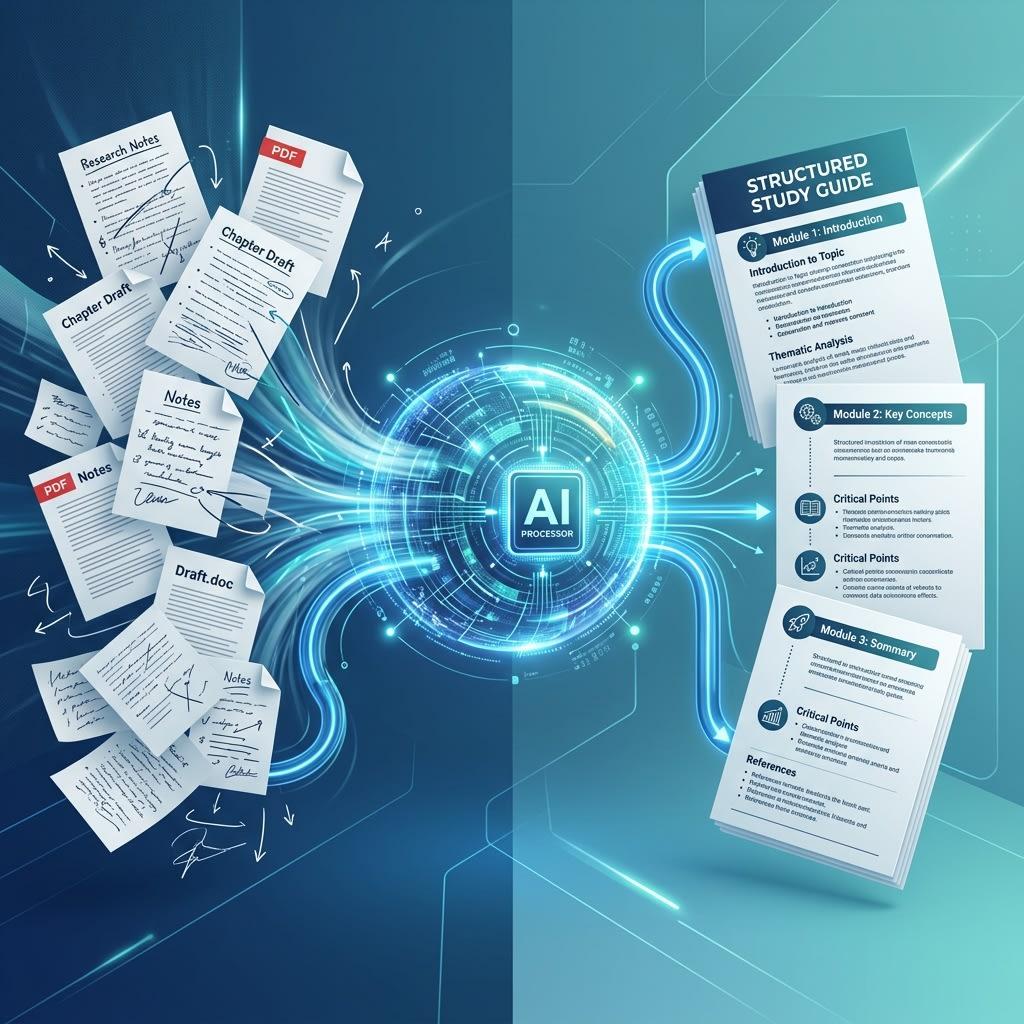
The better tools let you customize the output — adjusting depth, adding or removing sections, and exporting to formats you can actually use.
Study Guide vs. Flashcards: What's the Difference?
A study guide gives you a full overview of a topic in organized form. It's a map of everything you need to know, structured so you can find things and see how they connect.
Flashcards drill individual facts and concepts for recall. They're great for testing yourself once you've already organized the material.
The most effective study setup uses both. Build the guide first to understand the scope of what you're learning, then generate flashcards from it to lock in the details. Cramd's AI flashcard generator does exactly this: it turns your processed notes into smart, spaced-repetition flashcards once you've got the big picture clear.
Why Study Guides Actually Work (Do They Actually Help You Learn Faster?)
Before you assume a study guide is just a glorified outline, it's worth knowing why they work, because the research is pretty striking.
According to Coursera, study guides can improve learner performance by up to 34 percentage points. That's not a marginal gain. And a Stanford-linked study cited by Herzing University found that a strategic approach to studying helped college students improve their exam scores by an average of one-third of a letter grade.
The reason comes down to how memory works.
The Forgetting Curve and Why Review Matters
Hermann Ebbinghaus's forgetting curve research, summarized by Bearded Skeptic's learning retention analysis, shows that learners forget roughly 70% of new information within 24 hours and up to 90% within a week. You can sit through a two-hour lecture and retain almost none of it without a system for review.
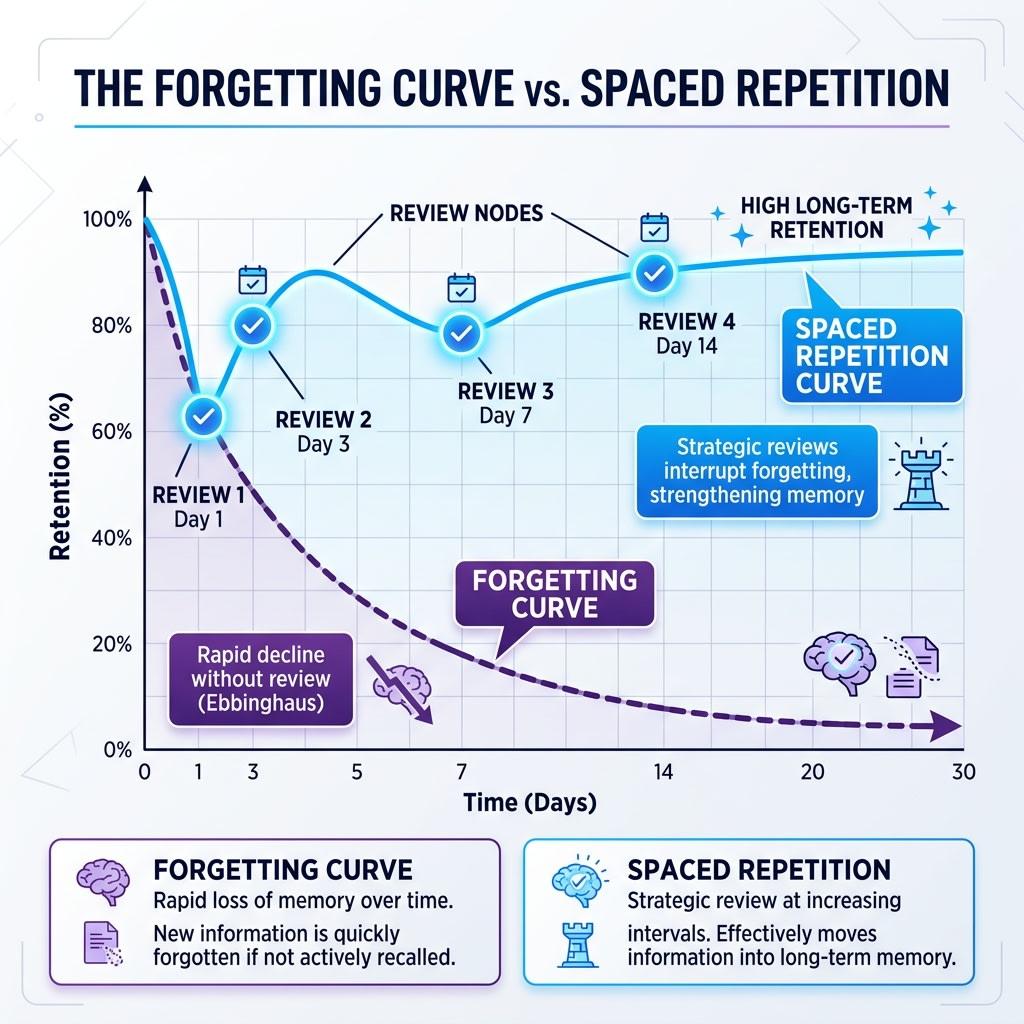
A study guide forces you to process material before you forget it. That act of organizing, summarizing, and structuring is itself a form of review. And because a good guide is concise enough to revisit in one sitting, it makes repeated review actually realistic.
Want to understand how spaced repetition can lock in what your study guide covers? Cramd's guide to mastering spaced repetition breaks down exactly how to build that system.
The real leverage in any study guide comes from building active recall into it. Passive reading burns time without building memory. Research from Engageli's 2024 Active Learning Impact Study found that active learners retained 93.5% of information compared to 79% for passive learners, and scored 54% better on average.
A well-built AI study guide does more than summarize: it surfaces questions, highlights gaps, and gives you something to quiz yourself against. Pair that with Cramd's active recall overview and you've got a real system, not just organized notes.
How to Use an AI Study Guide Maker (Step-by-Step)
Using an AI study guide generator isn't complicated, but how you use it determines whether you get a useful study tool or a wall of text you'll never look at again.
Step 1: Feed It the Right Input
Garbage in, garbage out. The quality of your AI study guide depends on what you give it.
Lectures, textbook chapters, reading notes, and professor slides all work well. What doesn't work: vague prompts like "make me a study guide for biology." The more specific and rich your input, the better the output.
If you're working from PDFs, Cramd's PDF summarizer handles this directly. Upload your document and it processes the content, pulling out the key points and building a structured learning experience from them. In under 30 seconds.
Step 2: Review and Customize the Output
Don't treat the AI's first output as final. Read through it. Check that it captured what matters. Add examples you remember from class, cut sections that aren't tested, and adjust headings to match your professor's framing.
Rutgers Learning Centers recommend comparing your study guide to past exams and quizzes once you have a few under your belt. Patterns in what actually shows up on assessments help you sharpen which parts of your guide need the most attention.
This step takes 10-15 minutes and makes the difference between a generic summary and something built around your course.
Step 3: Turn Your Guide Into a Study System
A study guide you read once isn't going to save you. The goal is to build a short, repeatable review loop around it.
Read through your guide the same day you create it. Return to it two days later. Use it to generate practice questions. Then create flashcards from the sections you struggled on. That loop (guide, review, test, repeat) is what actually builds retention.
Best AI Study Guide Makers in 2026
Not every AI study guide generator works the same way. Here's a clear-eyed look at what's worth using and who each tool works best for.
Cramd: Best for Converting Any Material Into a Full Study System
Cramd is built specifically for students who need to go from raw material to testable knowledge fast. Upload a PDF, paste lecture notes, or feed it a text document: Cramd processes it and builds you a structured learning experience, then lets you generate flashcards and quizzes directly from that material.
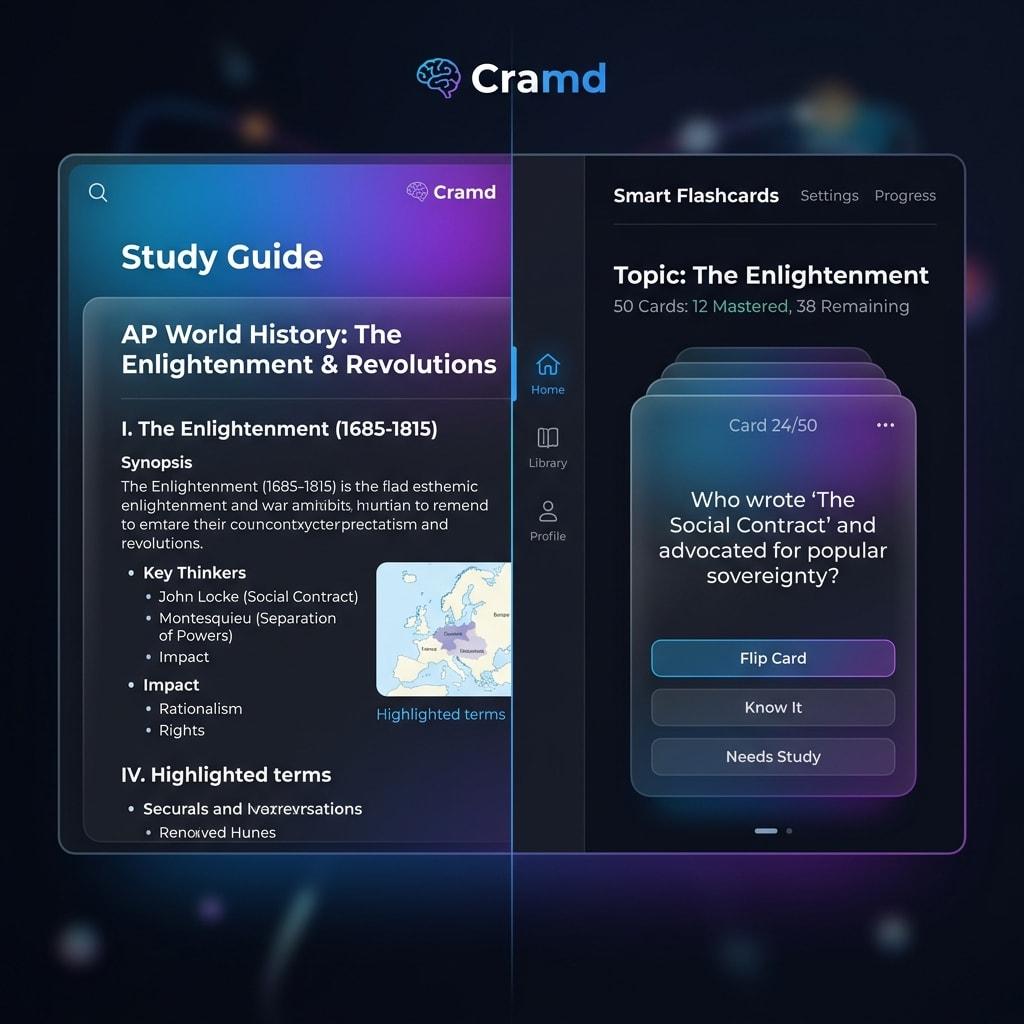
The key difference from a basic AI study guide maker: Cramd doesn't just organize your notes. It builds adaptive, spaced-repetition flashcards on top of your guide so you're not just reading, you're testing. For students who need to actually retain content for exams, this is the full stack.
Best for: Students who want a study guide and a quiz and flashcard system built from the same material.
NoteGPT: Best for Note-Heavy Studying
NoteGPT converts YouTube videos, documents, and text into structured summaries and study guides. It also generates flashcards and simple quizzes from processed content. For students who attend a lot of lecture-heavy courses and need to process content from multiple formats, it's a solid choice.
Best for: Students processing video and audio content alongside written notes.
Scribe: Best for Visual, Step-by-Step Guides
Scribe captures your on-screen workflow and turns it into a structured, annotated guide. It's less suited for traditional academic studying and stronger for procedural content: step-by-step processes, technical walkthroughs, and lab procedures where sequence matters.
Best for: STEM students studying procedures, lab methods, or technical processes.
Piktochart AI: Best for Visual Learners
Piktochart's AI study guide maker transforms text, PDFs, and outlines into visually formatted guides with designed layouts and infographic-style organization. If you retain information better when it's displayed visually with color and structure, Piktochart gives you that.
Best for: Visual learners who need design alongside content organization.
What Makes a Great AI Study Guide? (What to Look For)
Not all AI study guide tools are equal. Before you commit to one, here's what separates a useful tool from a flashy one.
Input Flexibility
The best tools accept multiple input types: PDFs, plain text, images, video, links. If a tool only accepts one format, you'll be reformatting materials just to use it. Look for something that works with what you already have.
Output Quality — More Than Just Bullet Points
A real study guide isn't just a bulleted list of what was in your notes. It groups related ideas, uses clear headings, includes definitions for key terms, and surfaces questions worth thinking about. Tools that produce shallow summaries aren't saving you much time if you still have to reorganize everything manually.
Scribe's breakdown of study guide benefits points out that a good guide reduces overwhelm by condensing lectures and textbooks into focused material, and builds a foundation for active recall by giving you something structured to quiz yourself against. If a tool's output doesn't do both, keep looking.
Integration with Active Recall Tools
A study guide on its own is a map. You still need to test yourself against that map. The tools worth using either include built-in quiz and flashcard generation or integrate easily with the study tools you already use. Cramd builds this in by default, so your study guide and your flashcard deck are made from the same source material.
The Takeaway
Study guides work. The research is clear on that, they improve retention, reduce exam anxiety, and give you a structured base to test yourself against. The only reason students don't use them consistently is the time it takes to build one from scratch.
An AI study guide maker removes that bottleneck. You get a structured, organized guide from your actual course materials in seconds, which means you can spend your limited study time actually learning instead of organizing notes.
Cramd is built to take this further. Upload a PDF, generate a study guide, and turn it into adaptive flashcards, all in one place, all from the same source material.
FAQ: AI Study Guide Maker Questions Answered
Further reading from Cramd: The Power of Active Recall | Mastering Spaced Repetition | Best Note-Taking Methods | How to Study Effectively in College