
You studied for hours. You re-read every chapter, highlighted half the textbook, and still bombed the exam. That is not a you problem. It is a method problem. Most students rely on study methods that feel productive but do almost nothing for long-term retention.
Research published in Psychological Science in the Public Interest classified the most common techniques students use: re-reading and highlighting ranked as "low utility." Meanwhile, active recall and spaced repetition ranked as "high utility" with strong evidence behind them. One landmark study found retrieval practice more than doubles retention compared to re-reading after just one week.
This guide covers 15 effective study methods grounded in cognitive science. For each one, you get the research behind it, a practical how-to, and the types of courses it works best for. Whether you are prepping for finals, tackling the MCAT, or just trying to stop forgetting everything you study, at least one of these will change how you work.
TL;DR
- Most students rely on passive review methods like re-reading and highlighting, which create an "illusion of competence" but fail to produce long-term retention.
- Active recall and spaced repetition are the most effective study methods backed by evidence, capable of doubling retention compared to re-reading.
- Techniques like the Feynman Technique, Interleaving, and Practice Testing build deeper understanding and problem-solving skills under exam conditions.
- You do not need to use all 15 methods. Start by combining active recall and spaced repetition for the best results.
Why Most Study Methods Fail You
The Illusion of Competence
Re-reading feels effective because the material starts to look familiar. That familiarity gets mistaken for understanding. Cognitive psychologists call this the "illusion of competence." You recognize the information on the page, but recognition is not the same as recall. When the exam puts a blank in front of you, the difference becomes obvious.
A 2025 review published on ScienceDirect found that 91% of students rely on passive review methods like re-reading notes or rewatching lecture videos. These approaches create only surface-level familiarity and contribute heavily to rapid forgetting.
What Cognitive Science Says Actually Works
Researchers have studied learning techniques for over a century, starting with Hermann Ebbinghaus and his forgetting curve in 1885. The consistent finding: active engagement with material beats passive review, and spacing beats cramming.
The UKZN Evidence-Based Techniques review classifies study techniques into three tiers. High utility: active recall, spaced repetition, Pomodoro technique. Moderate utility: interleaving, handwritten notes, Feynman technique. Low utility: re-reading, highlighting alone. The gap between tiers is large.
Comparison of Top Study Methods
| Method | Impact | Effort | Best For |
|---|---|---|---|
| Active Recall | High | Moderate | All Subjects |
| Spaced Repetition | High | Low (Apps) | Memorization & Facts |
| Feynman Technique | High | High | Conceptual Subjects |
| Interleaving | Moderate | Moderate | Math & STEM |
| Pomodoro | High | Low | Focus & Discipline |

The Top-Tier Study Methods (Backed by Research)
1. Active Recall - The #1 Most Effective Study Method
What it is: Instead of reviewing your notes, you close them and try to retrieve the information from memory. Flashcards, practice questions, and blank-page recitation all count.
The research: Roediger and Karpicke's 2006 study at Washington University is the benchmark here. Students who used retrieval practice retained roughly 80% of material after one week. Students who re-read retained only 34%. That gap, documented on Recallify's evidence review, comes from a single change in how they studied.
How to use it: After reading a section, close the book and write down everything you remember. Then check. The struggle to retrieve is the actual learning. Read more about how this works on Cramd's active recall guide.
Best for: All subjects. Universal.
2. Spaced Repetition - Fight the Forgetting Curve
What it is: You review material at increasing intervals over time, revisiting it just before you would naturally forget it. Each review session resets the forgetting clock and strengthens the memory.
The research: A meta-analysis of 254 studies covering over 14,000 observations, cited on PMC, found that spaced practice consistently outperforms massed practice (cramming) across subjects and age groups. Separate studies show spaced repetition can improve retention by 200-400% compared to cramming.
How to use it: Start reviews the day after initial learning, then after 3 days, 7 days, 14 days, and 1 month. AI-powered spaced repetition apps handle the scheduling automatically.
Best for: Vocabulary, formulas, anatomy, law, any content requiring memorization.
3. The Feynman Technique - Teach It to Learn It
What it is: Named after Nobel Prize-winning physicist Richard Feynman, this method asks you to explain a concept out loud as if teaching it to a complete beginner. Where you stumble is where your understanding breaks down.
The research: Psychologists call this the "protege effect." The act of explaining forces you to organize information, surface gaps, and build mental models rather than just recognize patterns. A student survey found 75% of those using the Feynman technique rated it a 4 or 5 out of 5 for effectiveness.
How to use it: Pick one concept. Explain it out loud using plain language. When you hit jargon you cannot simplify, go back and study that gap. Then explain it again.
Best for: Sciences, economics, philosophy, any conceptual subject.
4. Interleaved Practice - Mix It Up for Deeper Mastery
What it is: Instead of blocking study time by topic (all of Chapter 3, then all of Chapter 4), you mix related topics within a single session. This forces your brain to identify which approach applies to each problem.
The research: A 2025 Princeton study published in Nature and covered by ScienceDaily found the brain excels at reusing cognitive "building blocks" across different tasks. Interleaving trains exactly this skill: recognizing which mental framework to deploy and switching between them fluidly.
How to use it: In a math session, alternate between integration problems, differentiation problems, and word problems. In history, rotate between causes, events, and consequences rather than studying each category in a block.
Best for: Math, physics, chemistry, any subject with multiple problem types.
5. The Leitner System - Flashcards With a Brain
What it is: A flashcard-based method developed by journalist Sebastian Leitner in the 1970s. Cards you answer correctly move to a box reviewed less frequently. Cards you get wrong drop back to the most frequent review box.
The research: The Leitner System is spaced repetition made physical. It concentrates your time on weak material and reduces time spent on what you already know. Modern AI flashcard generators replicate this logic automatically, adapting review schedules based on your performance.
How to use it: Three boxes: Box 1 reviewed daily, Box 2 every 3 days, Box 3 weekly. Correct answers promote a card. Wrong answers reset it to Box 1.
Best for: Languages, biology, chemistry, any content requiring discrete fact recall.
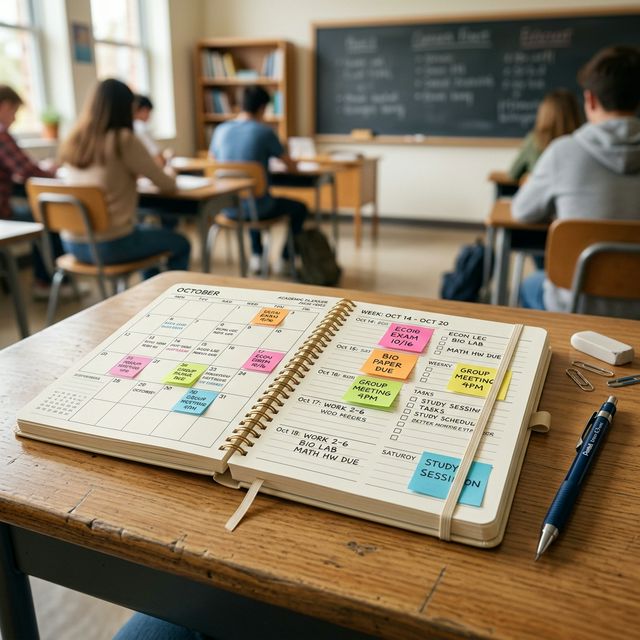
High-Impact Study Techniques for Focus and Organization
6. The Pomodoro Technique - Work in Sprints
What it is: Work in 25-minute focused intervals with 5-minute breaks. After four cycles, take a longer break of 15-30 minutes. Developed by Francesco Cirillo in the 1980s.
The research: The technique reduces the cognitive cost of getting started (sometimes called "start-up friction") by making the commitment feel small. Short, defined intervals also prevent the attention decay that sets in during long unbroken study sessions.
How to use it: Set a timer for 25 minutes. Work on one task only. When the timer goes off, take your break away from screens. Track completed Pomodoros to measure actual study time.
Best for: Any subject, especially useful for tasks you keep avoiding.
7. Cornell Note-Taking - Notes That Study Themselves
What it is: Developed by Cornell education professor Walter Pauk, this system divides your page into three zones: a wide right column for notes during lecture, a narrow left column for cue questions written afterward, and a summary section at the bottom.
The research: The Cornell Learning Strategies Center notes that handwriting activates different encoding processes than typing. The cue column builds active recall directly into the note-taking structure: cover the right column, read the cues, and test yourself.
How to use it: Take notes in the right column during class. Within 24 hours, write questions or keywords in the left column that correspond to those notes. At the bottom, write a 2-3 sentence summary in your own words. Use the cue column to self-test.
Best for: Lecture-heavy courses: history, psychology, biology, law.
8. Mind Mapping - Visual Learning That Sticks
What it is: Start with a central concept in the middle of a page and branch outward to subtopics, details, and examples. Connections between branches are drawn explicitly.
The research: Spatial organization of information leverages visual-spatial memory systems alongside verbal memory. This dual encoding creates more retrieval pathways, making concepts easier to access on exams. Mind maps work best for showing relationships between ideas rather than linear sequences.
How to use it: After a lecture or reading, reconstruct the topic as a mind map from memory first. Then check your notes and add what you missed. The gaps you find are your study priorities.
Best for: Conceptual subjects: biology, history, literature, business strategy.
9. Dual Coding - Words Plus Visuals Together
What it is: Pair verbal information with visual representations: diagrams, timelines, flowcharts, sketches. The two formats reinforce each other in memory.
The research: Cognitive psychologist Allan Paivio's dual coding theory shows that combining verbal and visual information creates two independent memory traces. When one retrieval path fails on an exam, the other can still activate the memory.
How to use it: After taking written notes, redraw the concept as a diagram or timeline. Label the visual elements. When studying, try to reconstruct the visual from memory before checking.
Best for: Sciences, engineering, history with timelines, anything process-based.
10. The Blurting Method - Brain Dump, Then Fill the Gaps
What it is: Set a 10-15 minute timer and write down everything you know about a topic without looking at your notes. Then compare your output against the source material and study only the gaps.
The research: Blurting is applied active recall. It functions as a diagnostic, showing you exactly where your memory breaks down rather than giving you a vague sense of what you "kind of know." The comparison step converts the gaps into targeted review tasks.
How to use it: Choose one topic from the day's material. Write or speak everything you remember. Then open your notes, circle what you missed, and study only those gaps. Repeat once before moving on.
Best for: Exam review, any fact-heavy subject.
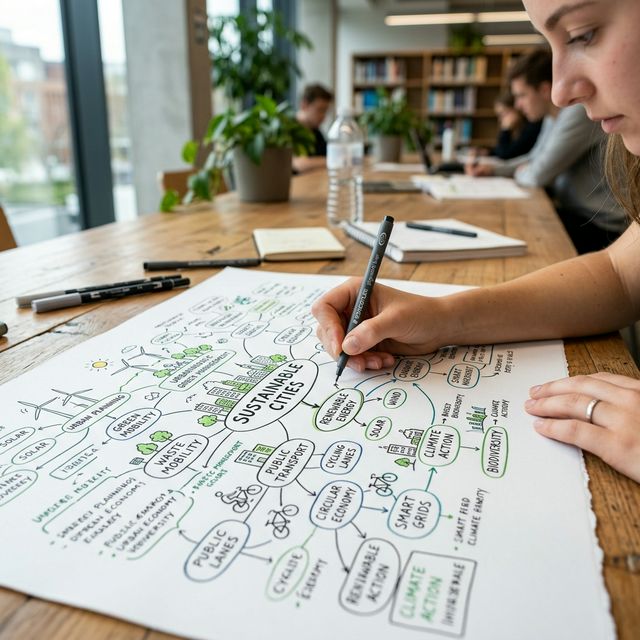
Study Methods That Build Deeper Understanding
11. Elaborative Interrogation - Ask Why Constantly
What it is: As you study, generate "why" and "how" questions about the material and answer them. Rather than accepting a fact, you force yourself to explain the mechanism behind it.
The research: Elaborative interrogation consistently produces stronger retention than note-taking or re-reading because it connects new information to existing knowledge frameworks. The more connections a memory has, the more retrieval paths exist.
How to use it: As you read, after every key fact ask: "Why is this true?" and "How does this connect to what I already know?" Write the answers in the margins or in a separate notebook.
Best for: Sciences, history, economics, any content where mechanisms matter.
12. Self-Explanation - Talk Through the Problem
What it is: While working through a problem or reading a passage, verbalize your reasoning step by step. Explain each move to yourself out loud.
The research: Self-explanation forces you to monitor your own understanding in real time. Gaps become audible rather than invisible. Studies show students who self-explain solve novel problems more successfully than those who practice problems quietly.
How to use it: Work through a problem set or case study out loud. At each step, say why you are doing it, not just what you are doing. If you cannot explain the step, stop and go back to the concept.
Best for: Math, physics, coding, case-based subjects like medicine or law.
13. Practice Testing - Treat Every Study Session Like an Exam
What it is: Use past papers, practice problem sets, or self-generated questions to simulate exam conditions during study sessions. Do this under timed conditions with no notes.
The research: Practice testing is the active recall principle scaled to full sessions. Students who practice testing outperform those who study with any passive method by wide margins. The difficulty of test conditions strengthens encoding. Check Cramd's guide to effective flashcards for how to build good practice questions.
How to use it: Set a timer. Close your notes. Answer past exam questions or self-generated questions as if it is the real thing. Grade yourself. Focus your next study session on wrong answers.
Best for: Any course with cumulative exams.
14. Chunking - Break It Down to Build It Up
What it is: Group individual pieces of information into meaningful units. Phone numbers split into sections, amino acids grouped by chemical property, historical events organized by theme rather than date.
The research: Working memory holds roughly 7 items at once. Chunking compresses multiple items into single units, freeing capacity for processing and understanding rather than just holding individual facts. Experts in every field rely on chunking to manage complex knowledge.
How to use it: Before memorizing a list, look for natural categories. Group by theme, function, or pattern. Create a mnemonic for the categories rather than the individual items. Then reconstruct the items within each category.
Best for: Sciences with large taxonomies, languages, law, any content with long lists.
15. Pre-Testing - Get It Wrong First to Learn It Better
What it is: Before studying new material, take a practice test on it. You will get most answers wrong. That is the point. The errors prime your brain to notice and retain the correct information when you encounter it.
The research: Cognitive scientists call this the "hypercorrection effect." Errors made with high confidence produce stronger learning when corrected than errors made with low confidence. Getting something wrong before learning it focuses your attention more sharply on the correct version.
How to use it: Before reading a new chapter, look at the end-of-chapter questions and attempt to answer them. Then read the chapter, paying specific attention to anything that corrected a wrong answer. Then test yourself again.
Best for: Any subject with a clear body of knowledge to master.
What Are the Most Effective Study Methods for Exams?
How do I combine multiple study methods?
You do not need all 15. Pick two or three that address your specific bottleneck and combine them. A reliable stack for most students:
- Spaced repetition + active recall for building and retaining a knowledge base
- Interleaving + practice testing for sharpening problem-solving under exam conditions
- Cornell notes + Feynman technique for subjects requiring deep conceptual understanding
The key is sequencing. Build your knowledge base first (spaced repetition, Cornell notes), then shift to retrieval-heavy work (active recall, practice testing) as the exam approaches. Read Cramd's guide to building effective study habits for a full system.
Which study techniques work best for STEM vs. humanities?
STEM courses respond best to interleaved practice, self-explanation, and practice testing. The goal is pattern recognition and procedural fluency, so problem variety during study sessions matters more than passive review.
Humanities courses respond better to Cornell notes, elaborative interrogation, and the Feynman technique. The goal is understanding relationships between ideas and constructing arguments, so conceptual connections matter more than formula recall.
Both benefit equally from active recall and spaced repetition, which are universal. See also Cramd's college study methods guide for more subject-specific strategies.
Stat worth remembering: Students using active recall retain roughly 80% of material after one week. Students who re-read retain 34%. That is not a small difference. It is the difference between passing and failing.

Start With Two, Not Fifteen
You do not need to overhaul your entire study routine overnight. Start with active recall and spaced repetition. These two effective study methods have more evidence behind them than anything else on this list. Everything else is an upgrade.
Active recall forces your brain to work during study sessions rather than passively absorbing. Spaced repetition ensures that work compounds over time instead of evaporating by exam day. Pair them with one technique for focus (Pomodoro) and one for organization (Cornell notes), and you have a study system that actually works.
If you want to put spaced repetition and active recall on autopilot, Cramd generates smart flashcards from your notes, PDFs, and lecture slides automatically, then schedules reviews at the right intervals. Try Cramd free and let the AI handle the scheduling while you focus on the learning.