
You've been "studying" for two hours, but you've actually checked your phone eleven times, reorganized your notes twice, and reread the same paragraph six times without retaining a word. Sound familiar?
What is the Pomodoro Technique for studying?
The Pomodoro Technique is a study method where you work in focused 25-minute intervals followed by 5-minute breaks. After four sessions, you take a longer break. This structure improves focus, reduces burnout, and helps you retain more information by aligning with your brain’s natural attention span.
The problem isn't your subject. It's your relationship with time.
The pomodoro technique for studying is a time management method built around one simple idea: your brain wasn't designed to focus for hours straight, so stop asking it to. Instead, you work in focused 25-minute sprints, take short breaks, and repeat. That's the core of it.
This guide covers everything: the science behind why it works, how to actually set up a session, which interval length fits your study style, and how to combine it with proven learning methods like active recall and spaced repetition to get more out of every minute you study.
If you're also looking for smarter ways to manage your time as a student, this technique is one of the most practical starting points out there.
TL;DR
- The Pomodoro Technique uses structured intervals: Study for 25 minutes, take a 5-minute break, and after four rounds take a longer 15-30 minute break.
- Breaks improve learning, not just comfort: Short pauses help your brain recover and consolidate what you just studied.
- The best sessions are active, not passive: Use Pomodoros for flashcards, practice questions, and self-testing instead of passive re-reading.
- You can scale the method up or down: Start with 25/5, but use 10/5, 15/3, 50/10, or 75/15 if those match your attention span and task better.
- It pairs especially well with active recall and spaced repetition: Timed focus blocks help you sustain the effort these higher-value study methods require.
What Is the Pomodoro Technique for Studying?
Who Created It - and Why It Actually Works
In the late 1980s, a university student named Francesco Cirillo was drowning in assignments. Sound familiar? He challenged himself to focus for just ten minutes, using a tomato-shaped kitchen timer to hold himself accountable. "Pomodoro" is Italian for tomato, and that little red timer gave the method its name.
Through trial and error, Cirillo landed on 25 minutes as the sweet spot for focused work, followed by a 5-minute break. After four rounds, you take a longer 15-to-30-minute break. That structure became the official Pomodoro Technique, and it's been used by students, programmers, and writers for decades since.
Research published in 2026 by The Brown Daily Herald confirmed that the pomodoro method's core principles are grounded in existing cognitive science, even if direct studies on the technique itself remain limited.
The Core Structure: How One Pomodoro Session Works
One full cycle looks like this:
- Pick a specific task, not "study biology" but something like "answer practice questions 1-20"
- Set your pomodoro timer for studying to 25 minutes
- Work without interruptions until the timer rings
- Take a 5-minute break
- After four rounds, take a 15-30 minute break
Each 25-minute block is called a Pomodoro. The rule is simple: once the timer starts, it doesn't pause. Distractions get noted down, not acted on.
The Science Behind the Pomodoro Study Method
Your Brain's Attention Span Has a Deadline
Your brain runs on what researchers call ultradian rhythms - biological cycles of high focus and low focus that repeat throughout the day. According to Formal Psychology, your brain can only sustain intense concentration for a limited window before it needs to recover. Working past that window doesn't produce more output; it produces more errors.
There's also what's known as Parkinson's Law: work expands to fill the time available. Give yourself an entire afternoon to review one chapter, and your brain will fill that afternoon. Set a 25-minute timer and your brain suddenly finds urgency.
The planning fallacy compounds this. Most students vastly underestimate how long tasks take, which leads to last-minute cramming and anxiety. Breaking your study time into counted Pomodoros gives you real data on how long things actually take.
Why Breaks Are Part of the Strategy, Not a Weakness
A lot of students treat breaks as wasted time. That thinking backfires.
A 2025 scoping review published in PMC analyzed 32 studies covering over 5,000 participants and found that Pomodoro Technique use showed positive correlations with student performance (r = 0.65), focus and concentration (r = 0.72), and learning engagement (r = 0.68).
The break isn't just rest. It's when your brain's Default Mode Network activates, consolidating what you just studied. Skip the break and you skip the processing. A 2025 study from Maastricht University found that students who self-regulated their breaks without structure reported higher levels of fatigue and lower motivation compared to those using systematic break methods.
Your brain learns during the pause. The break is the point.

How to Use a Pomodoro Timer for Studying (Step-by-Step)
Setting Up Your Session the Right Way
Before you start the timer, spend two minutes on prep. Write down exactly what you're doing in this session - specific, not vague. "Read chapter 7" becomes "identify the three main causes of cell apoptosis from chapter 7." Specific tasks give your brain a clear finish line.
Then: phone on silent, notifications off, tabs closed. Coursera's guide to the Pomodoro method recommends choosing a single task and committing to it without multitasking. The entire point of the timer is to make that commitment feel finite and achievable.
You don't need a fancy app. A phone timer works. That said, free tools like Pomofocus or Be Focused let you customize intervals and track your sessions over time, which is useful once you're serious about the method.
What to Do During a Pomodoro Session (And What to Avoid)
During the 25 minutes: work only on your stated task. If a thought pops into your head - a text to send, a thing you forgot to do - write it down on a separate sheet of paper. This is sometimes called a "parking lot." You're not ignoring the thought; you're deferring it. That's all your brain needs.
What to do on breaks: stand up, stretch, get water, look out a window. What not to do: scroll social media, check email, or start a conversation that will run long. According to Formal Psychology's analysis, social media introduces new cognitive input that prevents the Default Mode Network from doing its recovery work. Your break needs to be genuinely restful.
How to Handle Interruptions Without Derailing Everything
An interruption doesn't have to break the whole session. If someone needs you, tell them you're available in X minutes. If it's urgent, stop the Pomodoro, handle it, then restart fresh. Cirillo's original approach says a voided Pomodoro doesn't count - but it also doesn't mean you failed. You just restart.
Tracking your interruptions over a week gives you useful data. You'll start to notice patterns: when they peak, what triggers them, and how to set up your environment to reduce them before they happen.
Pomodoro Technique Variations - Which Interval Is Right for You?
The Classic 25/5 Method
This is where everyone should start. Twenty-five minutes of focused work, five minutes of break. It works for most study tasks: reading, flashcard review, practice problems, writing outlines.
SchoolHabits specifically recommends the 25/5 for active recall sessions because active recall is cognitively intense enough that your brain genuinely needs the five-minute reset after each round.
The 50/10 and 75/15 for Deep Study Sessions
Once you've built the focus habit over a few weeks, you can extend your intervals. The 50/10, with 50 minutes on and 10 off, suits longer reading or essay writing where building momentum matters. The 75/15 is for graduate-level research or creating study materials where getting into a flow state takes time.
One rule of thumb from SchoolHabits: stick to no more than two consecutive 50-minute Pomodoros before taking a longer break. That puts you at about two hours of deep work, which is close to the ceiling for maintaining quality output.
Todoist's guide to the Pomodoro Technique notes that a 2021 study found highly productive people tend to work for around 112 minutes before taking a 26-minute break. If the classic 25/5 feels choppy for your workflow, work your way up gradually.
Short Sprints for ADHD and High-Distraction Environments
The classic 25-minute block can feel like too much if you're studying in a noisy environment, dealing with anxiety, or managing ADHD. A 10/5 or 15/3 ratio works just as well for building momentum when the goal is getting started, not maximizing time.
Birmingham City University's revision guide highlights that the pomodoro study method works particularly well for students with ADHD because it converts large, overwhelming tasks into short, structured sprints. The structure reduces procrastination by making the work feel approachable rather than infinite.
The adjustment that matters most: match the timer to your attention span, not the other way around.

How to Combine the Pomodoro Method With Active Recall and Spaced Repetition
Why Timed Intervals and Active Recall Are a Power Combo
Active recall - testing yourself on material rather than rereading it - is one of the most evidence-backed study methods for long-term retention. The problem most students face isn't that they don't know about it. It's that they run out of focus before they get through their materials.
Pomodoro solves that. A focused 25-minute block dedicated to flashcard review or practice questions is more effective than 90 minutes of passive re-reading. You get more retrieval attempts per hour of study, and the forced breaks prevent the mental fatigue that tanks retention.
Spaced repetition pairs with Pomodoro naturally too. You can dedicate one Pomodoro per subject per day during a review period, letting the spacing between sessions do the memory consolidation work that cramming can't.
Using Flashcards and AI Study Tools Inside Pomodoros
Flashcard review is the perfect Pomodoro task. It's self-contained, measurable because you can track how many cards you clear per session, and cognitively demanding enough to justify the break that follows.
If you're still making flashcards by hand, you're spending Pomodoro time on the wrong thing. Cramd's AI flashcard generator turns your notes, PDFs, or lecture slides into testable study materials in under 30 seconds. You can spend your Pomodoros actually studying the material instead of formatting cards.
If you want to focus 100% on studying and cut the admin work entirely, that's the move.
Common Pomodoro Mistakes Students Make (And How to Fix Them)

Breaking the Timer Early
The moment students think they're "almost done" with a task, they break the timer to finish up. This erodes the whole method. The Pomodoro is an indivisible unit of time. If you finish early, use the remaining minutes for review, overlearning, or extending your understanding. Never just end early.
If you find yourself consistently finishing tasks in 10 minutes, your tasks aren't specific enough. Break them down further before you start the timer.
Passive Study During Sessions
Rereading your notes during a Pomodoro looks like studying but functions like procrastination. Passive review gives your brain the feeling of learning without the cognitive effort that actually builds memory.
Use active study methods in your Pomodoros: self-quizzing, solving problems, summarizing from memory, explaining concepts aloud. If you're highlighting text, you're not in Pomodoro mode, you're in procrastination mode with a colored pen.
Best Pomodoro Timers for Studying
While a simple kitchen timer or your phone's clock app works, dedicated tools can help you track your sessions and stay away from distractions. Here are the top recommendations:
- Pomofocus (web-based): A simple, clean, and customizable timer that works in any browser. It allows you to create task lists and track your time spent on each subject.
- Be Focused (iOS/macOS): Great for users in the Apple ecosystem. it helps you manage your tasks, track your progress throughout the day/week, and set custom goals.
- Forest (focus + gamification): A unique app where you plant a digital tree that grows while you focus. If you leave the app to check social media, your tree dies. It's excellent for those who need a visual incentive to stay off their phones.
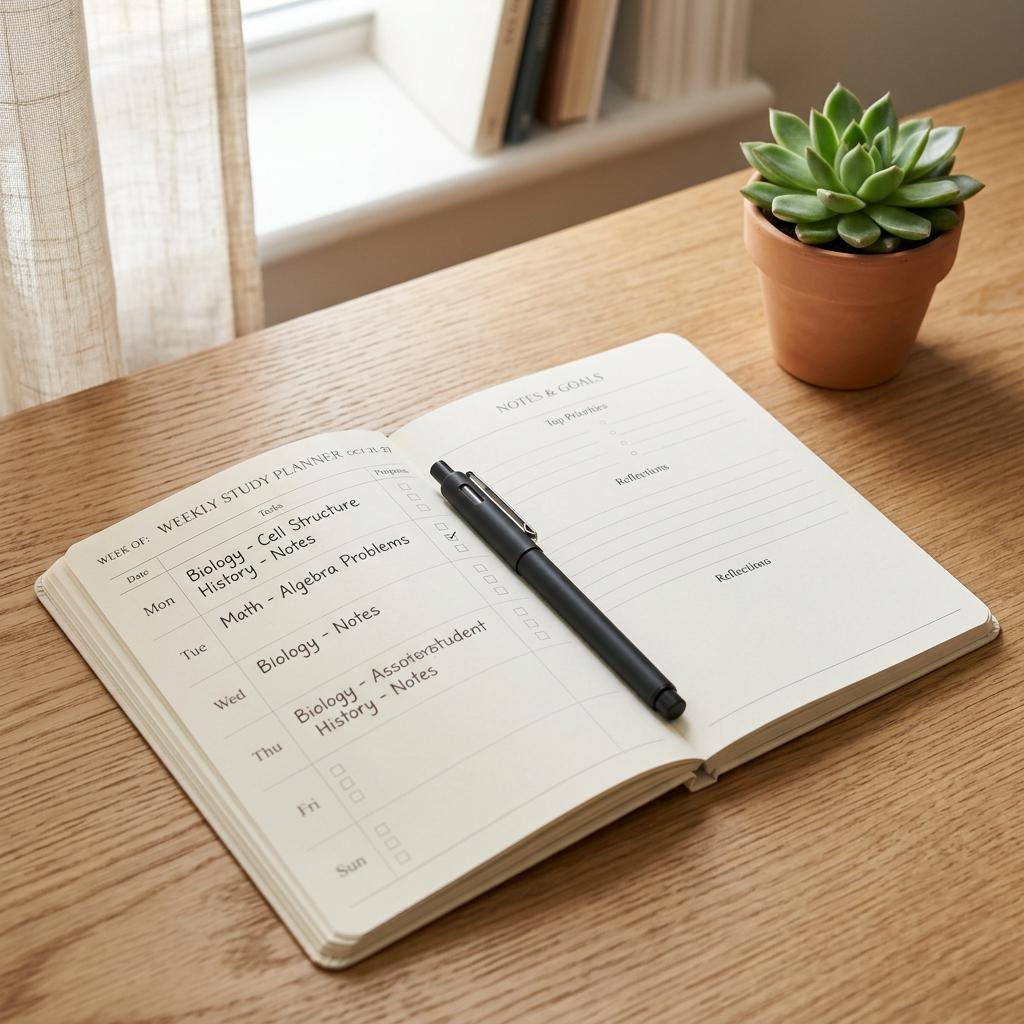
Start Your Next Study Session the Right Way
The pomodoro technique for studying works because it stops pretending you can sustain unlimited focus. You can't. No one can. But 25 focused minutes, repeated with intention? That's how you actually get through a textbook, retain the material, and show up to an exam confident.
Start with three Pomodoros today. Notice when your focus drifts, what triggers interruptions, and how different tasks feel at different times of day. Within a week, you'll have better data on your own study patterns than most students collect in a semester.
And if you want to get more out of every Pomodoro session, pair it with active recall and AI-powered flashcards from Cramd. Upload your notes or PDF, generate your deck in seconds, and spend your study time actually learning the material.