TL;DR
- Start at least 2-3 weeks out and build a time-blocked schedule that assigns each subject its own daily study slot.
- Rotate between subjects every 30-90 minutes (called interleaving) instead of spending an entire day on one course.
- Use active recall and spaced repetition - the two most research-backed study methods - rather than re-reading your notes.
- Aim for 4-6 hours of focused study per day during finals week, and prioritize sleep over all-nighters.
- Work smart: condense your notes first, then quiz yourself. An AI flashcard generator can cut that prep time dramatically.
Introduction
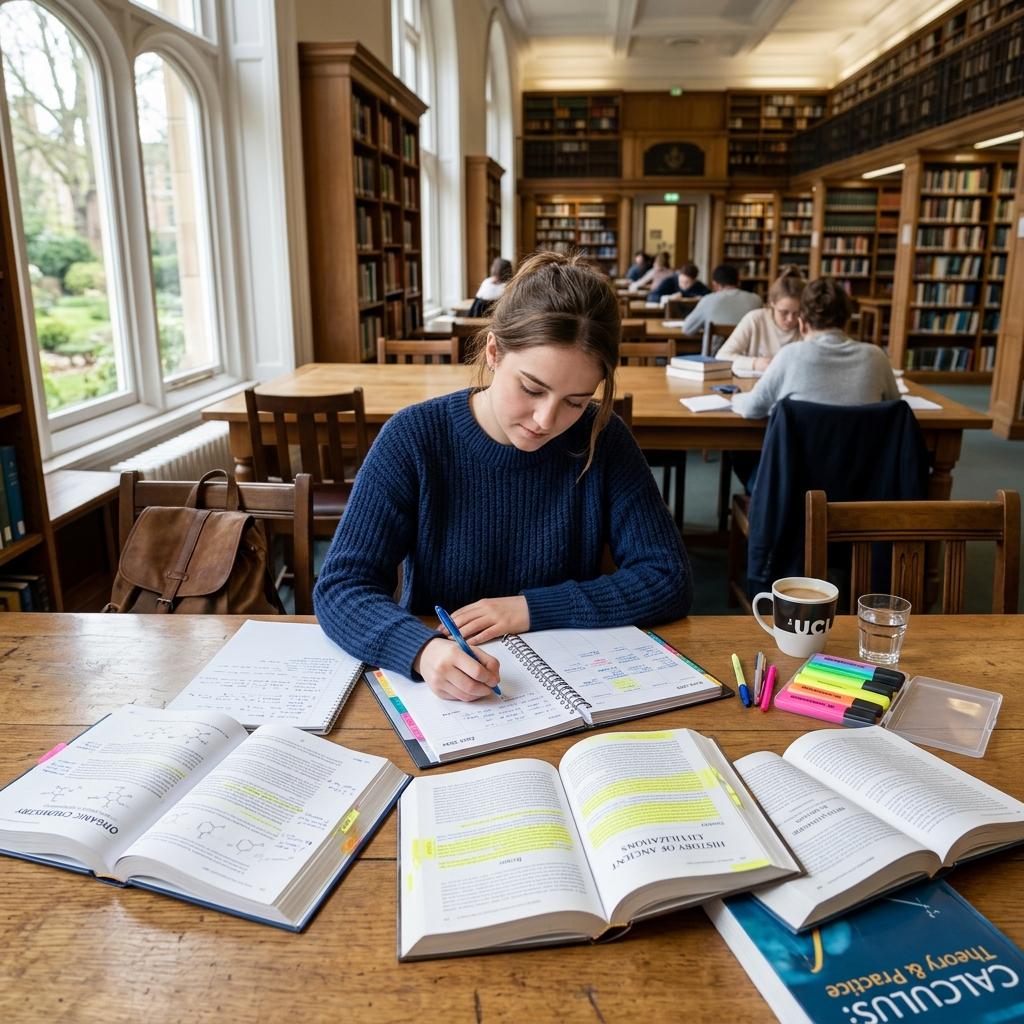
Finals week feels like someone stacked four exams on top of each other and said, "Good luck." You've got organic chemistry on Tuesday, economics on Wednesday, and a history essay due Thursday - and somehow you're supposed to walk into all three feeling prepared.
The good news: studying for multiple finals at once is a learnable skill. It's not about grinding for 12 hours straight or willing yourself through an all-nighter. It's about knowing how to divide your time, which study methods actually work, and how to keep your brain from turning to mush by day three.
This guide covers exactly that. You'll get a practical system for scheduling multiple exams, the study methods most proven to boost retention, and honest answers to questions like how many hours a day you should actually study. Whether you've got two finals or five, the same core strategy applies - and it starts well before finals week.

Step 1: Map Everything Out Before You Open a Single Textbook
The biggest mistake students make when juggling multiple exams is diving into content without a plan. You end up spending too much time on subjects you already know and not enough on the ones that need the most work.
Build Your Finals Calendar First
Before you study a single concept, write down every exam date, its format (multiple choice, essay, open-book), and what percentage of your grade it carries. A quick visual overview of your entire finals schedule changes how you allocate time. You'll immediately see which exams cluster together and where you have breathing room.
Edvisorly recommends that students aim for 2-3 weeks of dedicated prep time before finals week, with 3-5 hours of focused study per day spread across subjects.
Prioritize by Difficulty, Not by Date
Once your calendar is built, rank your exams by difficulty - not chronologically. Your hardest final gets the most time, regardless of when it falls. If chemistry has been a struggle all semester and it's your last final, you still devote more hours to it than to the course where you've been acing every quiz.
The Princeton Review advises reviewing your previous tests from the semester to spot patterns in what you've missed - those weak spots will likely show up again on the final.

Step 2: Schedule Each Subject Every Single Day
This is counterintuitive to a lot of students. Most people want to knock out one subject completely before moving to the next. The research says that's the wrong approach.
Why Interleaving Works Better Than Blocking
Interleaving means rotating between subjects in a single day rather than dedicating full days to one course. It feels harder, but that difficulty is exactly the point - your brain has to work to switch gears, which deepens encoding. UNC's Learning Center calls this one of the most effective ways to make progress across multiple classes simultaneously.
The practical setup: if you have four exams, plan four separate study sessions each day, roughly 30-45 minutes each. Keep sessions short and rotate. SchoolHabits recommends this exact structure - many shorter, intense sessions outperform a few long, unfocused ones.
Time-Block Your Schedule the Night Before
Every evening, write out the next day's blocks before you go to sleep. Assign a specific subject to each slot. McGraw Hill recommends this style of time-blocking - blocking study time for one specific exam, scheduling a break, then repeating for the next subject - as an effective way to stay organized and reduce decision fatigue during finals week.
This matters because you can't study well if you're spending 10 minutes each morning figuring out what to review. Plan it the night before, write it down, and execute.
How Many Days Does It Take to Study for an Exam?
The honest answer depends on the subject and how well you've kept up during the semester. For most college-level finals, 2-3 weeks of prep is the research-backed recommendation. Start earlier if you're behind, or if the exam covers a full semester of dense material.
For large, high-stakes tests like AP exams or professional licensing tests, you'll need considerably more runway. For a typical midterm in a course you've been attending regularly, a week of focused prep is often enough.
The key variable isn't total days - it's whether you're spacing out your review. Distributing your study over multiple sessions across multiple days produces far better retention than cramming the same number of hours into one or two nights. Research consistently supports this: spaced practice outperforms massed practice for long-term memory.
Step 3: Condense Your Materials Before You Study Them
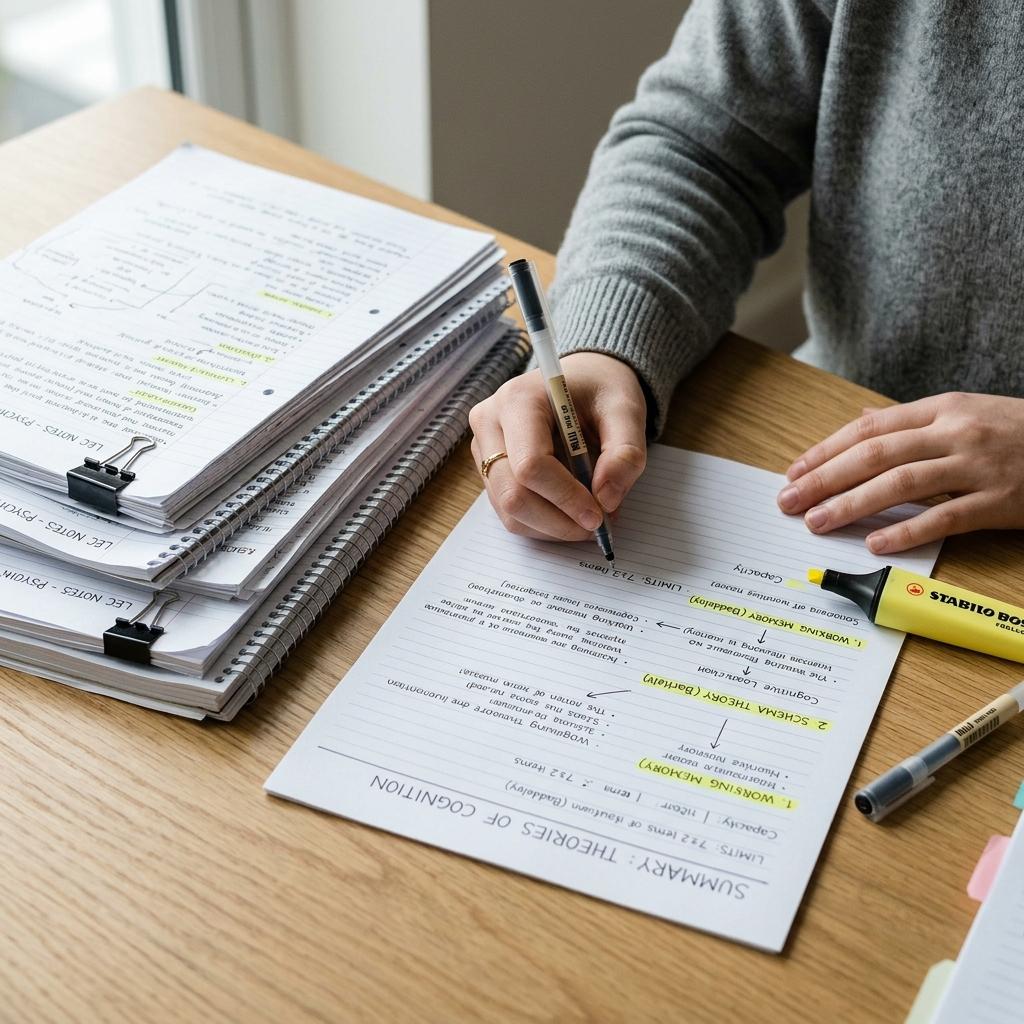
One of the fastest ways to overwhelm yourself during finals is trying to re-read an entire semester's worth of notes. Don't. Condense first, then study.
The Notes Reduction Method
Take 30 pages of biology notes and compress them to 5. Cut anything redundant, anything you already know cold, and anything that won't realistically appear on the exam. The process of deciding what to cut is itself studying - you're processing and evaluating information, not just reading it passively.
SchoolHabits calls this creating a "concentrated packet" - the only thing you'll actually study from that point forward. Once your materials are distilled, studying becomes faster and less overwhelming.
This step pairs well with an AI PDF summarizer. Upload your lecture slides or textbook chapters and get a condensed, structured summary in seconds - then use that as your study base.
What Is the Most Successful Study Method?
Active recall combined with spaced repetition. That's the research consensus, and it's not particularly close.
Active Recall: Stop Re-Reading
Active recall means closing your notes and pulling information from memory rather than reading it off a page. You ask yourself a question - without looking at the answer - and force your brain to retrieve it. Flashcards, practice problems, and blank-page recall all qualify.
Research by Karpicke and Blunt found that students who practiced retrieval consistently outperformed students who used concept mapping, even when the final test involved concept maps. The act of retrieval itself is what makes memories stronger.
Passive methods like re-reading and highlighting feel productive because they're low-effort. That ease is the problem. Your brain doesn't build strong memory traces from passive review.
Spaced Repetition: Time Your Reviews
Spaced repetition means reviewing material at increasing intervals rather than all at once. You review it the day after learning it, then three days later, then a week later. Each review happens just before you'd naturally forget it, which is the optimal window for strengthening memory.
Research from 2025 on Cramd's active recall guide confirms that combining spaced repetition with active recall outperforms either method used alone. If you change one thing about how you study for finals, make it this combination.
Cramd's AI flashcard generator builds spaced repetition directly into your study sessions. Upload your notes, generate a deck, and let the algorithm surface cards at the right intervals automatically. It's active recall studying on autopilot.
How Many Hours a Day Should I Study for Exams?
For finals week specifically: 4-6 hours of focused study per day is a solid target for most students. That's not 6 hours of sitting at a desk with your phone nearby - it's 4-6 hours of active, heads-down review with breaks built in.
Athenify's research-backed breakdown puts daily study targets in context: when you're 1-3 months out from an exam, 4-5 hours daily is manageable. During exam week, you can push higher - but only if you maintain quality.
Psychologist Anders Ericsson's research on elite performers found that even the best in the world rarely exceed 4 hours of high-intensity deliberate practice per day before hitting diminishing returns. More hours don't equal better retention past a certain threshold.
What Matters More Than Hours
Quality over quantity. Research cited by The Focused Student shows that most students overestimate their actual focused study time by 30-50%. You can sit at a desk for four hours and absorb almost nothing if you're switching tabs, checking your phone, or studying while mentally exhausted.
Use the Pomodoro Technique - 25 minutes of focused work, 5-minute break - to keep your sessions honest. Never go longer than 90 minutes without a real break. And protect your sleep. An all-nighter will cost you more in exam performance than you gain from the extra review hours.

Step 4: Use Practice Exams to Guide Your Final Week
In the last 3-5 days before each final, shift your focus from learning new material to testing yourself on what you already know.
Past Exams Are Your Best Study Tool
Ask professors for previous finals or look for practice problems online. Work through them under timed, exam-like conditions. This serves two purposes: it identifies gaps you didn't know you had, and it trains your brain to retrieve information under pressure.
The Princeton Review's finals guide recommends starting with content you know will appear on the exam, then moving to what's likely, then what might show up. If you run short on time, you'll at least have the high-probability material locked in.
Don't Cut Sleep or Exercise
Both directly affect the neurochemistry of memory consolidation. Sleep is when your brain cements the day's learning into long-term storage. Exercise increases blood flow and has been shown to improve memory recall. All Access Dietetics notes that a short run between subjects can give your brain a genuine boost.
Cut social plans, extra shifts, and anything non-essential during finals. But do not cut sleep or movement - those two are non-negotiable.
Conclusion
Studying for multiple finals at once comes down to one core principle: plan early, rotate often, and test yourself instead of re-reading. Start 2-3 weeks out, build a daily schedule that touches every subject, use active recall to quiz yourself, and get to bed on time.
The students who perform best during finals aren't the ones who study the longest - they're the ones who study the most intentionally.
If you want to put active recall and spaced repetition on autopilot, Cramd turns your notes, PDFs, and slides into smart flashcard decks in seconds. No setup, no manual card creation - just better retention.