TL;DR
- 7 days is enough if you stop rereading and start testing yourself. Active recall beats passive review every time.
- Build a day-by-day plan on Day 1. Rank your exams by difficulty and grade weight, then assign subjects to specific days.
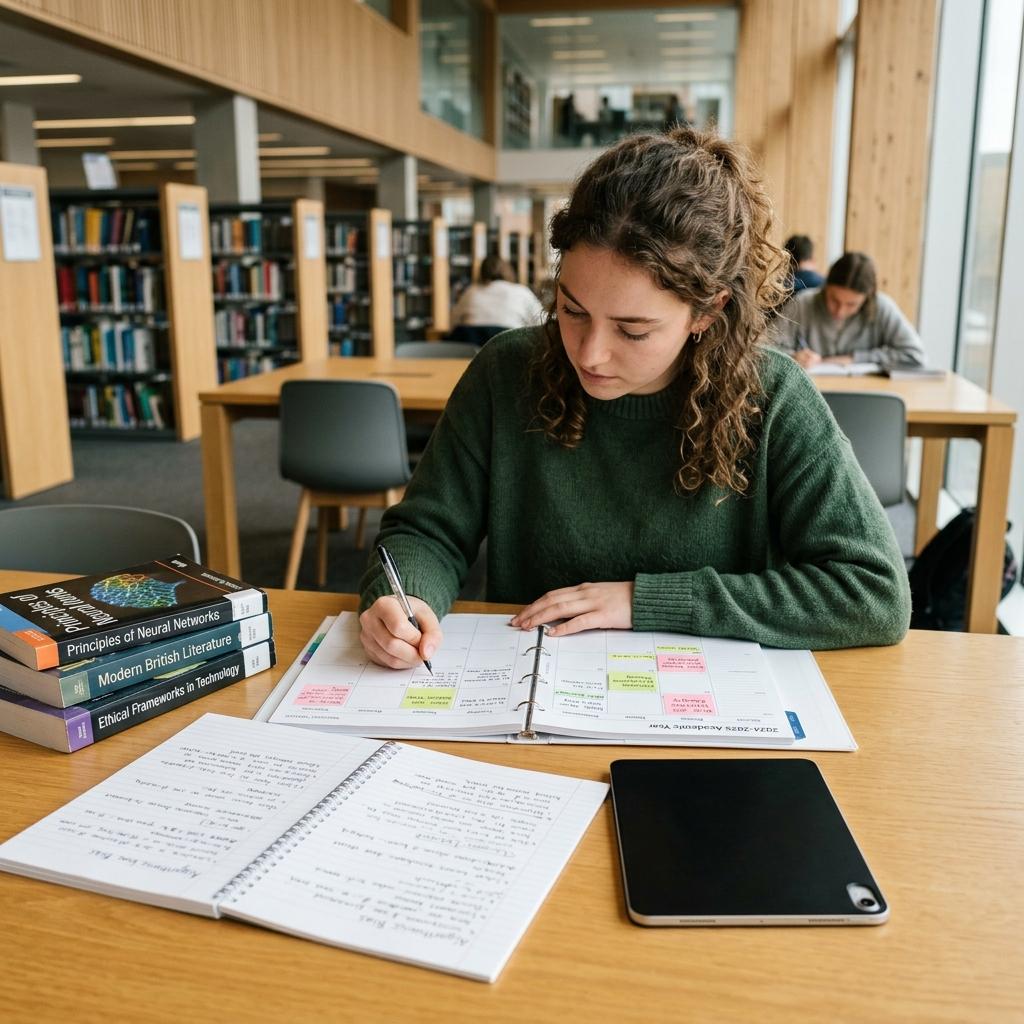
- Aim for 4-6 focused hours per day, broken into Pomodoro-style sessions of 45 minutes studying and 10 minutes resting.
- Use spaced repetition across the week. Reviewing Day 1 material again on Day 3 and Day 6 helps move it into long-term memory.
- Sleep and eat. Pulling all-nighters tanks memory consolidation. Seven to nine hours of sleep is part of your study plan, not the reward after it.
Finals are next week and you're staring at a semester's worth of notes like it's written in a language you've never studied. Sound familiar?
The good news: one week is enough time to prepare for finals, not just survive them, but actually do well. The bad news: you can't spend those seven days the way most students do. Rereading highlighted notes, rewatching lecture recordings, and hoping it sticks is not studying. It's a performance of studying.
This guide gives you a real system for how to study for finals in one week. You'll get a day-by-day schedule, the study methods backed by cognitive science, and the tools that make all of it faster. By the time you're done reading, you'll have a plan you can start within the next hour.

Is 7 Days Enough Time to Study for Finals?
Yes, with a catch. Seven days is absolutely workable, but only if you treat the week like a structured sprint instead of a vague "I should study more" intention.
The students who fail with a week to go aren't failing because of the timeline. They're failing because they spend six of those days doing low-return activities: rereading chapters, watching YouTube explainers passively, color-coding notes they won't look at again. The week burns out from under them.
What Makes One Week Actually Work
A week gives you enough time to run at least two full review cycles on your most important material. That's the key. Spaced repetition research shows that reviewing material at spaced intervals, rather than in one long cram session, dramatically slows the forgetting curve first described by Hermann Ebbinghaus in 1885.
In practical terms: if you learn something on Day 1 and review it again on Day 3 and Day 6, you're far more likely to recall it on exam day than if you spent twelve hours on it in a single Saturday session.
Prioritize Before You Open a Single Textbook
Before you do anything else, list every exam you have, its date, and roughly how much of your grade it controls. Then rank them. Your bottom two subjects by comfort level and grade weight get the most time. Your strongest subject, where you already feel solid, gets a lighter touch.
This prioritization step takes 20 minutes and saves you from spending two days on a subject you'd pass anyway while neglecting the one that could hurt you.

How to Prepare 1 Week Before an Exam: Your Day-by-Day Schedule
Here's how to actually structure the seven days. Adapt based on how many exams you have, but keep the overall shape.
Day 1: Audit and Plan (Don't Study Yet)
Don't crack a textbook on Day 1. Spend it entirely on logistics.
Pull up every syllabus. List every topic covered this semester for each exam. Mark the ones you understand well in green, the shaky ones in yellow, and the ones you'd completely blank on in red. Your red and yellow items become your priority list for the rest of the week. Also check whether your professor has posted old exams or review sheets. These are gold.
Days 2-4: High-Priority Heavy Lifting
This is your deep work window. Focus on your hardest or highest-stakes exams first.
Work in focused 45-minute blocks with 10-minute breaks. Research from Cornell's Learning Strategies Center confirms that distributed practice over multiple sessions produces far better retention than the same hours crammed into one sitting. For each subject, use active recall methods: close your notes and write down everything you remember about a topic, then check what you missed. Turn your gaps into flashcards.
If you have a PDF-heavy course, Cramd's AI PDF summarizer can break down a dense reading into key concepts in under 30 seconds. Then you can quiz yourself directly on the output instead of passively skimming 40 pages.
Days 5-6: Second Pass and Practice Problems
By Day 5, you're doing review, not fresh learning. Return to the flashcards you built in Days 2-4. Work through old exams or practice questions under timed conditions. Simulating exam conditions builds test-taking confidence and surfaces gaps you didn't know you had.
For math, science, or economics, skip reading your notes entirely at this stage. Just do problems. Explanations feel productive. Doing problems actually is.
Day 7: Light Review Only
Day 7 is not a cramming day. Review your flashcards on low-effort topics, skim the key concepts you marked on Day 1, and then stop. Your brain consolidates memories during sleep. Studying until midnight before an exam actively works against you. Sleep research confirms that slow-wave non-REM sleep plays a direct role in fortifying factual memory. Go to bed at a normal time.
How Many Hours Should You Study a Week for Finals?
Students consistently overestimate how many productive study hours they can log in a day. The ceiling is lower than you think.
Research on deep work and cognitive limits points to 4-6 hours as the realistic daily cap for focused, high-quality study, even among experienced learners. Beyond that threshold, you're moving words across your vision, not processing them. Expert musicians who spend their careers building focus capacity rarely sustain more than 4-5 hours of true deliberate practice per day.
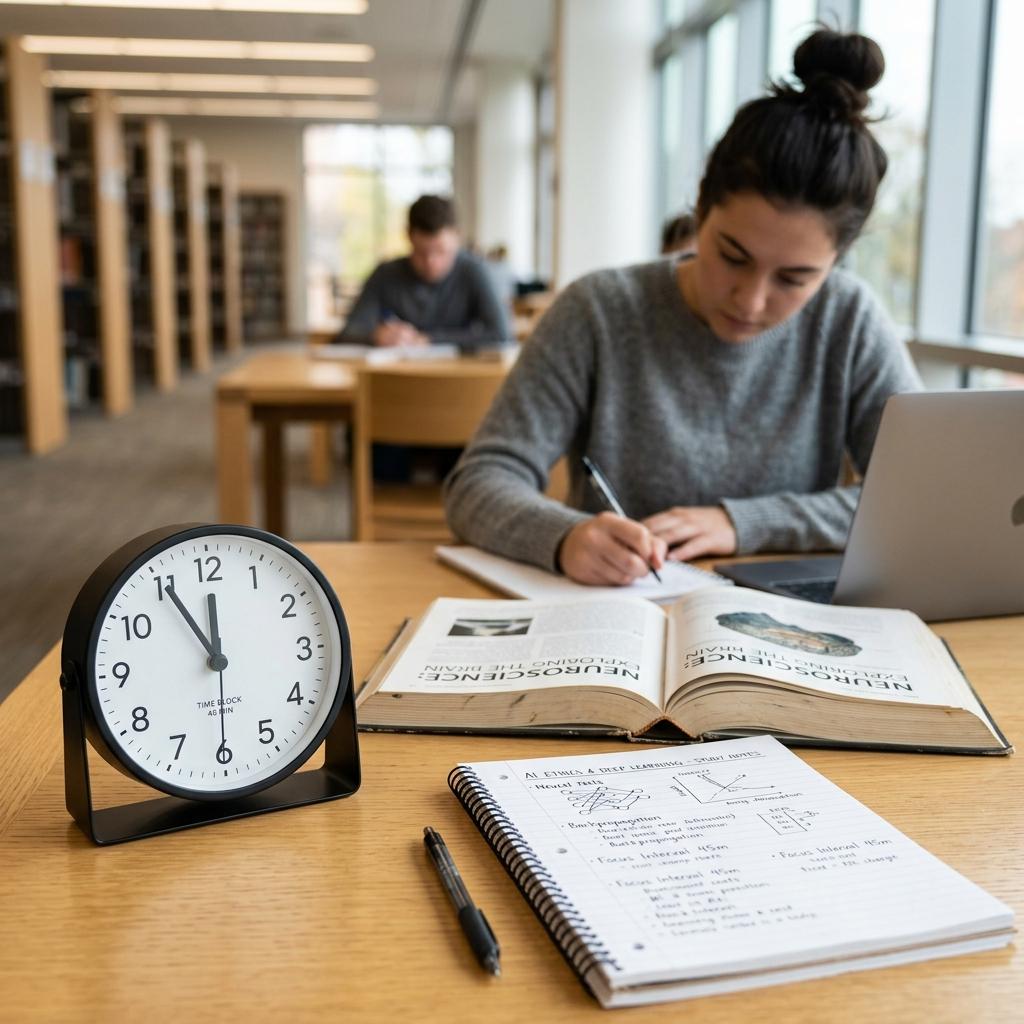
For a finals week, target 4-6 focused hours daily, broken into 45-50 minute sessions with real breaks in between. A break means walking around, eating, or talking to someone, not doomscrolling, which keeps your brain in a half-engaged state and doesn't let it rest.
The Rule About Hours Per Credit
Outside finals crunch, the standard academic guidance is 2-3 hours of independent study for every credit hour you're taking. A 15-credit semester load implies roughly 30-45 hours of studying per week, on top of class time. During finals week, you compress that into a final sprint. If you've kept up during the semester, 4-5 quality hours a day gets you there. If you're starting from scratch on multiple subjects, be honest: you may need to triage and decide what grade you're realistically protecting.
Quality Over Quantity, Always
Four focused hours will beat eight distracted hours every time. Put your phone in another room, use a website blocker if you need one, and pick a study spot where you actually concentrate, whether that's the library, a coffee shop, or your kitchen table. The physical cue of arriving somewhere specific to study helps your brain shift modes.
The Study Methods That Actually Work in a Week
Not all study techniques are equal, and with only seven days you can't afford to use the bad ones.
Active Recall: The Highest-Return Method You're Probably Not Using
Active recall means testing yourself instead of reviewing. Close your notes. Ask yourself: what were the three main causes of this event? What's the formula for this concept? What did the author argue in chapter four?
A landmark study by Roediger and Karpicke (2006) compared students who reread material against students who practiced retrieval. When tested a week later, the retrieval group retained around 80% of the material. The rereading group held onto roughly 34%. That gap is enormous when you're preparing for an exam in seven days.
Cramd's AI flashcard generator turns your notes, PDFs, or lecture slides into smart flashcards automatically, so you spend your limited time actually quizzing yourself instead of manually typing cards. That's the difference between a tool that saves you time and one that just moves the work around.
Spaced Repetition: Review Smarter, Not More Often
Spaced repetition means reviewing material at increasing intervals, not all in one session. The schedule doesn't have to be complicated. If you learn something on Day 2, review it briefly on Day 4, then again on Day 6. That's enough to significantly strengthen long-term retention compared to a single review.
The 2-3-5-7 revision method is one way to build this into your week automatically. Review material 2 days after first learning it, then at 3 days, 5 days, and 7 days. It sounds fussy, but in practice you're just revisiting your flashcard stack at the right moments.
Practice Exams: The Most Underused Study Tool
If your professor has released previous finals, do them in full, timed, without looking at notes first. Then check your answers, identify every gap, and convert those gaps to flashcards. Simulating real exam conditions is one of the most effective ways to build confidence and identify blind spots before they cost you points.
The University of Cincinnati's study guide for finals specifically recommends treating practice exams like the real thing: same time limit, same conditions, no peeking. It's uncomfortable. That discomfort is the point.
The Feynman Technique for Concepts You Can't Shake
For anything conceptual that won't stick, try explaining it out loud as if you're teaching someone who's never heard of it before. No jargon. No looking at notes. If you stumble, that's where your understanding breaks down, and now you know exactly what to go back and fix. This method works especially well for history, biology, psychology, and any subject that's heavy on concepts rather than formulas.
What to Do the Night Before and Morning Of
The night before your exam, stop studying by 9 or 10 PM. Do a light review of your most important flashcards, 20 minutes max, and then put everything away. Eat something real, drink water, and sleep. Attempting to squeeze in new information the night before produces significantly worse outcomes than consolidating what you already know.
The morning of, eat breakfast. Your brain runs on glucose and your ability to think clearly during a 2-hour exam depends on not being hungry. Review your highest-priority flashcards for 15-20 minutes. Read Cramd's guide on what to do 30 minutes before an exam for the mental prep side of test-day performance.
Arrive to your exam a few minutes early, find your seat, and breathe. You've done the work.
Conclusion
One week is enough. It's not ideal, earlier is always better, but it's workable if you stop treating studying as time spent near your textbook and start treating it as time spent retrieving information from your own memory.
Build your plan on Day 1. Use active recall and spaced repetition throughout. Do at least one practice exam per subject. Sleep. And use tools that compress the prep work without cutting the learning: flashcards you build yourself, PDFs you can actually interrogate, and notes you can turn into quizzes.
If you want to put all of this on autopilot, Cramd's AI study tools turn your notes and PDFs into smart flashcards, quizzes, and summaries in seconds. It's built for exactly this kind of crunch. Try it free ->
FAQ
Posted by the Cramd Team | trycramd.com