If you've ever pulled an all-nighter and still bombed the exam, you already know that effort alone doesn't equal grades. According to research on sleep and academic performance, every hour of sleep lost below the recommended eight hours is tied to roughly a 0.07-point drop in cumulative GPA, and chronic sleep deprivation raises the odds of failing or withdrawing from a class. That single stat says a lot: straight-A students aren't necessarily working harder than everyone else. They're working differently.
This post breaks down 10 study methods that show up again and again in the research on learning and memory, from active recall to strategic napping. None of them require natural genius. They just require consistency, and a system that makes the right habits easier to repeat than the wrong ones.
What makes this list different from the usual "top study tips" roundup is that every habit here is tied to actual research rather than just anecdote. If you're a college student trying to figure out which effective study habits are actually worth your limited time, this is meant to be a shortcut past the trial and error. By the end, you'll have a clear, science-backed framework you can start using in your very next study session.
Quick Answer: What Habits Help Students Get Straight A's?
The most effective habits for earning better grades include active recall, spaced repetition, consistent sleep, specific study goals, scheduled work blocks, strategic breaks, and weekly progress reviews.
These academic success habits work because they turn studying into a repeatable feedback loop: test what you know, revisit what you forget, protect the energy your brain needs, and adjust your study schedule before small gaps become big grade problems.
| Habit | Why it helps | First step |
|---|---|---|
| Active recall | Strengthens retrieval | Quiz yourself without notes |
| Spaced review | Improves long-term retention | Revisit material across several days |
| Consistent sleep | Supports attention and memory | Keep a regular sleep window |
| Specific goals | Makes progress measurable | Define one concrete session outcome |
1. They Use Active Recall Instead of Rereading
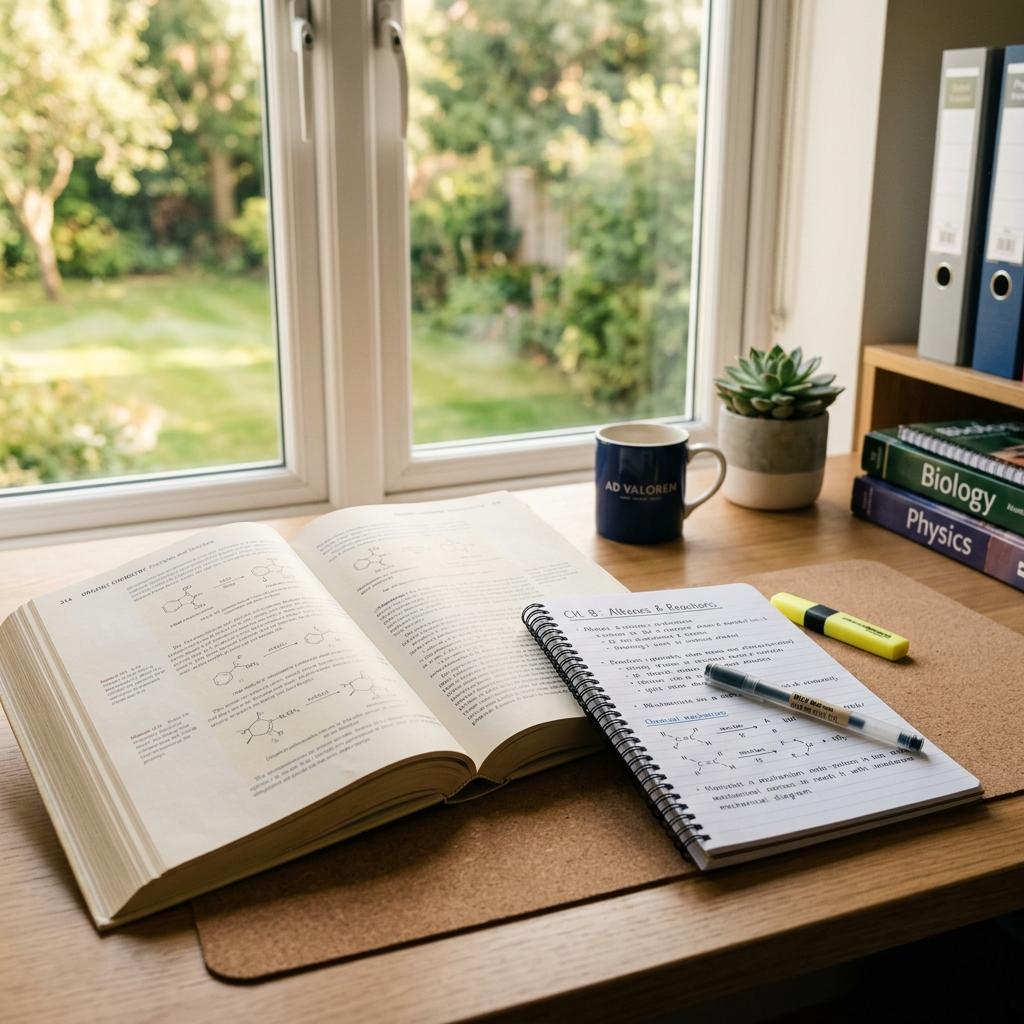
Most students study by rereading notes or highlighting a textbook. It feels productive, but it barely moves the needle. A large comparison of study techniques found that practice testing, forcing yourself to retrieve information from memory rather than just looking at it, ranked as the single highest-utility method out of ten techniques evaluated, well above highlighting, rereading, and summarizing.
The mechanism is simple: pulling a fact out of your memory strengthens the neural pathway attached to it. The more effort the retrieval takes, the stronger the memory gets. Researchers call this "desirable difficulty." The mild struggle of trying to remember something is exactly what makes it stick. Separate research comparing retrieval practice to concept mapping found that testing yourself produced better learning outcomes even when the final exam required building a concept map, which suggests the benefit isn't limited to simple fact recall. It holds up for more complex, connected knowledge too.
This is also why highlighting and color-coding your notes, while satisfying, does so little for actual retention. Highlighting only requires recognizing information, not retrieving it. Your brain can recognize a fact it barely remembers, which is exactly what makes rereading feel productive even when it isn't.
What Active Recall Studying Looks Like in Practice
- Close your notes and write down everything you remember about a topic, then check what you missed.
- Turn every heading in your notes into a question and quiz yourself on it later.
- Use flashcards and actually try to answer before flipping them, instead of just reading both sides.
If you're generating study material from lecture slides or a textbook chapter, an AI flashcard generator can turn your notes into a testable deck in seconds, which removes the "I don't have time to make flashcards" excuse that keeps a lot of students stuck on passive rereading. For a deeper dive into why this method works, our full breakdown of active recall covers the science in more detail.
2. They Space Out Their Review Sessions
Straight-A students rarely cram everything into one sitting. Instead, they review material multiple times, spread out over days or weeks. This is called the spacing effect, and it's one of the most heavily studied phenomena in cognitive psychology. A review of over 250 studies involving more than 14,000 observations found a consistent pattern: spreading practice out over time beats cramming the same amount of practice into one session, regardless of subject or age group.
The logic ties back to the forgetting curve. If you review information right before you're about to forget it, that review does more to cement it than reviewing something you already remember well.
How to Build a Realistic Review Schedule
- Review new material within 24 hours of first learning it.
- Review again after 3 days, then a week, then two weeks.
- Use a spaced repetition app or flashcard tool that automatically resurfaces cards you're close to forgetting, rather than manually tracking a schedule yourself.
This is exactly what our guide to mastering spaced repetition walks through in more detail, including how to combine it with active recall for the biggest retention boost.

3. They Protect Their Sleep Like It's a Class
It's tempting to treat sleep as the first thing to cut when deadlines pile up. Straight-A students tend to do the opposite. Beyond the GPA-per-hour stat mentioned earlier, a statistical analysis of freshman sleep and grades found that students who go to bed earlier tend to earn higher GPAs regardless of how heavy their course load is, and later bedtimes significantly predicted lower GPA even after controlling for other factors.
Why Bedtime Matters More Than Total Hours
It's not just about hitting eight hours. Consistency matters too. A stable sleep window helps your brain reliably enter the deep sleep stages responsible for consolidating what you studied that day. Staying up until 3 a.m. and sleeping until 11 disrupts that process even if the total hours add up.
If you're deciding between an extra hour of studying and an extra hour of sleep the night before an exam, the research leans toward sleep. Memory consolidation happens while you're out, not while you're rereading notes for the fifth time. It's also worth noting what the research doesn't show: pulling an occasional all-nighter isn't strongly linked to lower GPA on its own. It's the chronic pattern, repeatedly sleeping less than five hours a night, that does the real damage. One bad night before a test matters far less than a semester of consistently shortchanging your sleep.
4. They Set Specific, Not Vague, Goals
"Study biology" is not a goal. It's a vague intention that's easy to abandon the moment you get distracted. Straight-A students set targets specific enough to know exactly when they're done: "memorize the 12 steps of the Krebs cycle" or "finish practice problems 1 through 15."
Session Goals vs. Semester Goals
Break your studying into two layers:
- Session goals: what you'll accomplish in the next 30-60 minutes, stated concretely enough that you'll know if you hit it.
- Semester goals: the grade or mastery level you're aiming for in each class, checked weekly so you can adjust before it's too late to matter.
Specific goals also make it easier to notice when a study method isn't working, since "I didn't finish the practice set" is a much clearer signal than "I studied but it didn't feel like enough." Vague goals leave you no way to measure progress, which is part of why they're so easy to abandon halfway through a session. There's no clear finish line to work toward, so it's easy to convince yourself you've done "enough" long before you actually have.
5. They Study in Fixed, Scheduled Blocks
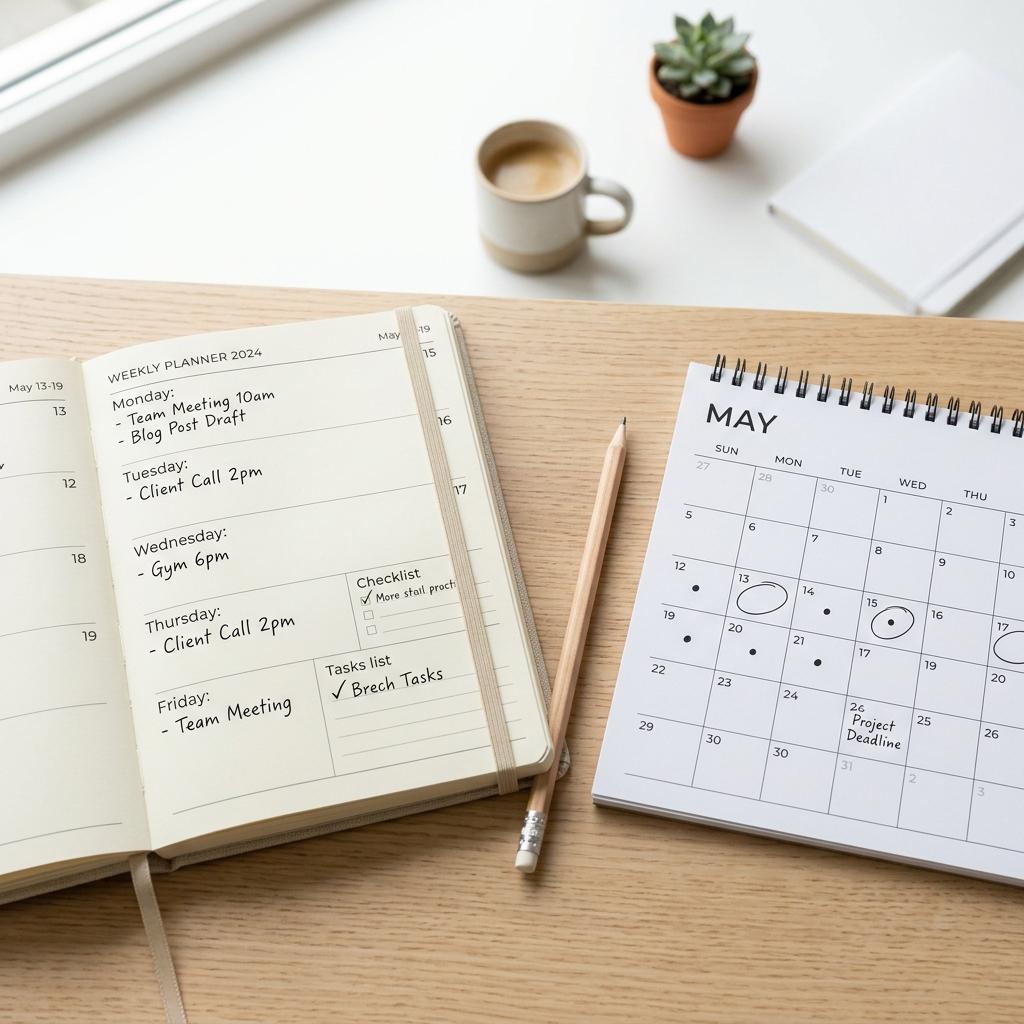
Top students tend to treat study time like a class they can't skip: same time, same place, most days. This removes a lot of the decision fatigue and procrastination that comes from deciding when to study every single day. When studying has a fixed slot, it stops requiring willpower and starts requiring the same habit that gets you out of bed for a 9 a.m. lecture.
Treating Study Time Like an Appointment
- Block off the same 1-2 hours daily on your calendar, ideally when your energy is naturally highest.
- Study in the same location each time. Your brain starts associating that spot with focus.
- Protect the block the way you'd protect a scheduled meeting: no last-minute "I'll do it later" swaps.
If distractions are the thing derailing your blocks, our guide on eliminating distractions while studying has practical strategies from students who've dealt with the same problem.
6. How Do Straight-A Students Take Notes?
Straight-A students generally don't transcribe lectures word for word. That's one of the least effective note-taking approaches, since it keeps your brain in passive-copying mode rather than active-thinking mode. Instead, they use structured formats like the Cornell method, which splits a page into notes, cues, and a summary section, forcing you to condense and question the material as you go.
The other habit that separates strong note-takers is speed of processing. Instead of letting a messy pile of notes or PDFs sit untouched until the night before an exam, they turn that material into something testable almost right away. An AI PDF summarizer can take a dense reading and turn it into a structured summary and flashcard set in under a minute, which means the "organizing my notes" step doesn't eat into the time you'd otherwise spend actually reviewing.
The key principle either way: notes should be built for retrieval later, not just for looking complete today.
7. They Take Real Breaks, Including Naps
High performers don't treat breaks as wasted time. Research on power nap length consistently points to a sweet spot: naps in the 10-to-20-minute range restore alertness and sharpen focus without the grogginess that comes from waking up mid-deep-sleep. Naps that stretch past 30 minutes risk that groggy "sleep inertia" feeling, while a full 90-minute nap can support deeper memory consolidation if you actually have the time for it.
Building Breaks Into Your Study Cycle
- Study in focused blocks of 25-50 minutes, then take a genuine break, not a break that turns into 45 minutes of scrolling.
- If you're mid-afternoon and hitting a wall, a 10-20 minute nap can be more useful than another cup of coffee.
- Time naps for the early-to-mid afternoon; napping too close to bedtime can disrupt your regular sleep schedule.
Breaks aren't a reward for finishing. They're part of how the material actually gets absorbed.
8. They Turn Big Assignments Into Small Tasks
A 15-page research paper or a cumulative final feels overwhelming as a single block of work, which is exactly why so many students avoid starting until the deadline forces their hand. Straight-A students break big tasks into pieces small enough that starting doesn't feel like a big decision.
Reverse-Engineering a Deadline
- Start from the due date and work backward, listing every sub-task, such as outline, draft, sources, and revision, with its own mini-deadline.
- Make the first task tiny on purpose. "Write one paragraph" is easier to start than "write the essay."
- Track progress visually so you can see the project shrinking instead of just feeling the deadline approaching.
This habit does double duty: it reduces the anxiety that fuels procrastination, and it naturally spaces your work on a project across days instead of cramming it into one panicked session, tying back to the spacing effect from habit 2. It also removes the false choice between "start now" and "start when I feel ready," since the first sub-task is small enough to knock out even on a day when motivation is nowhere to be found.

9. They Study With Others Strategically
Studying with friends gets a bad reputation for becoming a social hour, but used correctly, it's genuinely effective. Research on "study buddy" accountability groups found that these setups meaningfully support students' studying, in part because group members keep each other accountable and reinforce the material by explaining it to one another.
The distinction that matters: straight-A students use group study for quizzing each other and explaining concepts out loud, not for reading the textbook together in silence. Teaching a concept to someone else is itself a form of active recall, which loops back to habit 1.
10. They Review Their Own Progress and Adjust Weekly
The best students don't just execute a study plan. They audit it. Taking a few minutes at the end of each week to ask "what actually worked, and what didn't?" turns studying into a feedback loop instead of a routine you run on autopilot. Maybe active recall sessions felt rushed, or a particular class needs more spacing between reviews than others. That kind of reflection isn't about being self-critical; it's about catching a broken habit before it costs you a full unit's worth of grades.
What Weekly Review Actually Looks Like
- Spend 10-15 minutes each Sunday, or whatever day works, looking back at the week's study sessions.
- Ask which subjects felt solid and which ones you're still guessing on.
- Adjust next week's schedule based on the answer: more review time for weak spots, less time re-covering what you already know cold.
A simple tracker or journal is enough. The goal isn't a perfect system on day one. It's a system that gets slightly better every week, which compounds a lot faster than most students expect over a full semester.
Is It Better to Study Alone or Use AI Study Tools?
It doesn't have to be either/or. The students getting the most out of AI for studying use it to handle the tedious, mechanical parts of studying, such as organizing notes, turning a dense PDF into a summary, or generating an initial flashcard deck, while still doing the actual thinking themselves. AI study tools are genuinely useful for compressing the setup work that used to eat into study time, but the retrieval practice and spaced review still have to come from you.
Where this goes wrong is when students use AI to skip straight to an answer instead of working through the material, which strips out the retrieval practice that's actually building the memory. Used as a shortcut for busywork rather than a shortcut for thinking, AI study tools for students can meaningfully increase how much material you get through in a given week without sacrificing retention.
What's the Single Most Effective Study Habit?
If you can only adopt one habit from this list, make it active recall combined with spaced repetition. Across the research cited throughout this post, no other single technique consistently outperforms the combination of testing yourself and spacing that testing out over time. Sleep, scheduling, and breaks all matter, but they're the conditions that let active recall and spacing actually work, not substitutes for them.
In practice, that means: don't just reread your notes the night before an exam. Test yourself on the material starting days or weeks earlier, spaced out across multiple short sessions, and let your review schedule bring back concepts right before you'd naturally forget them.
Building Your Own Straight-A System
None of these habits require you to be naturally gifted. They require a system you can actually stick to. Start small: pick two or three habits from this list, like active recall and a fixed study block, and build from there rather than trying to overhaul your entire routine overnight.
If you want to put active recall and spaced repetition on autopilot instead of managing it all manually, Cramd's AI flashcard maker turns your notes, PDFs, and slides into testable flashcards with built-in spaced repetition in seconds. Try it free.